Realty Executives Elite Homes
Not every agent wants to recruit other agents, become a manager, build a downline, or spend their evenings trying to convince friends to get their real estate licenses.
Some agents simply want to sell real estate, build a respected personal brand, serve their clients well, and grow their business at their own pace.
At Realty Executives Elite Homes in Nutley, NJ, we believe there should be a place for those agents too.
There are plenty of talented real estate agents who work another job, own another business, have family responsibilities, or simply don't want real estate consuming every hour of their lives.
The problem is that many part-time agents never develop momentum.
They join a brokerage, receive a login and a business card, and are basically told, “Good luck.” That's not much of a business strategy.
If you're going to work real estate part time, your time becomes even more valuable. You need to concentrate your energy on the activities that can actually move your business forward.
That's where branding, marketing and positioning become extremely important.
The real estate industry has changed dramatically.
Today, consumers often research an agent online before they ever make a phone call. They look at Google. They look at social media. They watch videos. They read reviews. They want to know who you are, what you know and whether you understand the local market.
That's why we encourage agents at Realty Executives Elite Homes to develop their own identity and personal brand.
You don't have to become another agent's junior team member.
You don't have to spend your time recruiting agents underneath you.
You don't have to build an organization of 50 people just to feel successful.
You can build something much simpler:
Your name. Your reputation. Your database. Your business.
For many agents, that's exactly what they wanted when they got into real estate in the first place.
Real estate is ultimately a marketing business. Agents need to know how to market homes, but they also need to know how to market themselves. At Realty Executives Elite Homes, marketing is a major part of our culture.
That can include learning how to use:
Social media
Video marketing
Local content
Blogging and SEO
Artificial intelligence
Email marketing
Personal databases
Open houses
Community marketing
Direct mail
Listing marketing
Personal branding
The goal isn't to turn every agent into a social-media influencer.
The goal is to help agents become recognizable and relevant in the markets they want to serve.
A part-time agent with a strong reputation and focused marketing strategy can be far more effective than a full-time agent who nobody knows.
There's a strange mentality in real estate that everyone needs to sell 100 homes a year.
Why?
Success means different things to different people.
Maybe you want to sell six homes this year.
Maybe you want to sell 12.
Maybe your goal is to develop a solid referral business that generates additional income while you maintain another career.
Or maybe you're currently part time and eventually want real estate to become your primary business.
Those are all legitimate goals.
The important thing is having a strategy for getting there.
Real estate may have become more digital, but it's still incredibly local.
Our office is located in Nutley, New Jersey, and we understand the importance of knowing the communities we serve.
Understanding neighborhoods, housing styles, local market conditions, pricing, buyer behavior and the nuances of individual towns gives agents something technology alone cannot replace.
Combine that local knowledge with modern marketing and you have a much stronger value proposition.
That's particularly important for an agent trying to establish a recognizable personal brand.
Artificial intelligence is changing real estate quickly.
For a part-time agent, that's actually a tremendous opportunity. AI can help agents become more efficient with marketing ideas, content creation, market research, follow-up systems, video concepts, listing promotion and everyday business organization.
The objective isn't to replace what makes a good real estate agent valuable.
It's to eliminate wasted time.
If you only have a limited number of hours each week to build your real estate business, using technology intelligently can help you make those hours count.
There are many different brokerage models today, and some are heavily focused on recruiting.
There's nothing inherently wrong with that model.
But it isn't for everyone.
Some agents have absolutely no interest in recruiting.
They don't want to build a downline.
They don't want to manage other agents.
They don't want to become a team leader.
They want to become a better real estate agent.
That's a perfectly good ambition.
At Realty Executives Elite Homes, we believe an agent should be able to concentrate on developing their skills, building relationships, creating a recognizable brand and closing business.
You don't have to copy somebody else's version of a successful real estate career.
If your goal is to build a giant team, there are models designed around that.
But if your goal is to develop your own name, your own client base and your own real estate business, there's another path.
You can start part time.
You can build slowly.
You can become known in a particular town or niche.
You can improve your marketing.
You can develop a valuable database.
And if you decide someday that you're ready to take the business full time, you'll already have something important working in your favor:
A brand that belongs to you.
If you're a licensed New Jersey real estate agent—or considering getting into the business—and you're looking for an office where you can grow without feeling pressured to build a team or recruit other agents, Realty Executives Elite Homes in Nutley may be worth a conversation.
We're especially interested in agents who want to learn, improve their marketing, build a recognizable personal brand and create a real estate business that works for their life.
Because you don't need to build an empire.
Sometimes you just need to build a damn good business with your name on it.
Call Matthew De Fede at 862-228-0554 or fill out the form below:
Let's Connect!
Call us now
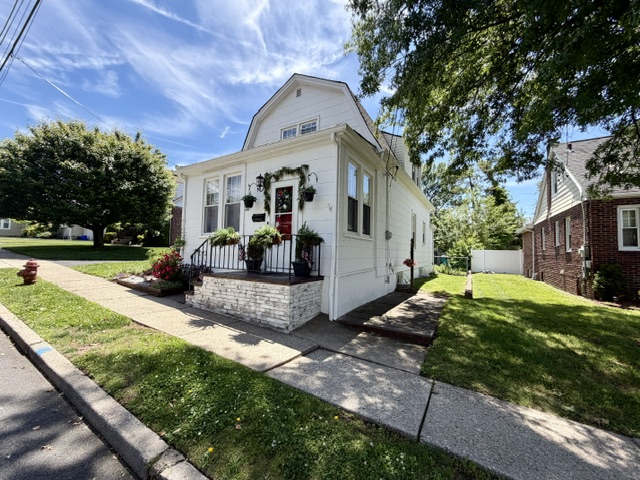
This 3 bedroom 2 bath home is located in the Lincoln Section of Town, Huge yard with large driveway, Plenty of opportunty here! form more information call 862-228-0554
Owning rental property should generate income—not become another full-time job.
Realty Executives Elite Homes Property Management provides professional, hands-on property management services for landlords and real estate investors throughout Nutley and Northern New Jersey.
From tenant communication and rent collection to property inspections, maintenance coordination, and leasing, we handle the day-to-day responsibilities of managing your rental property while keeping you informed and in control.
Whether you own one rental property or are building a larger investment portfolio, our goal is simple: protect your property, maintain strong tenant relationships, reduce unnecessary vacancies, and help your investment perform.
Property management works best when your management company knows the neighborhood, understands the local rental market, and is available when something needs attention.
Our office is located in Nutley, giving property owners the advantage of working with an established local real estate brokerage—not an out-of-state call center or faceless online management platform.
We understand local property values, tenant expectations, rental pricing, municipal requirements, and the challenges landlords face throughout Northern New Jersey.
When your property needs attention, you will know who is handling it.
We help establish a consistent rent collection process and monitor payments on behalf of the property owner.
Tenants can submit rent electronically through an approved payment method, helping create a clear and organized record of monthly payments.
If a rent payment is late, we communicate with the tenant promptly and notify the property owner of any ongoing issue.
You no longer have to respond personally to every maintenance request, payment question, or tenant concern.
We serve as the primary point of contact for tenants and help manage routine communications professionally and efficiently.
When a situation requires the landlord’s involvement, we provide the necessary information so an informed decision can be made.
When repairs are needed, we coordinate service through approved vendors who are properly licensed and insured when required.
Property owners may authorize us to approve routine repairs up to an agreed-upon dollar amount. Repairs exceeding that amount will be presented to the owner for approval, except when immediate action may be reasonably necessary to protect the property or address an emergency.
This process helps small problems get handled quickly while allowing the owner to maintain control over larger expenses.
Regular inspections can help identify maintenance concerns before they become larger and more expensive problems.
Our property management service includes scheduled quarterly inspections to review the general condition of the property, look for visible maintenance concerns, and help confirm that the home is being properly cared for.
Following an inspection, the property owner can be provided with an update regarding any conditions that may require attention.
These inspections are not engineering, environmental, code-compliance, or professional home inspections. They are practical visual property reviews designed to help owners stay informed.
A successful rental begins with finding the right tenant and setting the proper rental price.
As an experienced Northern New Jersey real estate brokerage, we can assist with:
Rental market analysis
Professional photography and marketing
Online rental advertising
Showing coordination
Rental applications
Tenant screening
Lease preparation and execution
Move-in coordination
Our marketing experience helps your rental receive stronger exposure while our screening process helps reduce unnecessary risk.
No screening system can guarantee a tenant’s future performance, but careful qualification can help an owner make a better-informed decision.
As the end of a lease approaches, we communicate with the landlord and tenant regarding renewal plans.
We can help evaluate current market rent, prepare renewal documentation, and coordinate the signing of an updated lease.
When a tenant does not plan to renew, we can begin preparing the property for the next leasing cycle.
A vacant property still needs attention.
During periods of vacancy, we can coordinate property checks, communicate with service providers, oversee approved repairs, and help prepare the home for marketing and future occupancy.
Vacancy management helps ensure that an unoccupied property is not forgotten simply because rent is not currently being collected.
We help create a smoother transition when tenants move into or out of a property.
Services may include:
Move-in condition documentation
Key coordination
Utility reminders
Move-out communication
Property condition reviews
Repair and cleaning coordination
Security deposit documentation support
Security deposit decisions and deductions remain subject to the lease and applicable New Jersey law.
Property emergencies do not always happen during business hours.
When a tenant reports an urgent issue involving water, heat, electrical conditions, property security, or another potentially serious situation, we help assess the problem and coordinate an appropriate service provider.
Our priority is to protect the tenant, the property, and the owner’s investment.
Rental property repairs should not be left to someone who simply owns a toolbox and has a free afternoon.
We require the use of approved service providers who are appropriately licensed and insured when licensing or insurance is required for the work being performed.
This helps protect the property owner, the tenant, and the management company while creating greater accountability for the quality of the work.
Owners are kept informed regarding significant repairs and expenses in accordance with the property management agreement.
Our property management services are ideal for:
Owners of single-family rental homes
Two-family and small multifamily property owners
Condominium and townhouse landlords
Accidental landlords
Owners relocating out of the area
Investors with multiple rental properties
Estate and inherited-property owners
Landlords who no longer want to manage tenants directly
Homeowners who want to rent rather than sell
Whether your rental was purchased as an investment or became a rental because your plans changed, we can help you manage it professionally.
We have decades of experience in Northern New Jersey real estate and understand what attracts qualified tenants, what protects property value, and what causes rentals to sit vacant.
A rental cannot generate income when no one knows it is available.
Our background in real estate marketing allows us to present your property professionally through quality photography, online advertising, social media exposure, and our network of local real estate professionals.
Owners should not have to chase their property manager for information.
We provide straightforward communication regarding tenant issues, maintenance requests, vacancies, inspections, and significant expenses.
We do not believe property management should feel automated, distant, or impersonal.
Your property is a valuable asset, and it should be managed accordingly.
Because we are a full-service real estate brokerage, we can assist owners with property management, leasing, future acquisitions, and the eventual sale of the property when the time is right.
Late-night maintenance calls, rent collection, tenant questions, repair scheduling, inspections, and vacancies can quickly turn rental ownership into a second career.
You do not have to handle everything yourself.
Realty Executives Elite Homes Property Management offers local, professional property management designed to protect your time, your property, and your investment.
Tell us a little about your property, its current occupancy status, and the type of management assistance you need.
We will review your situation, explain our services, and help determine whether our property management program is the right fit for your investment.
Realty Executives Elite Homes Property Management
Serving Nutley and select communities throughout Northern New Jersey.
Local Experience. Professional Oversight. Better Property Management.
We’ve never followed the market, we’ve led it.
We brought in professional photography when others were still using cell phones. We introduced video before anyone believed it mattered. We hosted large-scale open houses while others insisted they were a waste of time. We were first in Nutley, arguably in the state, to leverage social media to actually sell homes, not just post them.
We built a YouTube channel to showcase not just our listings, but the lifestyle of Nutley itself. We created a brand that represents this town and expanded it far beyond local borders.
While others are just now trying to define their identity, we built the luxury market in Nutley from the ground up.
Don’t be surprised when we’re the ones who sell the first $2 million home here too.
In a market that never sleeps especially just 12 miles from New York City you don’t stay on top by accident. You stay there by design. That’s exactly how Realty Executives Elite Homes continues to dominate the Nutley, NJ real estate landscape in 2025. We set the standard, raised the bar, and then broke it again. No fluff. No hype. Real results.
Located right in the heart of Nutley at 653 Franklin Ave, Realty Executives Elite Homes is not just another real estate office we’re the leading force in buying and selling homes in Nutley, Belleville, Clifton, Bloomfield, Montclair, and across Essex County. We have the exposure, the expertise, and the market muscle you need to win in today’s competitive housing environment.
When you say “#1 real estate office,” that has to mean measurable success — not just a catchy tagline. In 2025, Elite Homes continued its streak of market leadership by putting more listings in front of qualified buyers faster, securing stronger offers, and closing more deals at top dollar. Our presence in Nutley is unmatched, and our online visibility in Northern NJ real estate searches tops the charts. That visibility isn’t accidental — it’s strategy in action.
Let’s cut to the core of what moves inventory and accelerates deals: marketing that works. At Realty Executives Elite Homes, we don’t post listings and hope for the best. We engineer visibility — hyper-targeted digital campaigns, professional staging, high-impact photography, laser-sharp copy, strategic pricing, and an aggressive online footprint. Buyers see our properties before they even hit the broader market. That’s not luck. That’s leverage.
Clients choose Elite Homes because we bring a creative, data-driven edge to real estate and buyers and sellers feel that difference in every interaction.
Nutley isn’t a cookie-cutter suburb — it’s a dynamic marketplace with unique buyer profiles and neighborhood nuances. Knowing the local terrain isn’t optional. It’s critical. Our agents live and breathe this local market — from the way inventory shifts month-to-month to the expectations of buyers who commute to NYC or are relocating from Manhattan or Brooklyn. Our negotiation skills and pricing precision are rooted in deep, boots-on-the-ground experience.
Behind every successful office is strong leadership. Broker/Owner Matthew De Fede has built Realty Executives Elite Homes from the ground up — blending sharp marketing instincts with decades of real estate experience. His commitment to client success, innovative strategy, and relentless follow-through has shaped Elite Homes into the powerhouse it is today.
We aren’t just the #1 real estate office — we’re a part of the community. Our agents aren’t anonymous; they’re active, local, accessible, and accountable. Whether you’re buying your first home, selling for top dollar, or investing in Nutley real estate, you deal with people who understand your goals and get results.
In 2025, Realty Executives Elite Homes did it again — we remain the leading real estate office in Nutley, NJ. No buzzwords, no smoke, just solid performance, strategic marketing, and market leadership. If you want serious real estate results, you want Elite Homes in your corner.
Realty Executives Elite Homes in Nutley Has The Best Online Presence In Northern New Jersey, And is the only Realty Executives Office Located in Nutley New Jersey 12 Miles Outside of New York City We Focus On NYC Home Buyers Looking For Family Friendly Homes in Essex County, Bergen County & More. We Have Homes in Nutley, Belleville, Clifton New Jersey.
Each office independently owned and operated.