
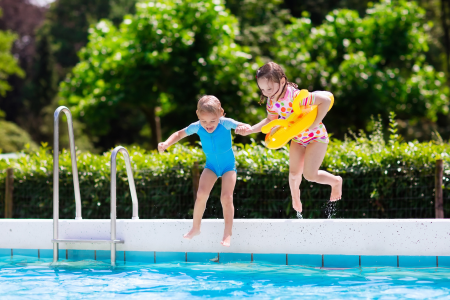
As temperatures climb, everyone gets excited to open the pool—but safety should always come first. This guide gives families, homeowners, landlords, and sellers a simple checklist to keep everyone safer all season long.
Start With Layers of Protection
No single safety measure is enough around water. The goal is multiple layers so if one fails, others are still in place.
- Install and maintain a four-sided pool fence with self-closing, self-latching gates.
- Use gate latches that are out of reach of small children.
- Add door and gate alarms that sound if someone enters the pool area unexpectedly.
- For above-ground pools, remove or secure ladders when not in use.
Encourage every household member and frequent visitor (grandparents, babysitters) to understand how the gate and alarms work.
Set Clear Family Pool Rules
Written rules help everyone stay on the same page, especially when kids have friends over.
Consider posting a small sign near the pool that covers:
- No swimming without an adult who can swim and is actively watching.
- No running, rough housing, or pushing on the pool deck.
- No diving in shallow areas.
- No glass near the pool—use reusable plastic or metal cups.
- Put away toys when you’re done so they don’t tempt kids into the water unsupervised.
Revisit rules at the start of each season and before parties.
Practice Active Supervision
“Active supervision” means there is a designated adult whose only job is watching the water.
- Rotate a “water watcher” every 20–30 minutes during gatherings and give them a badge or lanyard.
- The water watcher should avoid phones, books, or conversations that pull attention from the pool.
- For very young or inexperienced swimmers, an adult should be within arm’s reach in the water.
Even with lifeguards at community pools, parents and caregivers should keep focused eyes on their own swimmers.
Invest in Swimming Skills and Life Jackets
Swimming lessons and proper flotation can add another layer of safety, though they never replace supervision.
- Enroll children in age-appropriate swimming lessons that include water safety basics.
- Use U.S. or Canadian Coast Guard–approved life jackets for boating or lakes; avoid relying on inflatable toys or floaties as safety devices.
- Teach children never to swim alone, even if they feel confident.
Adults who aren’t strong swimmers can benefit from lessons too, especially if they are often supervising children.
Make Drains and Equipment Safer
Pool equipment can pose hidden dangers if not properly maintained.
- Ensure drain covers meet current safety standards and are securely attached.
- Teach children to stay away from drains, suction outlets, and pool cleaning equipment.
- Schedule regular professional checks of your pool pump, filter, and electrical systems.
If you feel strong suction or notice a missing or broken drain cover, stop using the pool until it’s corrected.
Store Chemicals and Tools Safely
Pool chemicals and tools are essential for clean water, but they must be handled carefully.
- Store all chemicals in a cool, dry, locked area away from children and pets.
- Always follow label directions and never mix chemicals together.
- Keep nets, poles, and vacuum hoses out of walkways to reduce tripping hazards.
Remind older children that pool chemicals are strictly off-limits.
Prepare for Emergencies
A bit of preparation can make a big difference in an emergency.
- Keep a fully stocked first aid kit near the pool.
- Have a reaching pole and a life ring or throw device easily accessible.
- Post emergency numbers or keep them saved and visible on a household device.
- Adults who supervise regularly should consider CPR training.
Walk through a simple emergency plan with family members so everyone knows how to respond quickly.
For Homeowners with Active Listings
If your home is on the market during pool season, buyers may be viewing it with kids in tow. A safe, well-maintained pool is a selling feature.
- Make sure fencing, latches, and alarms are in good working order before showings.
- Keep the water clear and clean, with toys neatly stored when not in use.
- Leave simple printed “Pool Rules” or safety notes that highlight your attention to safety.
Ask your real estate professional if there are local disclosure requirements related to pools, fencing, or safety devices.
For Landlords and Vacation Rental Hosts
If you rent your home, pool safety is part of good customer care and risk management.
- Clearly outline pool rules in your welcome guide and on a visible sign.
- Verify that required barriers and safety features are installed and maintained.
- Provide information about local emergency services and nearest urgent care.
Proactive safety steps can protect guests and help preserve your property’s reputation.
Enjoy Your Pool with Peace of Mind
With a few thoughtful updates and consistent habits, you can enjoy the best parts of pool season while reducing risk. After all, the goal is simple: create a space where family and friends can relax, recharge, and make great memories—without unnecessary worry. A little preparation today ensures your pool remains a safe, inviting retreat all season long.


