
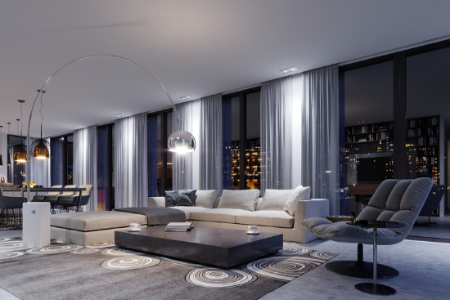
When the clocks change and the sun starts setting before dinner, a home can suddenly feel a little dimmer, and so can our moods. The good news is that lighting is one of the most affordable, high-impact design tools you have. With a few thoughtful changes, you can make your home feel warm, bright, and welcoming long after the sun goes down.
Think in Layers, Not Just Overhead
A single overhead fixture tends to flatten a room and cast harsh shadows. Designers rely on three layers of light working together:
- Ambient lighting provides the overall glow, such as ceiling fixtures, flush mounts, or recessed lights.
- Task lighting supports specific activities, like a reading lamp, under-cabinet lights in the kitchen, or a desk lamp.
- Accent lighting adds warmth and personality, such as picture lights, candles, or a small lamp on a bookshelf.
Aim to have at least two or three light sources in every room you use in the evening. Lamps placed at different heights make a space feel inviting and dimensional.
Choose the Right Bulbs
Bulb choice matters more than most people realize. Look at the color temperature on the package, measured in Kelvins:
- Around 2,700K gives a soft, warm glow that is ideal for living rooms and bedrooms.
- Around 3,000K is slightly crisper and works well in kitchens and bathrooms.
- Anything 4,000K and above reads as cool and clinical, which is better suited to a workshop or garage than a cozy living space.
Switching to warm-toned LED bulbs is an easy upgrade that saves energy while instantly improving the mood of a room.
Add Dimmers for Flexibility
Dimmer switches let one room serve many purposes. Bright light is helpful for cooking or cleaning, while a lower, softer setting is perfect for dinner or winding down. If you are not ready to rewire, plug-in dimmers and smart bulbs offer the same flexibility without an electrician.
Use Timers and Smart Controls
Few things are more discouraging than arriving home to a dark house. Smart plugs, smart bulbs, and simple plug-in timers can turn lamps on before you walk through the door. You can also schedule lights to come on at sunset automatically, which means the schedule adjusts itself as the days continue to shorten.
Light the Outside, Too
Shorter days mean more of your arrivals and departures happen in the dark. Well-lit entryways are both welcoming and safer.
- Make sure your porch light is working and fitted with a warm bulb.
- Add path lights or solar stake lights along walkways and steps.
- Consider motion-sensor lights near the garage or side door.
A softly lit exterior also does wonders for curb appeal in the evening hours.
Bounce Light Around
Mirrors and light-colored surfaces help make the most of every lumen. A mirror placed opposite or adjacent to a window reflects natural daylight deeper into the room during the hours you do have it. Light wall colors, sheer curtains, and glossy accents also help brighten a space without adding another fixture.
Don’t Forget the Glow of Candles and Warm Accents
Few things signal cozyness like the flicker of candlelight. Flameless LED candles offer the same ambiance with less worry, especially if you have pets or little ones. A small lamp on a console table, a string of warm white lights along a mantel, or a lantern on the porch can add that finishing touch.
Make Your Workspaces Brighter
If you work from home, shorter days can mean eye strain by mid-afternoon. A good desk lamp with adjustable brightness, positioned to avoid glare on your screen, makes a real difference. Consider a full-spectrum or daylight-style bulb for your workspace to help keep the room feeling bright and energizing during the day.
A Brighter Season Ahead
Shorter days do not have to mean a gloomier home. By layering light, choosing warm bulbs, and adding a few smart conveniences, you can create a space that feels bright and comforting from the first dark evening to the last. Start with one room, perhaps the one where your family gathers most, and build from there.


