
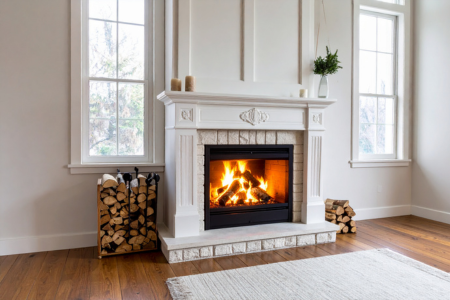
There’s nothing quite like the first fire of the season, that first crackle and glow that signals cooler weather has officially arrived. But before you strike that match, it’s worth taking a few minutes to make sure your fireplace and chimney are actually ready for use. A little prevention now can save you from a much bigger problem later.
Schedule a Professional Chimney Inspection
If it’s been a year or more since your last inspection, this should be step one. A certified chimney sweep can identify creosote buildup, cracks, blockages, or structural issues that aren’t visible from the ground. Creosote, a flammable byproduct of burning wood, accumulates inside the chimney over time and is one of the leading causes of chimney fires. An annual inspection catches this before it becomes dangerous.
Check for Blockages
Even without a professional inspection, you can do a basic visual check yourself. Look up into the flue with a flashlight for any obvious debris, nests, or blockages. Birds and small animals sometimes make chimneys their home during warmer months, and dead leaves and branches can also accumulate. A blocked flue prevents smoke and carbon monoxide from venting properly, which makes this a non-negotiable check before your first fire.
Inspect the Damper
The damper controls airflow into the chimney and should open and close smoothly. Before lighting a fire, confirm the damper is fully open, a partially open or stuck damper restricts airflow and can send smoke back into your living space instead of up the chimney. If it’s difficult to move or doesn’t seal properly, it may need repair or replacement.
Clear the Hearth and Surrounding Area
A few feet of clearance around the fireplace opening matters more than people often realize.
- Remove rugs, furniture, decorations, and anything flammable from the immediate area around the hearth.
- Keep firewood stacked a safe distance away rather than right next to the fireplace opening.
- Check that any mesh screen or glass doors are in good condition and close securely.
Test Your Detectors
Every fireplace should be paired with working smoke detectors and, critically, a carbon monoxide detector nearby. Carbon monoxide is odorless and colorless, meaning a malfunctioning fireplace or blocked flue can pose a serious risk without any obvious warning signs. Test both detectors before the season starts, and replace batteries if it’s been more than six months.
Choose the Right Wood
Burning well-seasoned hardwood, wood that’s been dried for at least six months, produces less creosote and smoke than green or wet wood. Avoid burning treated lumber, painted wood, or trash, all of which can release harmful chemicals and contribute to buildup inside the chimney.
Know the Warning Signs of a Problem
A few signs suggest it’s time to stop using your fireplace and call a professional:
- Smoke consistently backing up into the room instead of venting outside
- A strong, persistent odor even when the fireplace isn’t in use
- Visible cracks, damaged mortar, or crumbling bricks on the exterior chimney structure
- Excessive soot buildup around the fireplace opening
Any of these warrant a professional assessment before your next fire, rather than waiting to see if the problem resolves on its own.
Building a Safer Fall and Winter
A fireplace is one of the coziest parts of the fall and winter season, but that comfort depends on it being properly maintained. A little time spent on inspection and upkeep now means you can enjoy those crackling evenings without worry for the rest of the season.
If your chimney needs repair work before you can safely use it this year, addressing it sooner rather than later means you won’t be scrambling once the weather turns truly cold. A safe, well-maintained fireplace is worth the small investment of time it takes to check.


