
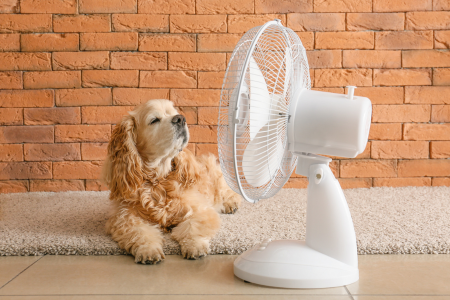
Late-summer heat waves can be just as intense as anything earlier in the season — and pets, who can’t regulate temperature the way humans do, are especially vulnerable during these final hot stretches.
Watch the pavement. If it’s too hot for your hand to hold comfortably on the sidewalk for five seconds, it’s too hot for paws. Early morning or evening walks avoid the worst of the afternoon heat and protect paw pads from burns.
Never leave pets in a parked car. Even with windows cracked, interior temperatures can climb to dangerous levels within minutes — this is one of the most preventable pet emergencies, and simply not worth the risk for any errand.
Provide constant access to water and shade. Multiple water stations (indoors and out) and reliable shade — whether natural or a shade structure — give pets a way to self-regulate throughout the day. Consider freezing broth or wet food in toys or bowls in these areas to help them cool down while staying occupied.
Know the signs of heat stress. Excessive panting, drooling, lethargy, or stumbling can signal heat exhaustion. If you notice these signs, move your pet to a cool area immediately and contact a veterinarian — this isn’t something to wait out.
Adjust exercise expectations. High-energy play sessions that were fine in spring may be too much during peak summer heat. Shorter, cooler-hour walks and indoor play can meet exercise needs without the risk.
Consider a cooling mat or vest for extra-hot days. These simple, inexpensive products can make a real difference for pets that spend time outdoors even briefly during the hottest parts of the day.
A little extra caution during these last hot weeks keeps pets comfortable and safe until temperatures start to ease into fall.


