
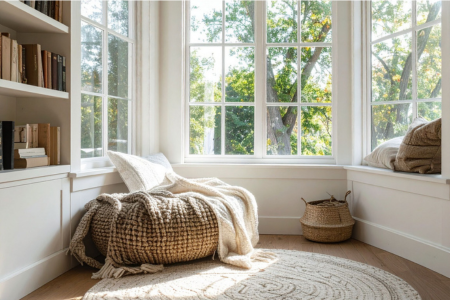
A reading nook doesn’t require a spare room or a major renovation — just a thoughtfully chosen corner, comfortable seating, and good lighting. Whether tucked into a bedroom, a living room corner, or even a widened hallway landing, a well-designed nook becomes one of the most-used spots in a home. It pairs naturally with other simple seasonal design refreshes if you’re already thinking about updating a room.
Here’s how to create one that actually gets used, no matter how much (or how little) space you’re working with.
Find the Right Spot
The best reading nooks take advantage of a space that isn’t otherwise doing much work — an underused corner, the end of a hallway, a spot beneath a window, or even a section of a bedroom that isn’t part of the main walking path.
Natural light matters here more than square footage. A small corner near a window often makes a better nook than a larger space with no natural light source, since good daylight makes the spot feel inviting even before anyone sits down.
Choose Comfortable, Well-Suited Seating
The seating is the heart of any reading nook, and it doesn’t need to be elaborate:
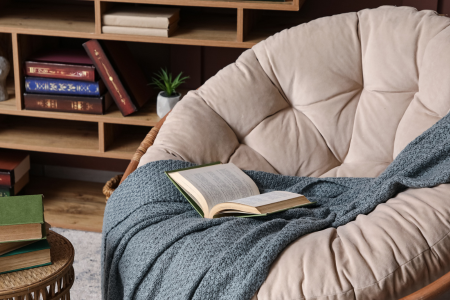
- A single accent chair with a soft throw
- A window seat with supportive cushions
- A papasan or oversized chair for a more relaxed, sink-in feel
- A daybed or chaise if space allows
The key is choosing a piece that’s genuinely comfortable for sitting for extended periods — a beautiful chair that’s uncomfortable after ten minutes won’t get used the way a slightly plainer, truly comfortable one will.
Layer in Soft Textures
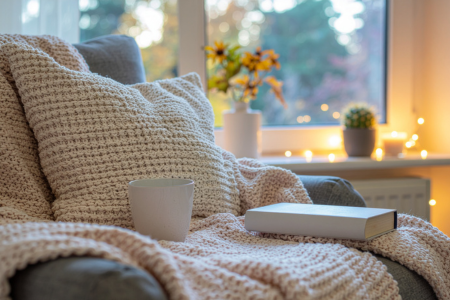
Texture is what makes a nook feel cozy rather than just functional. A chunky knit throw, a couple of supportive pillows, and a soft area rug underfoot all add warmth without requiring much investment. Mixing a few different textures — a woven basket for storage, a knit blanket, a smooth ceramic side table — tends to feel more inviting than an all-matching set.
Get the Lighting Right
Good task lighting is essential for a reading spot, especially as natural light fades in the evening. Layering ambient and task lighting is vital.
A few options:
- A floor lamp positioned just behind or beside the chair, angled to avoid glare
- A wall-mounted swing-arm lamp, which saves floor space in smaller nooks
- A simple table lamp on a nearby side table, paired with a warm (not overly bright or blue-toned) bulb
Layering a warm ambient light source alongside brighter task lighting lets the space feel cozy even when it’s not actively being used for reading.
Add a Small Table for Essentials
A small side table or stool nearby for a cup of tea, a stack of books, or reading glasses makes the space more functional. It doesn’t need to be large — even a small stool or a wall-mounted shelf can serve the purpose without crowding the space.
Making It Work in a Small Space
A reading nook doesn’t require a dedicated room. In smaller homes or apartments, consider:
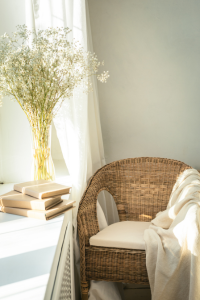
- A corner of the bedroom near a window
- The end of a hallway with a single chair and a wall sconce
- A widened stair landing with a small bench
- Even a closet with the door removed, outfitted with a cushion and shelf — a popular small-space solution for exactly this purpose
The same principles — good light, comfortable seating, soft texture — apply regardless of the space’s size.
A Small Investment With a Big Payoff
A reading nook is one of the lowest-cost, highest-impact updates you can make to a home. It doesn’t require construction or a large budget — just a thoughtful arrangement of furniture, lighting, and texture in a spot that’s currently going unused. Once it’s set up, it tends to become one of the most genuinely enjoyed corners of the whole home.


