
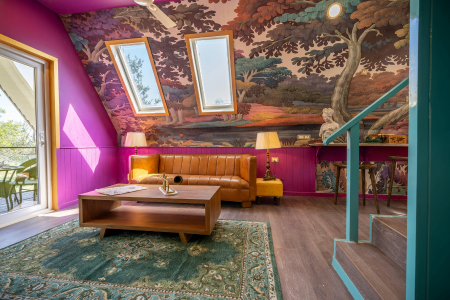
Personalizing your home is fun. Design trends can offer creative ways to express your style, but they can also affect your property’s value if you decide to sell it. When you put it up for sale, the furnishings and decorations you put up could put off potential buyers. Here are some popular themes that, while stylish, might make it harder for house hunters to say “yes” and how to make smart choices to protect your investment.
1. Dopamine Decorations
Partly a reaction to years of minimalist, neutral-heavy interiors, this trend is all about creating a joyful, energizing space. Think of saturated colors like hot pinks and sunny yellows, clashing patterns, and quirky, personal objects on full display. Dopamine decor aims to evoke pleasure or excitement through vibrant style choices.
While it’s great for your mental health, dopamine decor can be overwhelming for buyers. They may walk into a lime green living room and struggle to look past the paint color to see the space’s notable features, like its size and natural light. Most house hunters are looking for a neutral base that they can adapt to their own furniture and style. Some of them may see these bold, hyper-personal choices not as a bonus, but as an immediate cost and effort to “fix.”
2. Trendy and Impractical Cabinetry
Many consider the kitchen the heart of the home, and it’s one of the areas buyers scrutinize most. It can sell a house or be a major dealbreaker. A kitchen with cabinets painted an extremely specific “color of the year” from five years ago can make the entire house outdated. Ultra-modern, handle-less cabinets or ornate, specific hardware can be just as polarizing as color.
For a feature that’s so expensive and difficult to change, a classic style is a safer bet for resale. Shaker kitchen cabinets go well with transitional styles because of their clean lines, making them a great option for many kitchens. Raised panel designs are also an excellent choice, as they bring personality to rustic and traditional kitchens.
3. Outdated Accent Walls
Accent walls offer a low-effort way to add a pop of color or create a focal point. However, they can backfire for resale. An overly saturated accent wall can visually advance, making a room feel smaller and more closed-in than it actually is. It can also dictate furniture placement, especially if it only works with a specific color scheme or furnishing style. Meanwhile, dark shades and patterns can bring energy levels down and evoke feelings of lethargy.
When it’s time to sell your home, ensure all its walls have a cohesive, light, and neutral color. This creates a bright, expansive feel and gives buyers the freedom to imagine their own furniture and decor in the space.
4. Inflexible Custom Built-Ins
It could be a bulky entertainment center built for a 2010-era rear-projection television, an awkward desk squeezed into the corner of a bedroom or a highly specific shelf for a niche collection. Custom furnishings can reduce flexibility. A buyer may want to use that bedroom as a nursery, not an office, or mount a modern flat-screen TV on a different wall. Your custom solution then becomes their custom problem.
A great home design is universal and adaptable. It’s made of spaces that people of all ages and abilities can use easily. An inflexible built-in does the opposite, as it’s typically designed for only one person or purpose.
Designing for Lasting Appeal and Potential
You don’t have to settle for a boring, personality-free house. Be strategic. Choose timeless, neutral options for things that are permanent or expensive to change, such as floors, cabinets, and fixtures. For features that are easy to swap out, let your personality shine. You can go wild with colorful pillows, dramatic curtains, bold artwork, or a trendy area rug. These are the items that make your house a home, and you can take them with you to your next one.


