Realty Executives Midwest
When you put your house on the market, you don’t just want it to sell. You want it to sell fast. But the thing is, nationally, it’s taking a little longer to sell lately. And that slowdown can feel frustrating if you want a fast process. Here’s what you need to realize.
In every market right now, there’s one clear exception:
Well-priced, well-presented homes are still selling, and it’s often faster than you’d expect.
If you can tap into that, you can still set yourself up to move quickly, too. Here’s how to get it done.
According to Realtor.com, homes are selling in about 52 days right now. That’s how long the process takes from the day it hits the market until closing day.
And while that may sound slow to you, it’s not slow. It’s normal.
That’s because it’s pretty much right in line with what it was during the last normal years in the market (see 2018-2019 in the graph below):
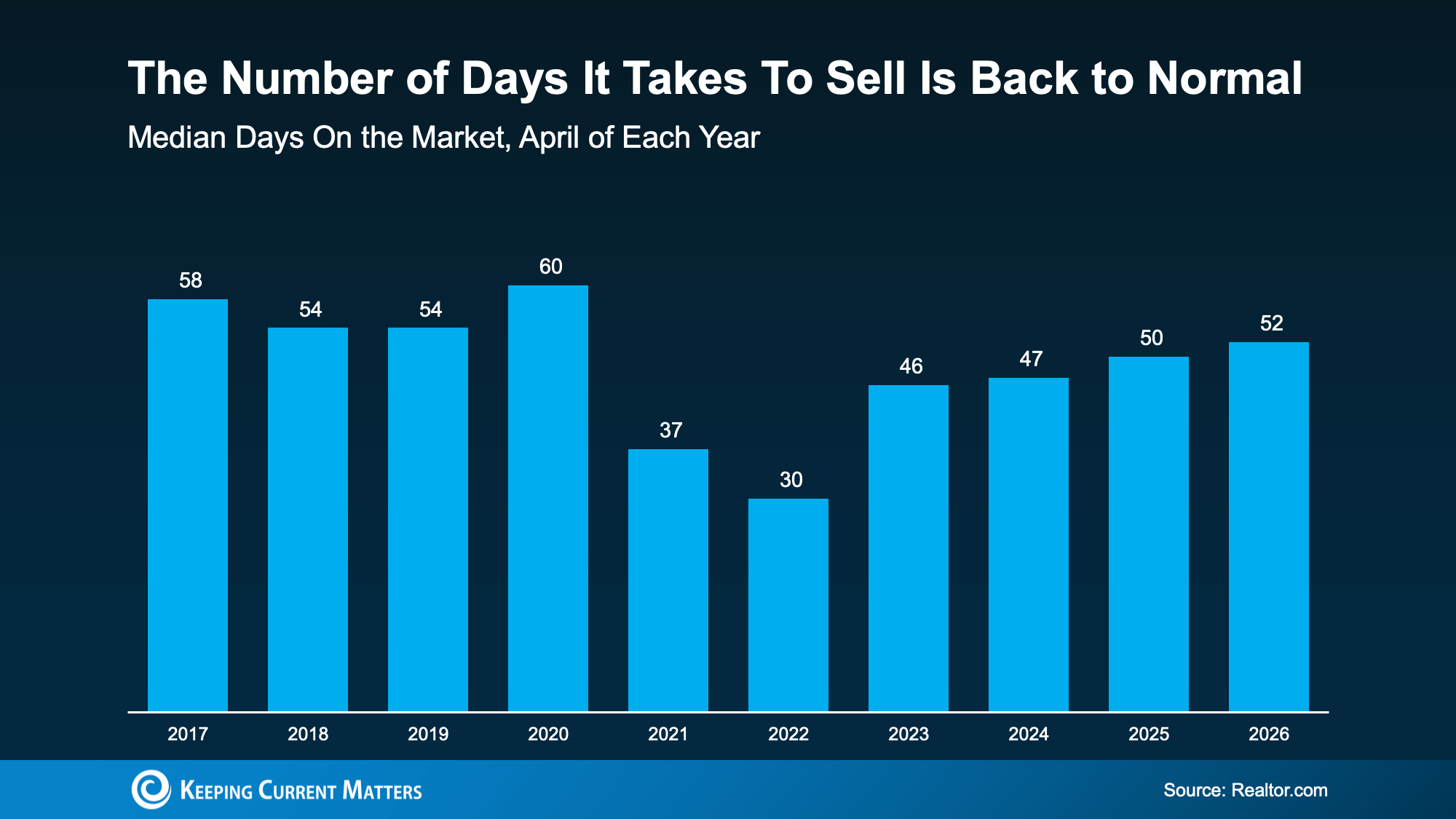 It just feels slow when you’re eager to move – or when you think back a few years to when homes seemed to sell almost instantly.
But here’s what matters most. The market is normalizing. Not at a standstill.
This is the norm for timing from start to finish. You may have an accepted offer in hand even faster than this.
Zillow says the typical home will go “pending” or “under contract” in 19 days. Some homes even see it happen in as little as 7 days. It just depends on where you are – and how you prep your house.
So, don’t let the slowing pace of sales stress you out. Homes can still sell fast, if they’re positioned right.
Just to show you, here’s a quick look at some of the markets that are moving faster than the norm, according to Zillow (see map below). This’ll show you how different it can be based on where you live.
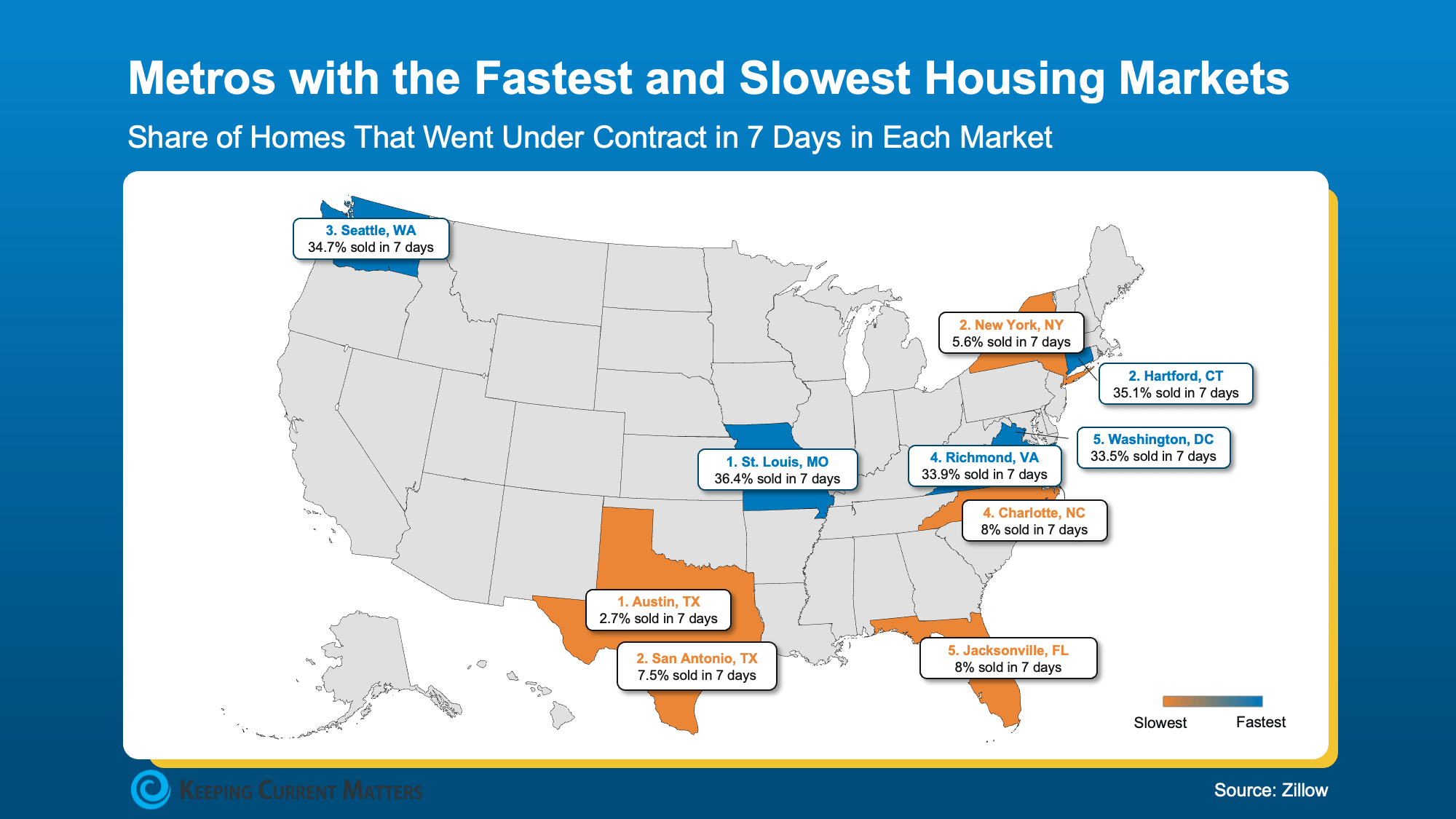 The key things you need to remember when looking at this visual:
So don’t worry about if your state made either list. As Orphe Divounguy, Senior Economist at Zillow, says:
“The cream of the crop is still selling fast, even in markets that have slowed considerably. . .”
And here’s the big secret. While location can definitely play a role, it’s not just about location. It’s about strategy.
Today’s buyers are paying attention to condition. They’re comparing photos, upgrades, layout, location, and price. And they’re choosing homes that feel move-in ready and well worth the value.
The homes that check those boxes? They’re not sitting for long – no matter where they are.
As the Wall Street Journal (WSJ) explains:
“. . . some homes are still flying off the shelves. These houses are often in the Midwest or Northeast, where the lack of new construction keeps a lid on supply. Certain homes in other markets are selling quickly, too, often when a home is move-in ready.”
Because in any market – hot or not – if a home is overpriced, needs too much work, or just doesn’t meet current buyer expectations, it’s not going to sell.
In this market, the sellers who win are the ones who get real about their house. They’re honest about how their home compares to other listings, realistic about price, and they work with an agent who truly understands today’s market and what it takes to sell.
When your agent knows how to price strategically, spotlight the strengths of your home, and move quickly when the market gives clear signals, that’s when the results follow.
Today's housing market rewards the right strategy. Because even in a slower area, the homes that are priced realistically and positioned well are still selling – sometimes faster than you may expect.
Source:Keeping Current Matters
Realty Executives Midwest
1310 Plainfield Rd. Ste 2 | Darien, IL 60561
Office: 630-969-8880
E-Mail: experts@realtyexecutives.com
You may have heard April 12-18 was the “best week” to list your house. That’s based on a report from Realtor.com. But now that it’s passed, you may be wondering if you missed your moment.
Here’s the good news – you didn’t.
Because the reality is, there isn’t just one perfect week to sell your house this Spring. There’s a window. And right now, you’re still in it.
Here’s why. Different organizations run studies like this every year. And they don’t always land on the exact same week. That’s okay. It’s because they’re using different research methods and even different definitions of what “best” means.
But the fact that the results vary points to a larger trend. While there may be sweet spots, the entire Spring season gives sellers an opportunity to get some of the best conditions (and best sales prices) of the year.
And it’s definitely not too late to jump in.
According to Zillow, the best time to list your house this year is the last 2 weeks of May. And that’s approaching fast.
Based on their analysis, this is the ideal time to do it if you want to make top dollar. Because, in this 2-week window, homes sell for more. Sometimes, quite a bit more.
Depending on where you are and the price point in your area, some homeowners may even net tens of thousands of dollars extra in this sweet spot. As Zillow explains:
“Why late spring? Buyer demand typically peaks before Memorial Day. Families want to move during the summer and settle in before the new school year. More buyers shopping at once can spark competition and lift prices.”
And they’re not the only ones saying listing in May could be the key to selling for more. ATTOM Data analyzed almost 52 million home sales over the past 10 years and found sellers in May are achieving some of the highest returns.
That means the ideal window this year is very much still open.
If your goal is to sell for the strongest possible price, this is where timing and strategy come together. And you want to be sure you’re ready to make the most of it.
So, what should you be doing right now?
When prepping for a fast-moving window like this, you don’t want to waste time or money on the wrong prep work. And your agent is your go-to to make sure you’re focusing on the right things.
They’ll be able to tell you if the “best week” is slightly different in your market. And what quick repairs or updates can help you get a higher price, without taking a ton of time or effort.
Here’s a quick example of things an agent may recommend based on information from Redfin:
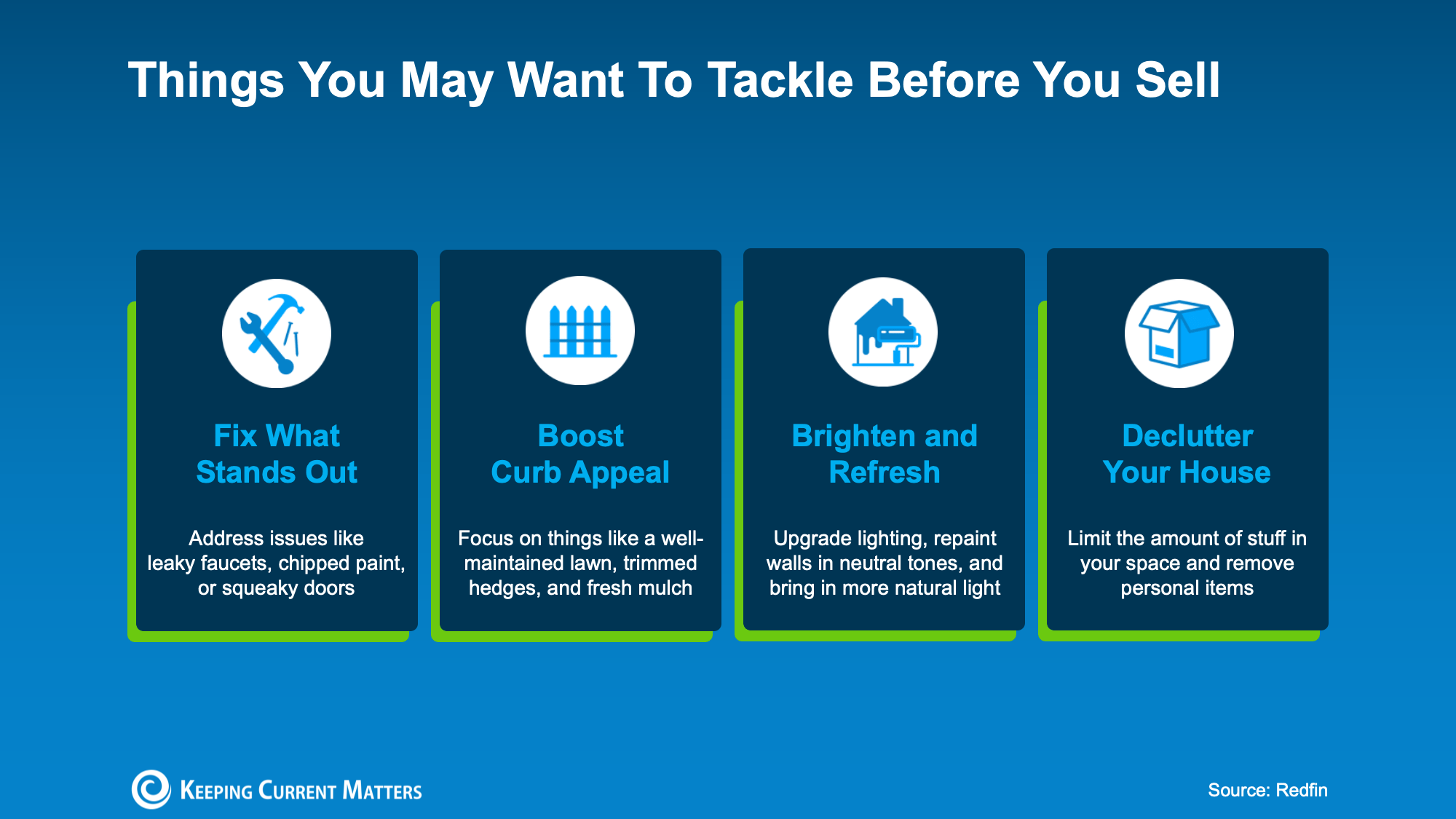 At the end of the day, when your prep time’s short, doing the right things matters more than doing more things.
Zillow says the best time to list your house is just around the corner. Are you ready to make the most of it?
If you want to take advantage of this Spring sweet spot and get top dollar for your house, talk to a local agent about what you need to do now to get ready to hit the market.

There’s a lot of uncertainty right now and that’s leading to some dramatic headlines. And if you’re thinking about buying a home, that can make you feel a little less sure about your decision.
A recent study by CNBC asked homebuyers what they’re most worried about, and three themes kept coming up again and again:
But a lot of what you may be hearing on those is based more on misconceptions. Not facts. So, let’s break it down and separate fact from fiction.
One idea doing its rounds on social is that mortgage rates are going to drop dramatically soon. So, it’s better to wait to buy.
But is that really what’s expected?
While mortgage rates have come down a bit in the last few weeks, forecasts don’t show a major drop ahead. The most likely scenario is that rates stay somewhere in the low 6% range this year.
And that’s not a big change from where rates are now (see graph below):
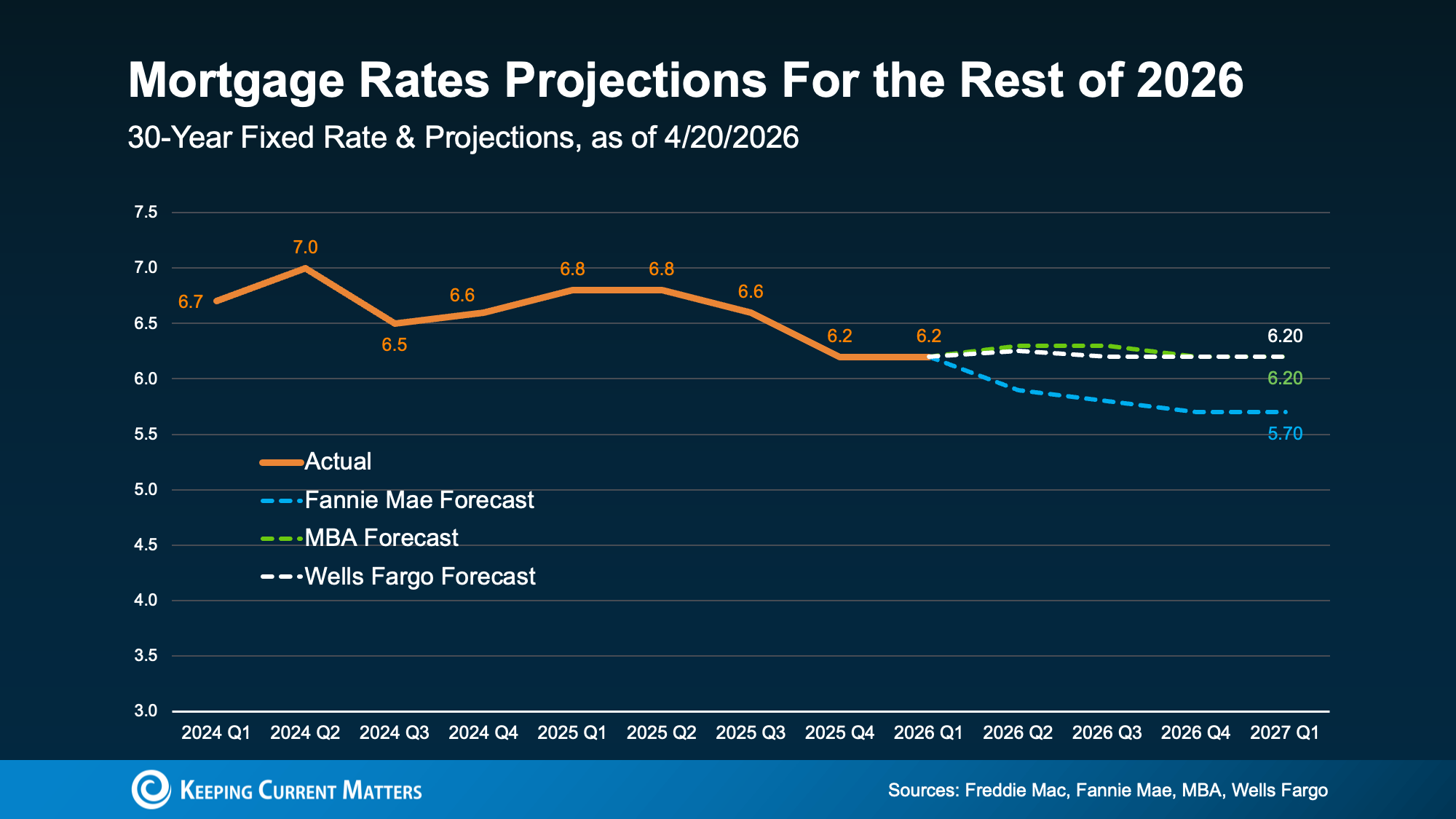 Of course, this depends on where inflation and the economy go from here. But, based on what we know today, waiting for a big drop in rates may not work out the way some people hope. As U.S. News explains:
“Mortgage rates aren’t expected to change much over the next several quarters . . .”
Not to mention, even with rates where they are today, it’s already more affordable than a year ago. So, even if they don’t change much, it’s still better than it was.
You’ve probably heard inventory is up. And nationally, it is. The number of homes for sale is 8% higher than this time last year. But that’s not a bad thing. In fact, it’s one of the reasons buyers have a bit more breathing room right now.
The problem is the headlines are making something good, sound bad. They’re focusing on how this is the most inventory we’ve had since 2019 or how many homes builders are building. And that can make it sound like the number of homes for sale is rising too far, too fast.
But that’s not what the bigger picture shows.
Data from Realtor.com proves that, even though inventory is up compared to last year, it’s still nearly 14% lower than it was during the last normal housing market (2017-2019):
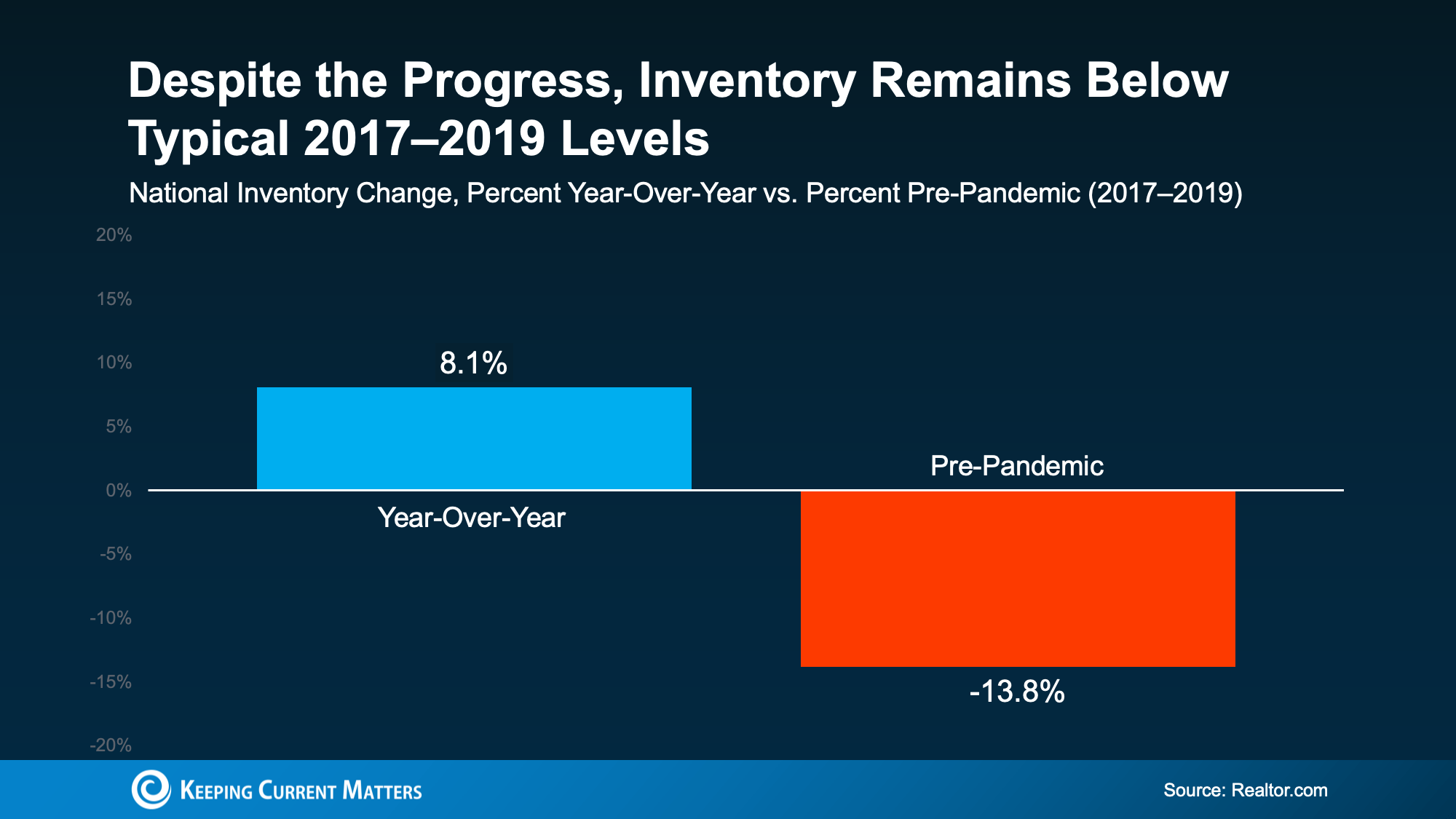 While it can vary a lot based on where you live, only 9 states have more inventory than pre-pandemic today. That’s a key reason why there still aren’t enough homes for sale to trigger something like the crash back in 2008.
You’ve probably seen this one, too. The confusion is coming from the fact that some metros are experiencing slight price declines. And influencers are running with that and saying prices are crashing. But that’s not the reality.
Most areas are seeing prices rise, not fall. And that’s because:
And those are 3 big reasons prices aren’t headed for a crash.
And even in the markets experiencing mild declines, the drops aren’t enough to cancel out the big gains most homeowners have seen in the last 5 years (see graph below):
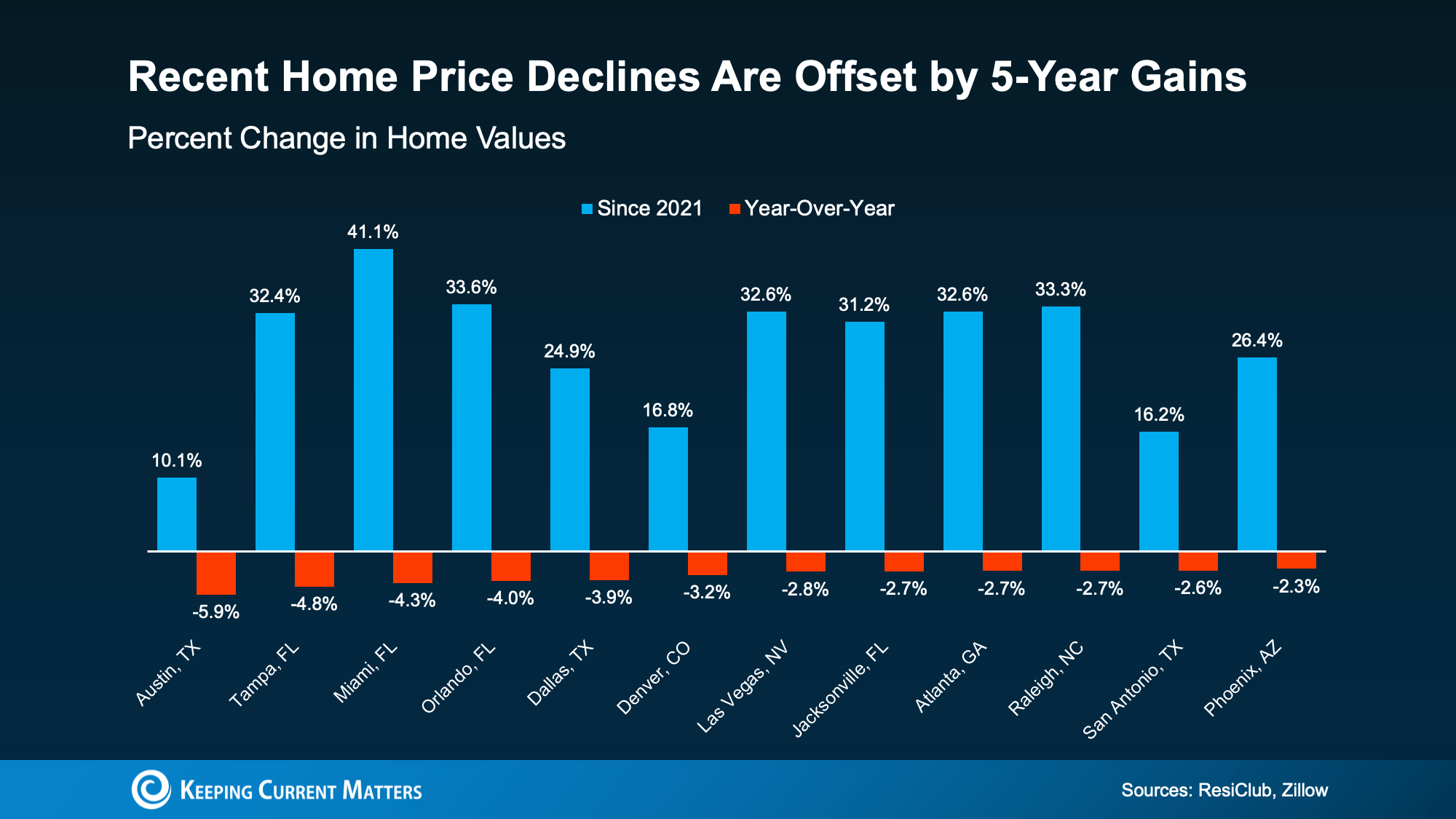 That’s not a crash. That’s just prices moderating after a few record-breaking years.
Online posts are going to make things sound worse than they are. If you want a true, data-bound look at what’s really happening in today’s market, lean on a real estate agent.
Source: Keeping Current Matters
Realty Executives Midwest
1310 Plainfield Rd. Ste 2 | Darien, IL 60561
Office: 630-969-8880
E-Mail: experts@realtyexecutives.com
Whether you own a house, rent an apartment, or are preparing a home to sell, adding a little greenery goes a long way. Plants make spaces feel more alive, more welcoming, and more like home—without requiring a big yard, a green thumb, or a major renovation. You just need a few smart ideas and the right plants for your space.
The good news? You don’t have to overhaul your space to enjoy the benefits of gardening. A few thoughtful choices—where you place a plant, which variety you pick, and how you care for it—can make greenery a natural, easy part of your everyday life.

Indoor gardening is a great starting point for anyone—no experience required. Look around your home for spots that get good natural light during the day. A sunny windowsill is perfect for herbs or small potted plants. Shelves, side tables, and empty corners can all come to life with a simple container or two.

Short on floor space? Think vertical. Wall-mounted planters and tiered stands let you grow multiple plants without taking up any square footage. Hanging planters near a window add visual interest while keeping the room feeling open and airy.
Think about how you use each room and let that guide where plants go. A small plant next to your reading chair creates a calming nook. A bit of greenery near your home office softens the space and can even help you focus. Placement doesn’t have to be complicated, just intentional.
The secret to keeping plants alive? Pick ones that match your actual lifestyle. If you love tending to things daily, go for it. If you’re busy and forget to water, that’s okay too; there’s a plant for that.

Snake plants, pothos, and spider plants are all excellent low-maintenance options that look great and are hard to kill. If you want something functional, herbs like basil, rosemary, and mint thrive on a kitchen windowsill and are ready to use whenever you cook. For a pop of color, compact flowering plants add seasonal charm without a lot of effort.
Remember: consistency beats complexity every time. When plant care is simple, it stops feeling like a chore and starts feeling like something you actually look forward to.
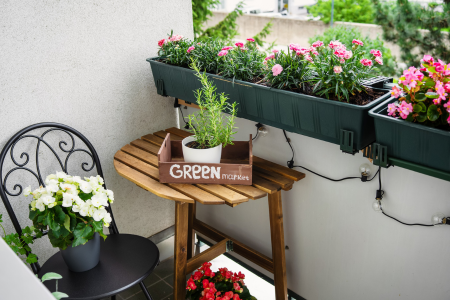
You don’t need a big backyard to enjoy outdoor gardening. A patio, balcony, or front entryway is more than enough. Container gardening lets you turn even the smallest outdoor spot into something beautiful and functional.
Use larger pots for vegetables or bold foliage plants in spots that get good sun. Group containers together for a layered, intentional look that adds real curb appeal. Even a few well-placed pots along a walkway or beside the front door can make a home feel more inviting, which matters whether you’re settling in or getting ready to sell.
One of the best things about container gardening? It’s flexible. Move pots to follow the sun, bring them inside before a frost, or rearrange them whenever you want a fresh look.

The container you choose matters just as much as the plant inside it. Neutral tones—white, gray, terracotta—blend easily with most décor styles. A statement pot in a bold color or interesting texture can become a focal point in its own right.
Pay attention to proportion. A large floor plant anchors an open living area, while a small succulent is perfect for a narrow shelf or windowsill. Mixing heights and textures—a tall leafy plant next to a low trailing one—creates a layered, curated look that feels put-together rather than cluttered.
The goal is for your plants to enhance the room—not overwhelm it. When in doubt, start with one or two pieces and build from there.

The easiest way to keep plants thriving is to build a few simple habits. Water when the top inch of soil feels dry—don’t just go by a schedule. Trim back leggy growth occasionally to keep plants looking their best and encourage new leaves. Make sure pots have drainage and aren’t crowded together, so air can circulate freely.
Give leaves a gentle wipe now and then to remove dust—it helps them absorb light more effectively. Keep an eye out for yellowing leaves or drooping stems, which are usually easy-to-fix signs that a plant needs a little more water, light, or space. None of this takes much time, and it makes a big difference.

Plants do more than look nice, they change how a space feels. Indoor greenery softens hard surfaces, reduces noise, and creates a sense of calm that guests notice immediately. Outdoors, a well-tended container garden makes an entrance feel warm and cared-for from the moment someone walks up.
For buyers and sellers especially, this matters. A home with thriving plants signals that it’s been loved and looked after. That impression sticks—and it doesn’t require a major staging budget, just a little intention. No matter where you live or what stage of homeownership you’re in, there’s a way to bring greenery into your space. Start small, keep it manageable, and let your plant collection grow at its own pace. Over time, you’ll find that a little greenery goes a long way—making your home more comfortable, more personal, and more beautiful every day.
Source: Realty Executives
Realty Executives Midwest
1310 Plainfield Rd. Ste 2 | Darien, IL 60561
Office: 630-969-8880
E-Mail: experts@realtyexecutives.com
Be honest. Have you started looking at homes online yet? If you have, it’s already time to get pre-approved. Because here’s what not enough people know.
If buying a home is on your radar – even if it’s more of a someday plan than a right now plan – you don’t want to wait until later on in the process to tackle this step.
No matter what you’ve heard, pre-approval isn’t about commitment. It’s about clarity.
And here are the two big ways pre-approval sets you up for success.
During the pre-approval process, a lender will walk through your finances and tell you what you can borrow based on your income, debts, credit score, and more. And once you have that number, your search becomes a lot more focused.
With a mortgage pre-approval, you know what you can borrow, so it’s easier to figure out your ideal price point, and what you can actually afford. And that clarity is key.
Because if you just start browsing online and just guess at your price point, you run the risk of falling for a house that’s outside of your price range – or missing out on ones that aren’t.
You want this number to be clearly defined before your search. Here’s why.
This is how a lot of home searches go today. You scroll through listings just to see what’s out there, and then it happens. You fall in love with something you’ve seen online.
If you’re already pre-approved? You’re probably in great shape.
But if you’re not…
Instead of being able to jump on that house and quickly make an offer, you have to scramble to get a lender, gather the financial documents, and then submit the necessary pre-approval paperwork first. And while you’re waiting to hear back from your lender, someone else who’s more prepared could beat you to the house. As Bankrate explains:
“The best time to get a mortgage preapproval is before you start looking for a home. If you find a home you love but don’t have a preapproval in hand, you likely won’t have time to get preapproved before you need to make an offer . . .”
And that’s avoidable, with the right prep.
Because while you can’t control when the right home shows up, you can be ready for it. Think of it like showing up to the starting line with your shoes tied and your warm-up done – while everyone else is still looking for parking.
It’s not about rushing your timeline. It’s about removing the delay between finding the right home and being able to move on it.
Speaking of timing, pre-approvals do have an expiration date. So, be sure to ask your lender how long it’s good for. The Mortgage Reports explains:
“Mortgage preapproval letters are typically valid for anywhere from 30 to 90 days. However, a preapproval can be updated and extended if the lender re-checks your information.”
Doing the right prep and knowing this information can make the whole process a lot smoother.
You don’t have to be ready to buy to be ready to buy.
Getting pre-approved doesn’t mean you’re committing to buy right now. It just means you’ve taken a step to understand your numbers. And when a home catches your attention, you’re prepped and good to go.
Ask yourself this: if your perfect home popped up tomorrow, would you be ready to make a move?
If the answer is no and you want to buy, it may be time to get pre-approved. You don’t feel behind before your search even officially kicks off.
Source: Keeping Current Matters
Realty Executives Midwest
1310 Plainfield Rd. Ste 2 | Darien, IL 60561
Office: 630-969-8880
E-Mail: experts@realtyexecutives.com
Realty Executives agents are real estate experts. They have the education and expertise you need to navigate through the process of buying or selling a home. From listing at the right price to making the best offer, our Executives have witnessed the best - and most regrettable - decisions homeowners and homebuyers can make. Every day, they are immersed in every aspect of real estate that includes comparable home price analysis, property surveys, credit reports, open houses, HOA agreements, lenders, title companies, homeowners’ insurance, walk-throughs, terms of sale or purchase, repairs, concessions and closing documents. Let our accomplished Executives help navigate you through the process of buying or selling a home.