Realty Executives Midwest

While the Spring season consistently offers up some of the best conditions for home sellers, Realtor.com says there’s one window where the stars really seem to align year after year. And it’s coming up fast.
Based on their analysis of historical trends, the ideal week to put your house on the market this year is: April 12–18.
And here’s why this window stands out as being particularly seller-friendly:
And what seller doesn’t want more eyes on their house, getting an offer in hand sooner (rather than later), and their best shot at selling for top dollar?
If you’re already thinking about selling and you want to take advantage of this sweet spot, your next step is shockingly simple. Just talk to a local agent.
Their expertise on your area is going to be key over the next few weeks. Because these trends are going to vary by state, city, and even neighborhood. And your agent will use that insider knowledge to help you figure out what you need to do now to get your house ready. Including:
For some sellers, that’s a few easy fixes they can knock out in the next couple of weeks. A fresh coat of paint. Some new mulch. Or some light Spring cleaning.
For others, it’s worth taking another month or so to make some minor updates before listing. And that’s okay. Because while this mid-April window may give sellers an advantage, it’s not your only opportunity to sell.
Zillow says the best time to list is in May. And that means the golden window for sellers isn’t closing after this one week. It’s open all season long.
Getting your house on the market in mid-April may give you an extra edge, but the bigger opportunity is the Spring season as a whole.
Source:Keeping Current Matters
Realty Executives Midwest
1310 Plainfield Rd. Ste 2 | Darien, IL 60561
Office: 630-969-8880
E-Mail: experts@realtyexecutives.com

Buying your first home is exciting, but it can also be a little nerve-wrecking because it’s something you’ve never done before. And trying to think of everything you need to do can feel like a lot. But here’s the key.
You don’t have to figure everything out on your own. And you don’t have to do it all at once. Just tackle it one thing at a time.
Here’s a simple list of 3 main things you should focus on to help you get started.
Buying a home is a team sport. And having the right professionals by your side can make a world of difference. Here’s who you need to find:
This is what determines what you can afford, how competitive you’ll be, and how confident you’ll feel when it’s time to make an offer. Here’s how to get ready:
When you’re officially ready to kick off the buying process, lenders are going to need to verify your income, assets, and financial history. Having these documents ready-to-go upfront can speed up the process and reduce back-and-forth. Here’s what Bankrate says you need to prep:
Note: the exact time frames and list of documents may vary lender to lender. This is just a general rule of thumb to help you get the ball rolling.
Buying your first home doesn’t mean you have to have everything figured out. It just requires a plan.
If you start with your finances, organize your documents, and surround yourself with the right people, you’ll be in great shape when the time comes to make a move.
Source: Keeping Current Matters
Realty Executives Midwest
1310 Plainfield Rd. Ste 2 | Darien, IL 60561
Office: 630-969-8880
E-Mail: experts@realtyexecutives.com
Low-maintenance living is about designing a home that works with your daily life instead of adding to your to-do list. Thoughtful choices, like durable materials and smart layouts, can reduce the time and effort spent on upkeep, freeing you to focus on what matters most.
In this article, we’ll explore practical ways to design the interior and exterior of your home for easier care, so you can make everyday living simpler and more manageable.
One of the simplest ways to reduce ongoing maintenance is to start with materials that are built to last and easy to clean. Surfaces that resist stains, scratches, and everyday wear help keep your home looking good with less effort. Consider these options:
Homes with clean, minimal designs tend to be easier to clean and organize because there are fewer corners, transitions, and tight spaces where dust and clutter collect.
A neutral color palette can also help spaces feel cohesive and hide everyday wear better than bold or highly contrasting colors. When paired with simple and consistent finishes, it creates a home that looks pulled together without constant adjusting or redecorating.
Thoughtful placement of spaces can help make daily routines easier, too. Mudrooms or drop zones near entrances help contain shoes, bags, and coats. Locating the laundry room close to bedrooms shortens chores, while an open layout improves flow and reduces the number of walls, doors, and surfaces that need regular attention.
There isn’t a better way to make your home easier to maintain than to have good storage to keep everything out of sight and off the floor, especially if it is planned according to how you use the space. Here are some common storage fixes to consider:
Low-maintenance living extends beyond the walls of your home. Outdoor spaces designed around your climate and lifestyle can reduce ongoing work while still looking polished and inviting. Consider these tips:
These low-maintenance landscaping ideas can help you create a yard that looks great without demanding constant maintenance and attention.
Fixtures and finishes may seem like minute details, but they play a significant role in how much time you spend cleaning your home. Low-maintenance choices include:
Keeping up with daily home tasks can quietly take up more time than we realize. Smart home technology helps lighten that load by managing routine adjustments automatically, so you don’t have to think about them as often.
Programmable thermostats and whole-home humidity control systems help maintain comfortable indoor conditions without manual adjustments; robotic vacuums and automatic blinds take care of everyday cleaning and light management; and security cameras reduce the need for extra trips to check on the home. The possibilities are endless.
Durable exterior features reduce the need for frequent repairs, repainting, or seasonal upkeep. The choices below will withstand weather and wear while minimizing the time and effort spent maintaining them:
Homes that are easier to care for free up time, reduce daily stress, and make it easier to enjoy the space you’ve invested in. These same design decisions can also add long-term value. Durable materials, efficient layouts, and low-maintenance features are attractive to buyers and help protect a property’s condition over time. So, whether you’re planning to stay put or thinking ahead to resale, designing a home that’s easy to care for is an investment in your lifestyle and your home’s future.

Homeowners looking to sell usually want three things: plenty of interested buyers, strong offers, and a short timeline. Spring is the season that most often delivers all three.
So, if a move has been on your mind this year, this is the window where momentum tends to work in your favor. Here’s what makes this season so powerful for sellers.
Typically speaking, in the housing market, there’s no more popular time to move than the Spring. Historically, data coming out of ShowingTime proves that’s when buyer activity peaks each year. Take a look for yourself (see graph below):
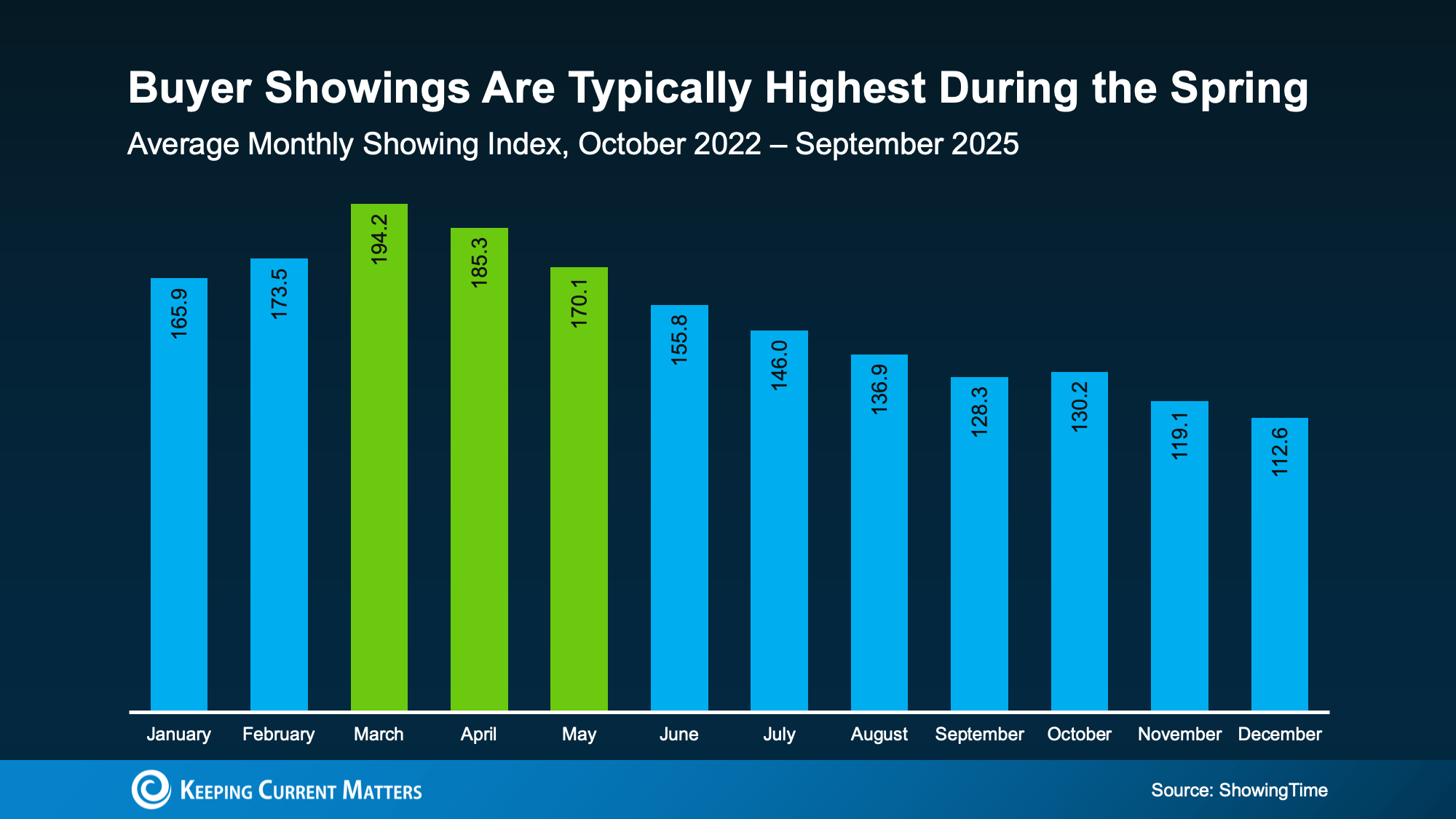 And this year, there’s more than just the seasonal trend working in your favor. Mortgage rates are also sitting near 3-year lows – and that combination matters.
More buyers + improving affordability = more eyes on your house.
That doesn’t mean the market will return to the frenzy of the pandemic – far from it. But it does mean more buyers will be ready to re-enter the market. And that’s good for you. As Redfin says:
“Homebuying demand is improving . . . and mortgage-purchase applications are sitting near their highest level in three years. . .”
You should make sure your house is listed so you can take advantage of the uptick in demand. Because more activity means one thing: more opportunity to get a deal done.
With more buyer demand, it makes sense that you may get more offers on your house. And history shows that’s usually true.
If we look at the data for the last three years from the National Association of Realtors (NAR), and take the averages for each month, it’s clear sellers in the Spring get more offers (see graph below):
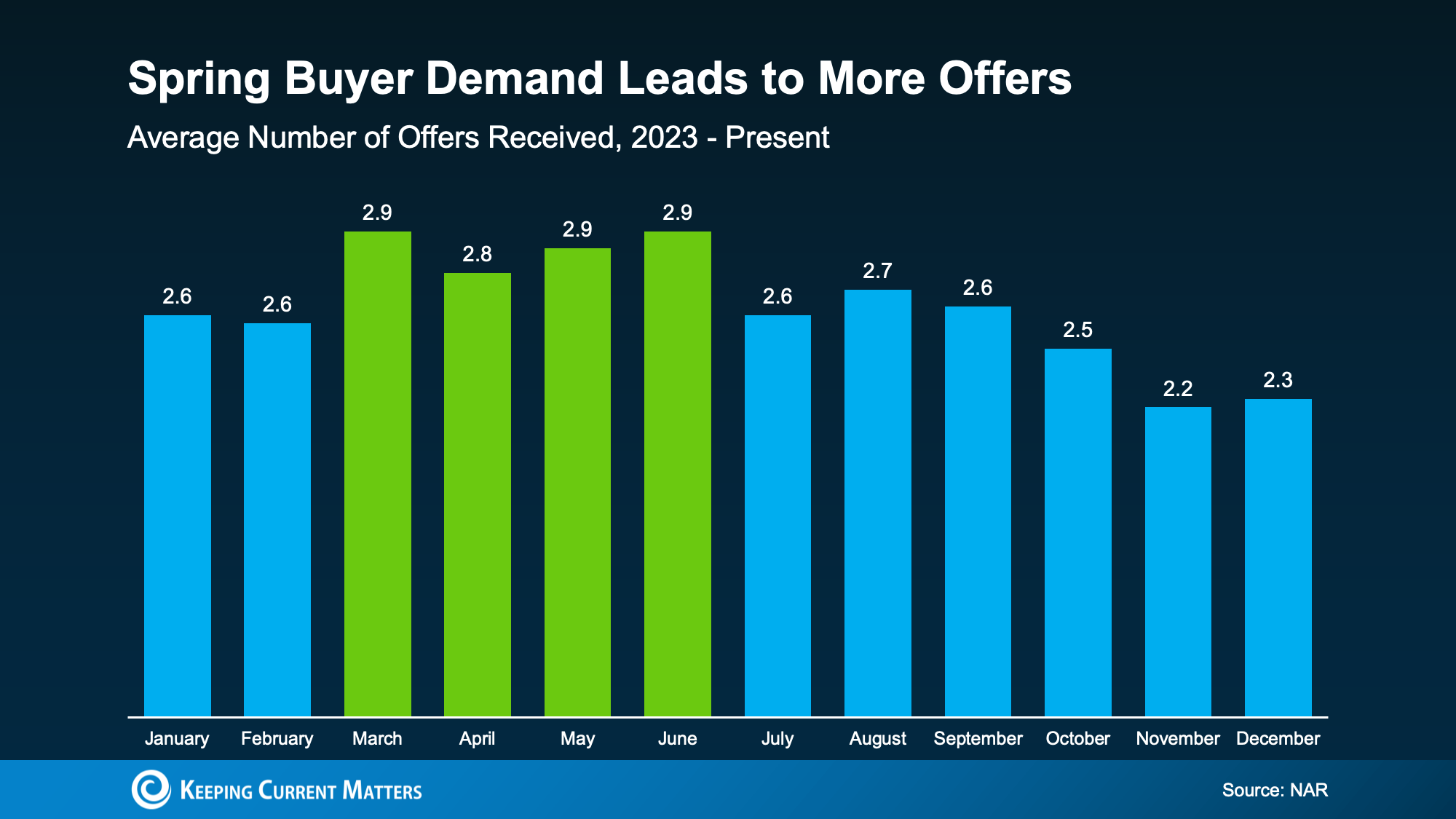 Now, don’t expect the excessive bidding wars that were so famous in 2020 and 2021. But it does mean, seasonality could help you out this Spring. As Realtor.com explains:
“Spring typically brings out more buyers who are ready to make a move before summer. Listings see more views, showings, and offers during this season.”
And that could be really good for your bottom line.
There’s one more predictable pattern that happens pretty much every Spring based on research from Realtor.com. Homes sell faster (see graph below):
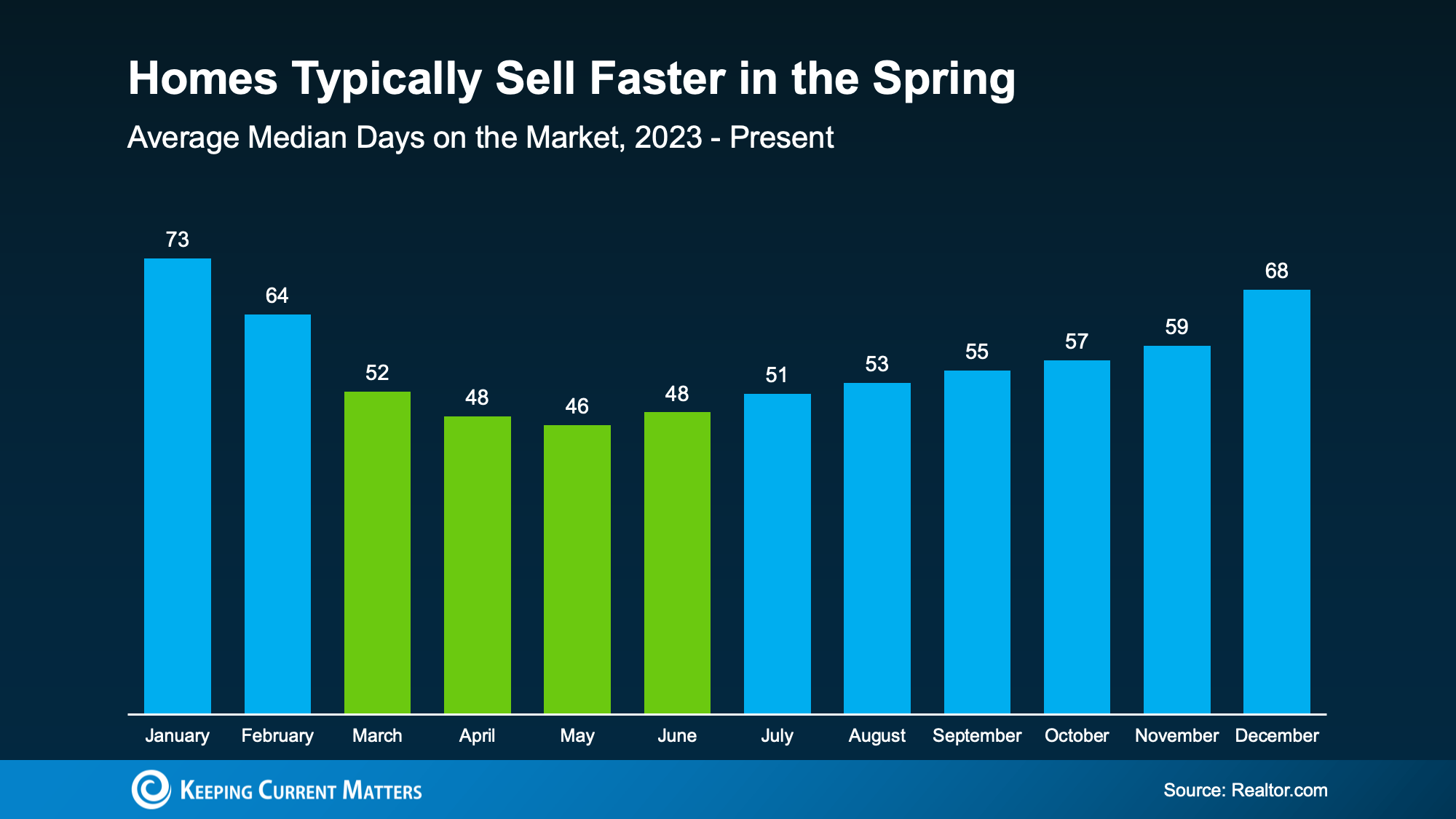 On average, homes sell 20 days faster in the Spring compared to the Winter. That’s almost 3 weeks shaved off your timeline. And that’s a difference you can feel.
Since homes have been taking longer to sell lately, listing your house during what’s usually the most active time of the year means you’re setting yourself up to move as quickly as possible. And isn’t that what sellers really want?
The faster your home sells, the earlier you can move on to what’s next for you.
If you’re eager to go on to your next chapter, need to downsize, or you’ve run out of space, Spring may be your best time to sell.
Spring doesn’t guarantee a sale. Strategy still matters. But this season gives you something valuable: momentum.
Source: Keeping Current Matters
Realty Executives Midwest
1310 Plainfield Rd. Ste 2 | Darien, IL 60561
Office: 630-969-8880
E-Mail: experts@realtyexecutives.com
What if you didn’t have a mortgage payment on your next house? It may sound a little unrealistic. But for a number of homeowners, it’s actually doable.
Nearly 3 in 10 homes purchased today are bought in cash, according to the National Association of Realtors (NAR). That’s far more than the pre-pandemic norm (see graph below):
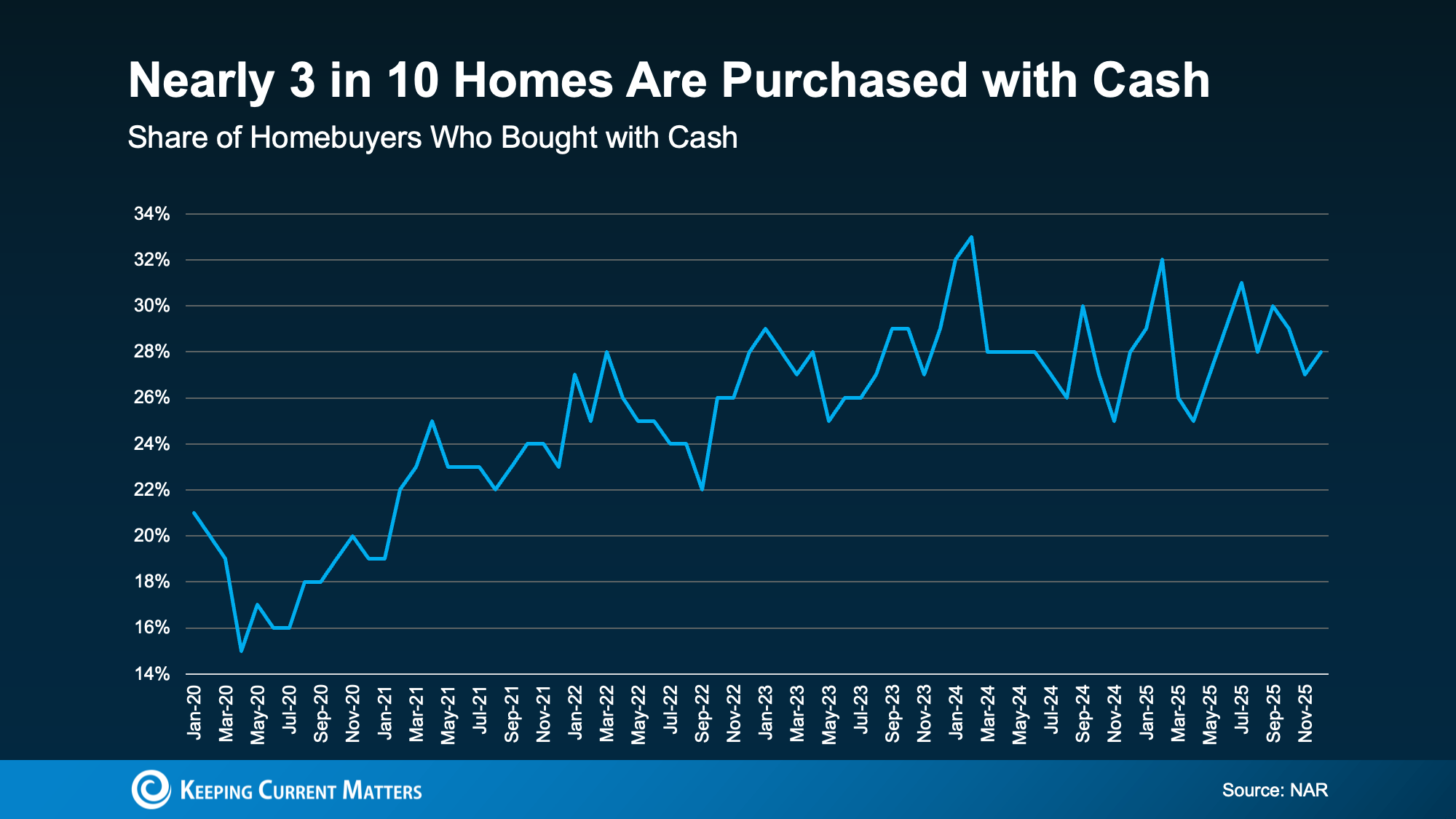 So, how are so many buyers pulling that off? The answer is simple: home equity.
Back in 2020-2021, mortgage rates and the number of homes for sale were both at all-time lows. And that combination pushed home prices up, fast.
If you owned a home during that time, it likely gained significant value – maybe even enough to buy your next house in cash. NAR explains:
“. . . rising home equity has armed many existing homeowners with the financial leverage to make cash offers, allowing them to convert years of price appreciation into immediate purchasing power.”
Here’s why you may want to go that route yourself, if you have enough equity to do it.
Sellers value certainty. And an all-cash offer removes one of the biggest unknowns in a transaction: financing. As Rocket Mortgage explains:
“Cash offers are attractive to sellers. Sellers often prefer to work with cash buyers if they can because they don’t have to worry about a buyer’s financing falling through at the last minute.”
In many markets, an all-cash offer can give you a serious edge.
And since you don’t have to worry about underwriting, lender approvals, and loan processing, the time it takes to close shrinks. Cotality puts it this way:
“Cash buyers have always enjoyed an edge over borrowers. They remove financing risk, reduce delays, and often close in days rather than weeks.”
If the owner of the house you’re buying is already under contract on their next home or they just need to move fast (like for a new job), that speed is a real draw.
When you buy in cash, you don’t have to finance your purchase. That means you don’t have to worry about what today’s mortgage rates are and you own the house outright from the day you close. And that’s a big deal.
No mortgage.
No monthly payment.
Full ownership.
That financial freedom opens the door for other big lifestyle benefits. Zillow explains:
“Paying in cash means you own your home outright. This eliminates the need for monthly mortgage payments, freeing up your finances for other priorities like savings, travel, or home improvements.”
And here’s one more thing that surprises a lot of homeowners: cash buyers often pay less for the house.
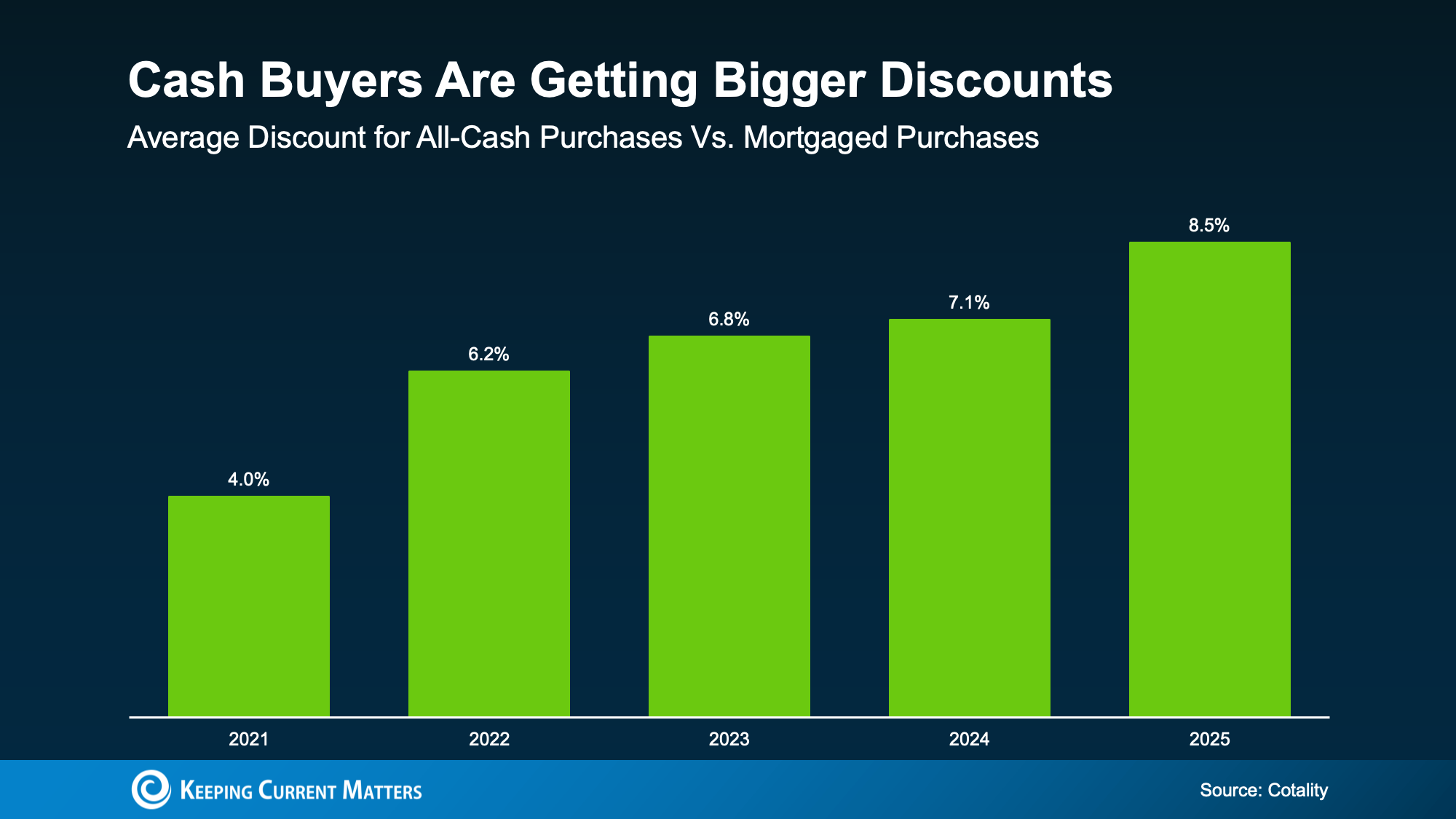
According to Cotality, all-cash buyers tend to spend roughly 9% less on the house than buyers who use a mortgage. That’s because some sellers are willing to accept lower offers to get a deal done quickly, with more certainty of closing, and fewer financing hoops to jump through. As Cotality explains:
“From a seller’s point of view, a lower but reliable offer can feel preferable to a higher one that may collapse weeks later.”
And that advantage grows with each passing year (see graph below):
 Is an All-Cash Move Realistic for You?
Not every homeowner will buy their next house outright in cash. And that’s okay.
But the bigger takeaway is this: the equity you’ve built may give you more options than you think.
Whether that means downsizing and eliminating a mortgage entirely, or just relocating with stronger negotiating power, your current house may be what makes it possible.
Before assuming you’ll need another traditional mortgage, it’s worth asking one simple question: How much equity do you really have? Because the answer might change what you thought your next move could look like.
Curious what your home equity could do for you? Ask a local real estate agent to run the numbers and see what kind of buying power you’re really sitting on.
Realty Executives agents are real estate experts. They have the education and expertise you need to navigate through the process of buying or selling a home. From listing at the right price to making the best offer, our Executives have witnessed the best - and most regrettable - decisions homeowners and homebuyers can make. Every day, they are immersed in every aspect of real estate that includes comparable home price analysis, property surveys, credit reports, open houses, HOA agreements, lenders, title companies, homeowners’ insurance, walk-throughs, terms of sale or purchase, repairs, concessions and closing documents. Let our accomplished Executives help navigate you through the process of buying or selling a home.