Realty Executives Midwest
On Tuesday, April 23, 2019, the Rotary Club of Darien held their annual “Taste of Route 66” fundraiser benefiting their “Food for Kids Program” which provides nutritional meals to food-insecure school children on weekends during the school year. This supports the child's nutritional, mental, and well-being needs, so they can focus on learning.
Joan Wayman, Darien resident and real estate Broker with Realty Executives Midwest in Darien, takes a huge part in organizing this event, along with others throughout the year. This year, the Darien Rotary team raised over $31,000 during the “Taste of Route 66” event, all of which will be donated to the program and serve a HUGE part in helping continue the ongoing efforts of the “Food for Kids Program”.
Jana Pinc, Managing Broker/Owner of Realty Executives Midwest, was also in attendance and stated, “I am so happy to be able to contribute to this very important cause. I feel humbled by Joan's efforts, and would like to applaud her and the rest of our team who showed their support this evening. As always, we’re grateful be able to take part in local fundraisers because we feel honored to give back to all of those in the community that support us with their business."
While this event is their biggest of the year, the Rotary Club of Darien is regularly involved with the “Food for Kids Program” because it requires a weekly commitment in order to succeed. Every week, volunteers get together in order to pack lunches for the kids. If you’re interested in participating, feel free to reach out to Joan Wayman directly.
It’s your yard — yours to do with as you wish. And while that’s great, that doesn’t mean you have to be one of those people who spends every spare moment in their yard, sprucing it up. But, still, your landscaping could use a little something. But something easy.
Here are five totally doable projects that your budget will barely notice, but your neighbors definitely will:
1.) Add Some (Tough) Edging
Tell your grass who’s boss with edging that can stand up to even the crabbiest of all crabgrasses. But don’t make the mistake that many homeowners make of buying the flexible plastic stuff, thinking it will be easier to install. It’ll look cheap and amateurish from day one.Worse, it won’t last. And before you know it, you won’t be able to tell where your garden bed ends and your “lawn” begins.
Instead buy the more rigid, tough stuff in either fiberglass, aluminum, or steel.
Tips on installing edging:
2.) Create a Focal Point with a Berm
A berm is a mound of gently sloping earth, often created to help with drainage. You can also build them to create “island beds,” a focal point of textures and colors that are so much more interesting than plain ol’ green grass.Plus, they’ll give you privacy — and diffuse street noises. What’s not to like about that? Especially if you live in more urban areas. For most yards, berms should max out at 2-feet high because of the space needed to properly build one. They need a ratio of 4-6 feet of width for every foot of height. That’s at least 8 feet for a typical 2-foot high berm. So be sure you have the room, or decrease the height of your berm.
Popular berm plantings include:
3.) Make a Flagstone Wall
Aim to build a wall no more than 12 inches tall, and it becomes a super simple DIY project — no mortar needed at all!
How to build an easy flagstone wall:
Choose a stone of consistent thickness. Flagstone might be limestone, sandstone, shale — any rock that splits into slabs.
4.) Install a Path with Flagstone or Gravel
There’s something romantic, charming, and simply welcoming about a meandering pathway to your front door or back garden — which means it has super-huge impact when it comes to your home’s curb appeal. You can use flagstone, pea gravel, decomposed or crushed granite, even poured concrete (although that’s not easy to DIY).
A few tips for building a pathway:
5.) Build a Tree Surround
Installing a masonry surround for a tree is a two-fer project: It looks great, and it means you’ve got less to mow. Come to think of it, it’s a three-fer. It can work as extra seating when you have your lawn party, too! All it takes is digging a circular trench, adding some sand, and installing brick, cement blocks, or stone. Just go for whatever look you like best.
The trickiest part is getting an even circle around the tree. Here’s how:
Set your spade inside the loop with the handle plumb — straight up and down. Now, as you move around the tree, the loop of rope keeps the spade exactly the same distance from the base of the tree, creating a nice circle.
Then build the tree surround:
Article Source: Houselogic
Realty Executives Midwest
1310 Plainfield Rd. Ste 2 | Darien, IL 60561
Office: 630-969-8880
E-Mail: experts@realtyexecutives.com
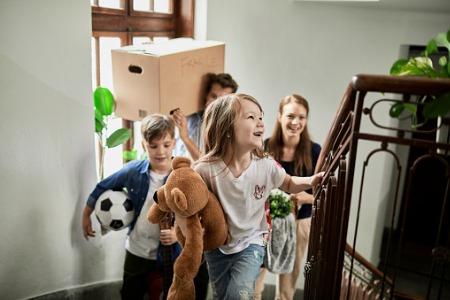
Packing your kids’ stuff for a move may be in some ways a little bit trickier than packing your own. Unlike you, your children have more than clothes, and accessories – they also have toys in all shapes and sizes.
Kids’ rooms and playrooms are usually piled high with toys, storybooks, and just about anything that triggers their creativity. And while “picking up toys” is in their daily chore charts, it may take more than that to keep these things organized especially when you’re in the process of moving houses.
Just in case you need more help; we came up with a few tips on how to keep your little ones’ precious (and forgotten) toys organized during the moving process.
Ask your kids to help
Children love being treated like adults. They like to feel needed and are almost always keen on helping out. Organizing toys is something your kids can do, and you sure can use the help from several small hands.
Sort the toys into piles or boxes
Sorting their toys is an essential step in the process. Besides, you don’t want to bring all those toys to your new house, do you?
Your kids have probably outgrown most of them anyway. What you should do is take two boxes: one for the toys your kids want to keep and the other for the ones they don’t want or play with anymore. Leave the sorting to your kids. Don’t worry; they’ll manage.
You might also want a separate box for your kids’ favorite toys. They’ll probably want to take those with them on moving day.
Categorize the ones you’re keeping
When your kids have finally decided which toys they’re taking with them, subdivide them again into groups. Maybe a group for arts and crafts supplies, another for board games, one more for dolls and stuffed toys, and so on. You may end up with a bunch of “uncategorized” toys, but this is expected. Just put the odd ones in one container.
Place the toys in separate containers and label them.
After categorizing the toys, place them in boxes or storage bins and label them accordingly. Labels make finding stuff so much easier; you and your kids can benefit from this especially when things are lost in a maze of moving boxes and containers.
Here’s an idea: Have your kids create and stick the labels themselves. It might be just another random task for adults, but your kids will think its super fun!
Consider donating
The moving process can also be an excellent chance to teach your kids the value of sharing and giving to the community. Remember those toys they tossed in the “unwanted” pile? They can find a new home in the arms of children not as fortunate as they are. Your local charity will be more than glad to make the pick-up.
We hope these few, simple tips help ease the stress and make the transition more convenient for you and your family. Happy moving!
Realty Executives Midwest
1310 Plainfield Rd. Ste 2 | Darien, IL 60561
Office: 630-969-8880
E-Mail: experts@realtyexecutives.com
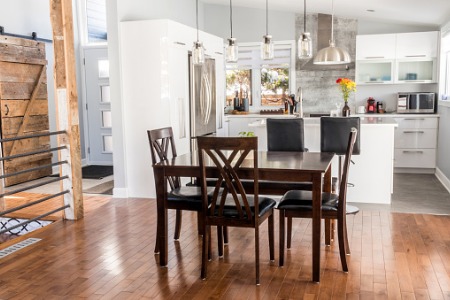
It’s nothing new that home staging is a wise move. After all, it has the potential to increase the final sales price of your home by 6 to 20 percent. But what you may not realize is that it doesn’t have to cost an arm and a leg to do it. After all, who needs more expenses when you’re moving? If you’re short on cash but want to speed up your home sale and possibly increase that final dollar amount, here are some budget-friendly home staging tips.
Declutter
The first step to home staging is about as budget-friendly as you can get — because it’s free. Donate or trash items such as clothes, extra furniture, books and knick-knacks – anything that’s not being used or that you no longer need. Go through the pantry and donate canned goods to a local food drive. Sift through piles of random papers and shred and recycle what you don’t need.
Hold a pre-moving sale
Hold a garage sale to get rid of what you won’t be taking with you when you move. Not only will you declutter, you’ll also make some extra cash for other home upgrades. Don’t feel like doing a traditional yard sale? Download OfferUp or another buy-and-sell marketplace app to sell your items.
Borrow from friends
A good rule of thumb with home staging is to furnish and stage every room in your home so that no room is left empty. To save costs, you can borrow furniture from friends and family, or you could split up the furniture in other rooms of your home to round out the less furnished rooms. Borrow the treadmill your sister no longer uses and the weight lifting bench in the garage to transform an empty bedroom into a home gym, or add a desk and cabinet to your guest room to help buyers envision both a guest room or home office in that space.
Consider portable storage
After getting rid of the items you no longer want, it’s time to empty your home of excess furniture items, quirky art, and any personal items that may be distracting to buyers. A portable storage container is a popular cost-effective option because it conveniently combines moving and storage.
Here’s how it works: A driver delivers your storage container to your home to fill at your leisure. Once you’ve loaded the items you’re storing, the driver picks up the container and takes it to a nearby storage facility. When your home is sold, have your container re-delivered to your door, fill it with the rest of your stuff, and ta-da! You’re all ready to move. Some portable storage providers can move your container long-distance. For instance, PODS can move your container to your new home even if it’s across the country, in Hawaii, or in some parts of Canada. A solution such as this that combines moving and storage can help reduce the costs of moving by eliminating the need to rent a storage unit or moving trucks multiple times. Moving long-distance with a container can also be significantly less expensive than using a traditional full-service moving company.
Grab your paint brush
Want to transform your home cheaply? Painting gives you the best bang for your buck if you if you’re looking to give your place a makeover. Light, neutral colors are great for staging. If you’re really tight on cash, opt for touch-ups or pick key walls in high-traffic areas to repaint.
Make tiny upgrades that make a big difference
Make your home feel fresh and new on the cheap with some inexpensive updates to hardware, lighting, and faucets. Even new outlet plate covers, vent covers, and kitchen cabinet hardware can give your place a facelift. You don’t even need to buy anything fancy – just shiny and new.
Decorate on a budget
Some simple décor updates can have a surprisingly effective impact on the way buyers view your home. Replace your old, boldly colored shower curtain with a cheap but tasteful curtain. Cover up stained or old couches and chairs with affordable slipcovers. Add some homey cushions to the living room. Just remember to keep things neutral – it’s not the time to express your unique personality! Save that for your new home.
While redoing your flooring or putting in new kitchen cabinets would be ideal, it doesn’t have to take much money to give your home a makeover and make it appealing to buyers. With a little time and creativity, you can turn your soon-to-be-sold home into a beautiful space and have some fun while you’re at it. Good luck with your move!
Article Source: Realty Executives International, Written by PODS
Realty Executives Midwest
1310 Plainfield Rd. Ste 2 | Darien, IL 60561
Office: 630-969-8880
E-Mail: experts@realtyexecutives.com
Most sellers expect their real estate agent to hold at least one open house while their house is on the market. But are open houses really necessary? Do open houses really sell homes?
Let’s look at the pros and cons of open houses so you can decide for yourself if an open house should be part of your marketing plan.
Pros:
Exposure
Holding an open house provides exposure for your listing. Your real estate agent will advertise the open house on real estate websites, on social media, in industry networks, and perhaps even in print. This advertisement gets more eyes on your listing. And the more people who see your listing, the more likely you are to find the right buyer.
A low-pressure environment for buyers
Open houses also provide a low-pressure environment for buyers. Buyers can feel comfortable coming in to view the home without a buyer’s agent watching them for signs of interest. Of course your listing agent will keep an eye on the potential buyers coming through and will provide plenty of information so those buyers get to see all the highlights. Your agent will also make sure potential buyers know how to take action if they’re interested in making an offer.
Cons:
Looky-loos
The downside of the exposure and the low-pressure environment is that open houses attract looky-loos. Interestingly, most open house attendees have no intention of purchasing the house. They’re often just curious neighbors and real estate hobbyists. Serious buyers who are actively looking to find the right house are more likely to make an appointment for a private viewing with their agent.
So, while holding an open house will increase your exposure, it won’t necessarily increase your chances of selling the house.
Security Concerns
The biggest downside to open houses is security concerns. It’s not exactly common for personal items to go missing during an open house, but there is some concern about extending an open invitation for strangers to stroll through your house. And your listing agent might not be able to keep eyes on all visitors at all times. Especially if he or she is busy discussing the house in detail with a potential buyer.
The Bottom Line
Holding an open house is a personal choice. If you feel the pros outweigh the cons, have your agent go for it! But understand that open houses aren’t required. Your agent can successfully sell your house without one.
Talk to your real estate agent if you’re unsure about whether an open house is right for you. If you don’t already have an agent, you can contact your local Realty Executives International office to speak to a highly-qualified agent about the success rates of open houses in your local market. You can also discuss security concerns. Ask the agent if they are aware of any security issues around local open houses.
Getting all the facts on open houses in your specific market will help you make the best possible decision on whether or not an open house should be included in the marketing plan for your property.
Article Source: Realty Executives International, Written by: Michelle Clardie
Realty Executives Midwest
1310 Plainfield Rd. Ste 2 | Darien, IL 60561
Office: 630-969-8880
E-Mail: experts@realtyexecutives.com
Realty Executives agents are real estate experts. They have the education and expertise you need to navigate through the process of buying or selling a home. From listing at the right price to making the best offer, our Executives have witnessed the best - and most regrettable - decisions homeowners and homebuyers can make. Every day, they are immersed in every aspect of real estate that includes comparable home price analysis, property surveys, credit reports, open houses, HOA agreements, lenders, title companies, homeowners’ insurance, walk-throughs, terms of sale or purchase, repairs, concessions and closing documents. Let our accomplished Executives help navigate you through the process of buying or selling a home.