Realty Executives Midwest
Some Highlights
Ready to start your home search? Contact one of our experts at Realty Executives Midwest in Darien, IL 630-969-8880

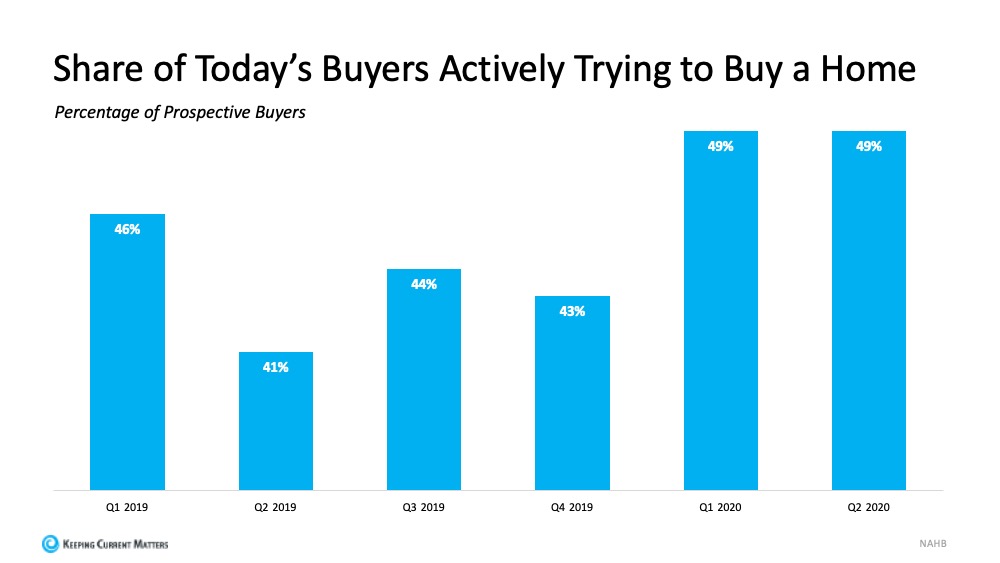
Today’s homebuyers are not just talking about their plans, they’re actively engaged in the buying process – and they’re serious about it. A recent report by the National Association of Home Builders (NAHB) indicates:
“…. Of American adults considering a future home purchase in the second quarter of 2020, about half (49%) are not simply planning it, they are actively engaged in the process to find a home. That is a significantly higher share than the comparable figure a year ago (41%), which suggests that the COVID-19 crisis and its accompanying record-low mortgage rates have converted some prospective buyers into active buyers.”
It’s no surprise that buyers are out in full force today. Many Americans now need more space to work from home, and the current low mortgage rates are providing an extra boost of motivation to enter the housing market.
If you’re considering selling your house, know that today’s buyers are serious about making a move. Your opportunity to sell your house in a market with high demand is growing, especially as more millennials enter the housing market too. The same report also notes:
“Of Millennials planning a home purchase in the next year, 57% are already actively searching for a home.”
Odeta Kushi, Deputy Chief Economist at First American, explains:
“When breaking down house-buying power by educational attainment for millennials in 2019, we find that the higher the education, the higher the household income, and the higher the house-buying power. In 2019, median house-buying power for millennials increased 16 percent relative to 2018.”
As demand for homes to buy grows and more millennials enter the market with growing buying power, the opportunity to sell your house grows too.
Bottom Line
Today’s buyers are serious ones and millennials are helping to fuel that charge. So, if you’re considering selling your home, reach out to a local real estate professional to determine your next steps in the process while buyers are actively looking.
Article Source: Keeping Current Matters
Realty Executives Midwest
1310 Plainfield Rd. Ste 2 | Darien, IL 60561
Office: 630-969-8880
E-Mail: experts@realtyexecutives.com

Moving day, just imagine it: The sun is shining, the weather is just perfect, and you’re about to close one chapter and open a brand new one. There’s so much possibility ahead! Although it may be exciting and full of promise for you, moving can be a terrifying event for your pets, even if you’re just moving down the street. Fortunately, you can take a lot of steps to protect your furry, feathery and scaly pals in these high stress times.
Whether you’ve got a dog that you love, a cat that’s a handful or a flock of chickens, moving with animals takes patience and attention to detail in order to help them get through the process with the least amount of stress possible. Remember that your pet doesn’t understand what’s happening and that the noise, strangers and general chaos can be terrifying for them.
Before you so much as begin to pack, it’s important to consider what’s going to happen with your pets during your move. Here are some things you can do to keep them safer and happier during the whirlwind that’s to come:
Getting your pets used to being confined like this can help prevent injuries to them should they frantically scramble to escape, and can help you better see what kinds of things in those spaces may be potentially dangerous when they’re left unattended on moving day.
Not sure where to turn for a pet-friendly mover or a pet sitter who can help tend your favorite furry friend while you’re away? Look no further than HomeKeepr where you can find the perfect pet-friendly moving team that can help you start your new chapter with as little stress as possible.
Article Source: HomeKeepr
Realty Executives Midwest
1310 Plainfield Rd. Ste 2 | Darien, IL 60561
Office: 630-969-8880
E-Mail: experts@realtyexecutives.com
Midwest Real Estate Data (MRED) serves more than 45,000 real estate professionals in Chicagoland and the surrounding counties.
This week's market snapshot shows that homes under contract increased for the third week in a row, surging 17 percent from the first week of July. The data from across MRED's markets also show a 66.5% increase in contracts for the week ending July 27 versus the same week last year.
Median prices continue to show strength as well, with a 6.7% increase over the same week last year. This was the sixth straight week of year over year weekly median price gains, the data show.
Interested in more information? Contact us today!
On July 21st, 2020, the Darien Lions Club, in collaboration with the city of Darien, held a ceremony at city hall in honor of Deneen Ruffolo, recipient of the Darien organization's 'Humanitarian of the Year 2020' award.
Joe Marchese, Mayor of Darien, designated Friday, July 24th, 2020 as 'Deneen Ruffolo Day' in Darien, IL. Lions Club President, John Pearson, presented Deneen with a replica brick paver to be placed in Lions Patio at Darien Community Park.

The Humanitarian of the Year award is bestowed by Darien Lions to honor efforts of community members in delivering charitable services. Deneen's selfless efforts assisting Darien Lions programs earned her this prestigious award. Her invaluable assistance with Lions Food Baskets program, procuring & wrapping thousands of gifts ensuring a Merry Christmas to over 250 families & their 600 children, is priceless. She spearheads organizing and wrapping over 4,000 gifts every year for families in need, something she does so thanklessly and with a bright smile on her face, year after year.

Greg Ruffolo, her husband, comments "Deneen taught our children (and now grandchildren) how to properly treat others, to always be kind, not speak poorly of others but rather find good in them, and to help by assisting others. In the end, that is the real reward for her."
Congratulations, Deneen, for this wonderful accomplishment!
Realty Executives agents are real estate experts. They have the education and expertise you need to navigate through the process of buying or selling a home. From listing at the right price to making the best offer, our Executives have witnessed the best - and most regrettable - decisions homeowners and homebuyers can make. Every day, they are immersed in every aspect of real estate that includes comparable home price analysis, property surveys, credit reports, open houses, HOA agreements, lenders, title companies, homeowners’ insurance, walk-throughs, terms of sale or purchase, repairs, concessions and closing documents. Let our accomplished Executives help navigate you through the process of buying or selling a home.