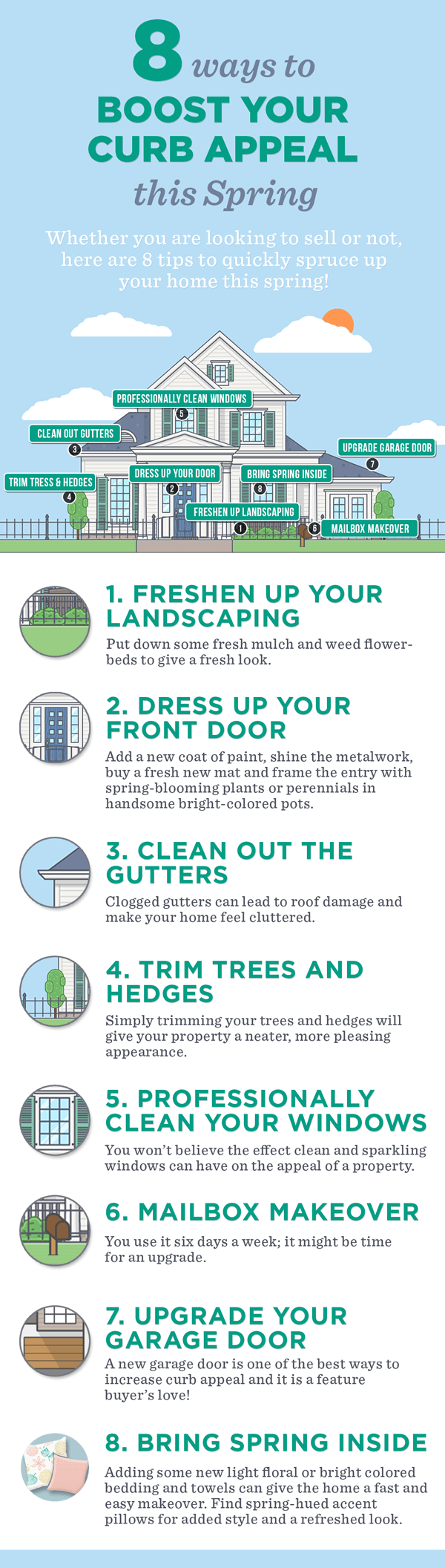
8 Ways to Boost Your Curb Appeal this Spring
(Published on - 4/22/2018 7:28:43 PM)
Realty Executives Midwest
1310 Plainfield Rd. Ste 2 | Darien, IL 60561
Office: 630-969-8880
E-Mail: experts@realtyexecutives.com
7 Ways Downsizing Saves Money
(Published on - 4/8/2018 4:44:33 PM)

Downsizing is hardly a dirty word these days, especially as Baby Boomers begin to question the size of their home, and more Millennials are finally making their way into the world. Home ownership is a good investment at any size, and if you’ve ever wanted to free up some cash for the rest of life’s joys (travel? new hobbies? investing?), downsizing can be a great way to rightsize your budget. Here are seven ways downsizing can foster a little more financial freedom:
- Utility costs. If your gas and electric bills have been climbing year over year, consider the pleasant surprise of heating and cooling 1,200 sq. ft. instead of 3,500. Controlling the climate in empty spare bedrooms is pointless when you don’t need the room. What’s more, you can count on fewer houseguests with less space, and this, in turn, can decrease utility costs.
- Maintenance costs. How big is that lawn? How many rooms need to be refreshed with a coat of paint? How many windows do you need to wash, and what about the size of that driveway that must be repaired and sealed?
- Insurance. Your insurance bill is based in large part on your appraisal, and if your new home is smaller, your insurance bill should shrink as well. (This can vary based on location and levels of coverage, of course, but you would be hard pressed to insure less for more!)
- Property taxes. Much like insurance, tax rates tend to be based on a percentage of assessed value. Here’s a few more dollars back into your wallet.
- Repairs. How many toilets do you need to have fixed? Appliances? Light fixtures to keep lit? The smaller home has fewer leaking faucets and a smaller roof to replace. Your overall spend on maintenance goes down when you have less home to maintain.
- Furniture. Downsizing is a perfect opportunity to sell excess furniture and find keep only those pieces well-loved or essential for your new smaller space.
- Hosting and entertaining. When you’ve got that sprawling home, your place is ground zero for out-of-town guests, relatives, and holiday parties. As your space shrinks, so does your annual hosting and entertaining budget. Besides, if you really want to throw a shin-dig, you can take some of that downsizing cash and pick a perfect venue.
Looking to downsize and redirect that extra cash? Get in touch:
Realty Executives Midwest
1310 Plainfield Rd. Ste 2 | Darien, IL 60561
Office: 630-969-8880
E-Mail: experts@realtyexecutives.com
How to Woo Sellers in a Hot Market
(Published on - 3/31/2018 8:18:29 PM)

If you’ve ever experienced the disappointment of losing out on a home in a seller’s market, you want to do everything possible to keep it from happening again. One tactic many buyers overlook is the “love letter” written to sellers about their home.
Rationally, you might expect the highest offer will always win the home, but there are a host of other factors involved. Some are emotional. Some sellers want to see their home go to a buyer they not only trust to close the deal, but they also like personally.
Want to give yourself an edge? Craft a short “love letter” to go with your offer. Here are the basics you’ll want to cover in your letter:
- Explain how much you like their home. Don’t go overboard, but prove to them you know the home and you truly appreciate their taste and the unique characteristics of the house. This might touch on improvements they’ve made or other aesthetic details.
- Spare them all the things you might want to change. What you say is as important as what you don’t say. Don’t tell them you’re going to gut the place as soon as you close, add a second story, or rip out their garden for a pool.
- Demonstrate you’re qualified to close. Make them feel confident in your qualifications as a buyer. Show them you’re pre-qualified for a loan, are buying cash, or have other reasons why you’ll be a hassle-free buyer.
- Be humble and positive. Don’t give them a sob story about the four other homes you’ve lost out on. Praise the neighborhood and make them feel as though you would be positively honored to be chosen as the next owner of their home.
- Check the letter for typos. Read it out loud. Listen for clunky sentences or awkward repetition. Have someone proof it for mistakes. Their confidence in your attention to detail is important.
A good agent should be able to tell you if the letter sounds like an honest appeal. Have it included with your offer as a cover letter.
Need help finding a home worth a love letter? Get in touch with us today:
Realty Executives Midwest
1310 Plainfield Rd. Ste 2 | Darien, IL 60561
Office: 630-969-8880
E-Mail: experts@realtyexecutives.com
Surprising Spring Cleaning Tips
(Published on - 3/25/2018 3:49:35 PM)
Not all seasonal celebrations are holidays. In spring we have an opportunity to throw open our windows and doors and refresh our homes after long winter months. Spring cleaning is one of those rituals which can invigorate our senses and deliver a deep sense of satisfaction.
There are lots of good resources out there for spring cleaning. Consider “Spring Cleaning: A Complete Checklist” for a comprehensive look at the tasks you can tackle. There’s also “Expert Advice: Editors’ Top 23 Cleaning Tips” which gives you the practical ins-and-outs of using all-natural cleaning solutions.
But there are also areas frequently ignored or overlooked by homeowners, and these are some of the most germ-laden places you’ll find. Before you finish your spring cleaning, be sure to consider these areas:
- Doorknobs: When was the last time you disinfected your doorknobs? The interior bathroom doorknob is an especially grave offender. When people are sick, have been cooking, or return home from the world, they’re going to be grabbing the knob. Disinfect these the same way you would any high-risk surface, like a countertop or toilet.
- Pillows: Can you even remember the last time you washed your pillows? Think about this before you plow face down for a night’s rest. Most pillows are perfectly fine to run through a gentle cycle in the washer and even a low tumble in the dryer. Naturally, you don’t want to become obsessive about this or you’ll destroy the pillow, but do take the time to wash or replace your pillows. A pillow case can only filter so much.
- Personal Devices: The screen of your smartphone is one of the most touched objects in your universe. Have you taken the time lately to disinfect it? There’s a good guide to the process in Greenbot . The same goes for your computer or laptop keyboard! Check out this piece from Popular Science .
- Remote Controls: This is a special category of nasty, because everyone in the house uses remote controls, and they often do so while snacking on sugary or salty food. Here’s a primer to guide you.
Keep it clean and healthy this spring! Questions or comments? Get in touch:
Realty Executives Midwest
1310 Plainfield Rd. Ste 2 | Darien, IL 60561
Office: 630-969-8880
E-Mail: experts@realtyexecutives.com
Reasons To Go Green This March
(Published on - 3/17/2018 6:33:09 PM)

Realty Executives Midwest
1310 Plainfield Rd. Ste 2 | Darien, IL 60561
Office: 630-969-8880
E-Mail: experts@realtyexecutives.com