Realty Executives Midwest
Wondering if it still makes sense to sell your house right now? The short answer is, yes. And if you look at the current number of homes for sale, you’ll see two reasons why.
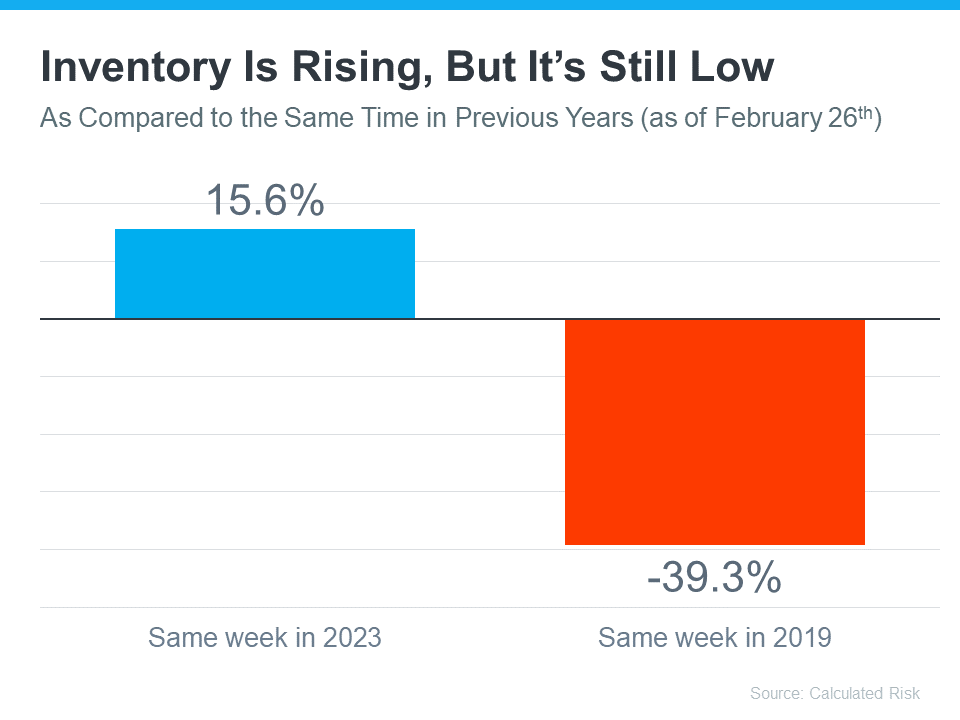
An article from Calculated Risk shows there are 15.6% more homes for sale now compared to the same week last year. That tells us inventory has grown. But going back to 2019, the last normal year in the housing market, there are nearly 40% fewer homes available now:
Here’s a breakdown of how this benefits you when you sell.
Are you thinking about selling because your current house is too big, too small, or because your needs have changed? If so, the year-over-year growth gives you more options for your home search. That means it may be less of a challenge to find what you’re looking for.
So, if you were holding off on selling because you were worried you weren’t going to find a home you like, this may be just the good news you needed. Partnering with a local real estate professional can help you make sure you’re up to date on the homes available in your area.
But to put that into perspective, even though there are more homes for sale now, there still aren’t as many as there’d be in a normal year. Remember, the data from Calculated Risk shows we’re down nearly 40% compared to 2019. And that large a deficit won’t be solved overnight. As a recent article from Realtor.com explains:
“. . . the number of homes for sale and new listing activity continues to improve compared to last year. However the inventory of homes for sale still has a long journey back to pre-pandemic levels.”
For you, that means if you work with an agent to price your house right, it should still get a lot of attention from eager buyers and could sell fast.
If you're a homeowner looking to sell, now's a good time. You'll have more options when buying your next home, and there's still not a ton of competition from other sellers. If you’re ready to move, talk to a local real estate agent to get the ball rolling.

Buying your first home is a big, exciting step and a major milestone that has the power to improve your life. As a first-time homebuyer, it’s a dream you can make come true, but there are some hurdles you’ll need to overcome in today’s housing market – specifically the limited supply of homes for sale and ongoing affordability challenges.
So, if you’re ready, willing, and able to buy your first home, here are three tips to help you turn your dream into a reality.
Paying the initial costs of homeownership, like your down payment and closing costs, can feel a bit daunting. But there are many assistance programs for first-time homebuyers that can help you get a loan with little or no money upfront. According to Bankrate:
“. . . you might qualify for a first-time homebuyer loan or assistance. First-time buyer loans typically have more flexible requirements, such as a lower down payment and credit score. Many help buyers with closing costs and the down payment through grants and low-interest loans.”
To find out more, talk to your state’s housing authority or check out websites like Down Payment Resource.
Right now, there aren’t enough homes for sale for everyone who wants to buy one. That’s pushing home prices up and making affordability tight for buyers. One way to deal with that issue and find a home right now is to consider condos and townhomes. Realtor.com explains:
“For many newbies, it might just be a matter of making a shift toward something they can better afford—like a condo or townhome. These lower-cost homes have historically been a stepping stone for buyers looking for a less expensive alternative to a single-family home.”
One reason why they may be more affordable is because they’re often smaller. But they still give you the chance to get your foot in the door and achieve your goal of owning a home and building equity. And that equity can help fuel your move into a larger home later on if you decide you need something bigger in the future. Hannah Jones, Senior Economic Analyst at Realtor.com, says:
“Condos can help prospective homebuyers who perhaps have a smaller budget, but who are really determined to get a foothold in the market and start to accumulate some equity. It can be a really great entry point.”
Another way to break into the market is by purchasing a home with friends or loved ones. That way you can split the cost of things like the mortgage and bills, to make it easier to afford a home. According to Money.com:
“Buying a home with another person has some obvious advantages in the mortgage department. With two incomes in the mix, buyers can likely qualify for a larger mortgage — a big help in today’s high-cost market.”
By exploring first-time homebuyer assistance, condos, townhomes, and multi-generational living, it can be easier to find and buy your first home. When you’re ready, connect with a local real estate agent.
Source: Keeping Current Matters
Realty Executives Midwest
1310 Plainfield Rd. Ste 2 | Darien, IL 60561
Office: 630-969-8880
E-Mail: experts@realtyexecutives.com
If you’re thinking of selling your house this spring, now is the perfect time to start getting it ready. With the market gearing up for its busiest time of year, it’ll be important to make sure your house shines bright among the competition.
Here are some valuable tips you can use to get your house market-ready.
First impressions matter, and if your house is a mess, that can easily turn off potential buyers. Before listing, take the time to declutter and organize each room. Decluttering is about more than just tidying up – it’s about creating a sense of space and openness that allows potential buyers to envision themselves living in your home. According to Moving.com:
“Decluttering and organizing your space will go a long way in appealing to potential buyers. . . .decluttering will help the buyers see themselves living in your home. Less clutter inside a home also helps a place appear larger and cleaner, which should attract more buyers.”
The kitchen and bathrooms are focal points for many buyers, and often influence their overall opinion of the house. Ensure these spaces dazzle by giving them a thorough deep cleaning. Pay attention to details like scrubbing grout lines, polishing fixtures, and decluttering countertops. A sparkling kitchen and bathroom can leave a lasting positive impression on potential buyers.
Your home’s exterior is the first thing potential buyers see, so it’s important to make a good impression from the moment they arrive. A well-maintained yard not only enhances curb appeal, but also shows buyers the home has been well taken care of.
Take the time to spruce up your yard by mowing the lawn, trimming bushes, and clearing away any debris or dead plants. Remember, the goal is to create a welcoming environment that entices buyers to step inside and imagine themselves living there. U.S. News says:
“A beautifully landscaped front yard can elevate an ordinary house into a charming home and will help homes sell faster and for more money.”
A skilled listing agent is your partner in minimizing stress when selling your home. Lean on your agent for advice on decluttering, staging, and enhancing your home’s appeal to potential buyers. Their insights into market trends and recommendations for reliable contractors and stagers are invaluable. As Realtor.com says:
“A good listing agent will help you price your home . . . recommend a photographer and stager to make it look its best, and put your home on the multiple listing service.”
By decluttering, deep cleaning, and tidying up your house, you can create a welcoming environment that resonates with buyers and increases your chances of a successful sale. Connect with a trusted real estate agent for advice on what you need to do to get your house ready to sell this spring.
Buying your dream home is a significant accomplishment, and you need to protect your investment. While there is no way you can control severe weather, you can do many things to prevent possible damage to your home and protect your family.
Here are tips you should remember when gearing up your home for an upcoming weather event.

Inspect your home and resolve issues like peeling roof shingles, loose fence boards, and rattling windows to prevent costly damage. Dealing with damages head-on can save you from expensive repairs after damage from severe weather events. For instance, if a shingle is damaged, it will likely get loose during a storm. If it is missing, reinstall or replace it immediately.
Keep an eye on potential hazards surrounding your home. Here is how you can implement basic outdoor maintenance before a weather condition.
A spare power source can keep your essential appliances and lights on, especially in brutal weather conditions. In some cases, intense storms can cut power sources for more than a day. On average, United States customers experienced more than seven hours of electric power interruptions in 2021.
A backup generator delivers power instantly during a blackout, maintaining safety and comfort during emergencies. It also protects the home from voltage surges and fluctuations when power is back. This equipment is especially useful during winter storms, as you want to keep your home warm enough to prevent property damage like frozen pipes and ensure your family is safe.
If you anticipate harsh weather, consider investing in a backup generator to keep your power on in the event your local grid goes down.
Extreme weather conditions remain a common reason behind property damage in the U.S., with damages reaching $121.4 billion between 2017 and 2021. You should ensure your insurance policy covers the losses you may incur after a natural disaster.
Damages caused by earthquakes, flooding, and hurricanes are commonly not covered, so you may need to invest in additional insurance, especially if you live in an area prone to natural disasters. Create a list of your belongings as documentation for the insurance company and keep it somewhere safe and dry.
An extensive roof inspection before an anticipated severe weather event can protect your home, especially thunderstorms, when wind gusts of 75 miles per hour can easily remove roofing tiles.
If you have a roof that is five or more years old, look for loose nails and shingles and replace them. A visual inspection from the ground can be beneficial for spotting small issues, but you may want to have a professional come out to do a more thorough inspection. This way, you can learn of any notable concerns and manage them as necessary.
Pay extra attention to your home’s doors and windows to maximize protection against brutal storms. Here are some things you can do:
Whether you are anticipating a severe rainstorm or a possible hurricane, you can combat the effects of natural disasters on your home in many ways. Start with these preventive measures to protect your home and your family, and you will be ready for all types of weather.
Source: Realty Executives
Realty Executives Midwest
1310 Plainfield Rd. Ste 2 | Darien, IL 60561
Office: 630-969-8880
E-Mail: experts@realtyexecutives.com

As you think about the year ahead, one of your big goals may be moving. But, how do you know when to make your move? While spring is usually the peak homebuying season, you don’t actually need to wait until spring to sell. Here’s why.
Last October, the 30-year fixed mortgage rates peaked at 7.79%. In January, they hit their lowest level since May. That means you may not feel as locked-in to your current mortgage rate right now. That downward trend in rates has made moving more affordable now than it was just a few months ago.
Another reason today’s rates make now a good time to sell? More buyers are jumping back into the market. Many had been waiting on the sidelines for rates to fall, but now that that’s happening, they’re eager and ready to buy. That means more demand for your house. According to Sam Khater, Chief Economist at Freddie Mac:
“Given this stabilization in rates, potential homebuyers with affordability concerns have jumped off the fence back into the market.”
Right now, there are still more people looking to buy a home than there are houses for sale, which puts you in a great position. But keep in mind, with the recent uptick in new listings, we’re seeing more sellers may already be re-entering the market.
Listing your house now helps you beat your competition and makes sure your house will stand out. And if you work with an agent to price it right, it could sell fast and get multiple offers. U.S. News explains:
“When there is low housing inventory, sellers could get top dollar for their homes.”
Experts forecast home prices will keep going up this year. What does that mean for you? If you’re ready to sell your current house and plan to buy another one, it may be a good idea to think about moving now before prices go up more. That would give you the chance to buy your next home before it gets more expensive.
Homeowners today have tremendous amounts of equity. In fact, a recent report from CoreLogic says the average homeowner with a mortgage has more than $300,000 in equity.
If you’ve been waiting to sell because you were worried about home affordability, know your equity can really help with your next move. It might even cover a big part, or maybe all, of the down payment for your next home.
If you're thinking about selling your house and moving to another one, connect with a local real estate agent to get the process started now so you can get a leg up on your competition.
Source: Keeping Current Matters
Realty Executives Midwest
1310 Plainfield Rd. Ste 2 | Darien, IL 60561
Office: 630-969-8880
E-Mail: experts@realtyexecutives.com
Realty Executives agents are real estate experts. They have the education and expertise you need to navigate through the process of buying or selling a home. From listing at the right price to making the best offer, our Executives have witnessed the best - and most regrettable - decisions homeowners and homebuyers can make. Every day, they are immersed in every aspect of real estate that includes comparable home price analysis, property surveys, credit reports, open houses, HOA agreements, lenders, title companies, homeowners’ insurance, walk-throughs, terms of sale or purchase, repairs, concessions and closing documents. Let our accomplished Executives help navigate you through the process of buying or selling a home.