Realty Executives Midwest
When you apply for a mortgage, your debt-to-income ratio (DTI) will play a vital role. The mortgage lenders will review your credit profile and check the DTI ratio to assess your affordability. So, the debt-to-income ratio will indicate how much debt you carry, such as credit card balances, payday loans, medical bills, personal loans, and utility bills against your monthly income.
Most borrowers know how much their credit score is, which is essential to show their credit affordability. However, many of us need to learn that, like credit score, the debt-to-income ratio will also affect your mortgage loan or credit approval.

When you take out a loan to buy your residential home, vacation home, or rental home, it will be called a mortgage.
The mortgage interest rate depends on the lender and other factors such as your credit rating, earning levels, and, most importantly, the debt-to-income ratio. Now, let’s discuss how the debt-to-income ratio impacts your ability to get a mortgage.
There are two types of debt-to-income ratios that most lenders accept while reviewing mortgage applications:
As discussed in the introductory paragraph, the lender can assume the risk factor from the DTI ratio before providing a home loan to a borrower. If the borrower’s debt is too high, the borrower can default on the loan amount.
Usually, the lenders follow a rule that the borrower can have a home loan if the DTI ratio is a maximum of 43% of the particular borrower.
So, a borrower who needs a home loan should repay some debt first. This will help the borrower reduce the DTI (debt-to-income) ratio. Thus, the borrower can qualify for a home loan with a favorable interest rate.
Before approving a home loan, lenders check credit scores, which largely depend on the credit utilization ratio. The credit utilization ratio means you have utilized up to what percentage of your credit limit.
Your credit score will be low if you borrow closer to your limit. Thus, your chances of getting approved for a home loan with a favorable interest rate will be lower.
Paying off at least a portion of your credit card debt is a strategy you should adopt. It will help you lower your credit utilization ratio and get approved for a mortgage with a favorable interest rate.
Remember that your income is limited. Manage your spending and card debt payments with this income. With the monthly mortgage loan payment, a new debt burden will be included in your income. Thus, if you pay off the credit card debts, you will have less debt payment on your shoulders.
When you apply for a home loan, the lender will check your credit score and DTI ratio. The interest rate of your home loan will depend on your credit score and the DTI ratio. The lower the lender will offer you an interest rate, the quicker you can pay off the principal balance.
A home buyer should calculate the mortgage loan amount that he or she will have to pay so that he or she may be able to repay the home loan within a definite period.
Fixed-rate mortgage loans are most common among first-time home buyers. A first-time buyer usually takes out this loan for 15 to 30 years. As such, even if the interest rate changes in the market, you will enjoy paying a fixed interest rate on your loan amount.
This is common among home buyers who would like to pay less initially but agree to accept a change in mortgage payment in the future. This change in mortgage payment may either increase or decrease according to the variation in market interest rate. By choosing this type of mortgage loan, the home buyer will have to make a high mortgage payment in the future if, by chance, the interest rate rises suddenly.
With the help of an interest-only mortgage loan, you pay only the interest on the loan amount you’ve taken out for a specific period. During this period, you do not have to pay the principal amount. But once the interest-only period ends, your payment amount increases with the repayment of the principal amount. This loan is helpful for those people who earn money on a commission basis.
Your high debt-to-income ratio may create issues when you apply for a home mortgage. The higher your DTI, the more likely you may face problems. The lender will only entertain your mortgage loan application if you take significant steps to lower it as soon as possible.
So, here are some steps that you may follow to reduce your DTI:
Whether or not you can afford a home loan payment, your lender will come to know about it when they check your credit score and DTI ratio. When you show an impressive credit score and DTI ratio to your lender, chances are you can get a home loan with a favorable interest rate. Thus, paying off your credit card debt before applying for a mortgage is important.
source: Realty Executives
Realty Executives Midwest
1310 Plainfield Rd. Ste 2 | Darien, IL 60561
Office: 630-969-8880
E-Mail: experts@realtyexecutives.com
If you have watched home improvement shows like “Fixer Upper” or “Property Brothers,” you are probably very excited to renovate your home. On TV, home renovations look fast, fun, and exciting. However, working through a renovation as a young homeowner comes with a unique set of challenges.
Renovating your home can be an incredible way to enjoy the space or sell your property for more! But when you renovate your home, you will spend more time on planning, permits and inspections than on choosing a new paint color or decorating.
Here are the top five things you need to know about taking on a renovation as a young homeowner.

According to Forbes, a home renovation in 2024 can cost anywhere from $1,200-$82,000, depending on everything from what materials you use to how much square footage you’re renovating. Since cost is such a crucial factor, planning and budgeting are essential for a successful renovation.
Prioritize your goals, then list all your costs and group them by category. You will need to cover contractors, inspections, permits, materials, and unexpected costs that may arise. Your renovation timeline is also part of your budget since longer projects can cost more to complete.
While planning your renovation, take some time to consider your goals and your neighborhood. What are houses in your neighborhood usually like? How much do they sell for? If your goal is to upgrade before selling, assessing nearby homes can help you hit the right target.
It is also a great idea to talk with people who have gone through a home renovation before. Ask them what their advice is for first-time renovations. What do they wish they had done differently? You can also research common renovation FAQs on YouTube, Google, and online forums like Quora or Reddit.
Before hiring contractors, check their references. Ask them about licensing and their previous experience and talk to several contractors for each kind of project. Although finding the right partners can be time-consuming, in the long run, it will save you time and stress.
Before you start looking for contractors, get familiar with the questions you should ask. With a little research, you will be equipped to sort through your options and find the best fit for your renovation.
Write down your big dream for renovating and remind yourself of it during the process. There are bound to be small frustrations with home renovations, and remembering your end goal will keep you encouraged.
Also keep in mind the importance of safety regardless of how long the project takes- especially in moments of frustration. Renovations inevitably create debris and unsafe environments, so take extra steps to keep your kids and pets safe. Always properly put away tools and safeguard machinery to avoid theft as the National Crime Information Center reports 600 to 1,200 claims of equipment theft each month.
Even with the best plan in place, unexpected changes can always occur during a renovation. Delays due to weather, surprises with structural elements, unplanned costs, and more can all affect the original plan.
It is important to balance research with fluidity. Like a tree that bends in the wind, you can adapt to changes in your renovation without snapping. There is always another solution and a new way forward.
Renovating your home takes time, so do not wait to get started. Use these five tips as a guide to point you in the right direction as you begin your home renovation journey. If you plan carefully, you will be prepared for unexpected setbacks and reach your renovation goals successfully. Pretty soon, you will be the one giving new homeowners renovation advice!
Source: Realty Executives
Realty Executives Midwest
1310 Plainfield Rd. Ste 2 | Darien, IL 60561
Office: 630-969-8880
E-Mail: experts@realtyexecutives.com

When you decide to buy your first home, you may come across a number of terms and conditions you’re not familiar with. While you may have a general idea of what an inspection is, maybe you’re not sure why you need one or how it’s different from an appraisal. To keep it simple, here’s an explainer of each one and what they mean for you as a homebuyer.
Once you’re under contract on a home you’d like to buy, getting an inspection is a key part of the process. An inspection gives you a clear idea of the safety and overall condition of the home – which is important for such a big transaction. As a recent Realtor.com article explains:
“A home inspection is something that protects your financial interest in what will likely be the largest purchase you make in your life—one in which you need as much information as possible.”
If anything is questionable in the inspection process – like the age of the roof, the state of the HVAC system, or just about anything else – you have the option to discuss and negotiate any potential issues or repairs with the seller before the transaction is final. And don’t worry – you don’t have to go through that process alone. Your real estate agent will be your advocate and negotiate with the seller for you.
While the inspection tells you about the current state of the house, an appraisal gives you its value. Bankrate explains:
“When buying or selling a home, an appraisal verifies that the sale price of the home is in line with fair market value. This ensures the homebuyer doesn’t pay more than the home is worth, and the mortgage lender doesn’t lend more than it is worth.”
Regardless of what you’re willing to pay for a house, if you’ll be using a mortgage to fund your purchase, the appraisal protects you from overpaying and the bank from lending you more than the home is worth.
And if there’s ever any confusion or discrepancy between the appraisal and the agreed-upon price in your contract, your trusted real estate professional will help you navigate any additional negotiations to try to close the gap.
The inspection and the appraisal are different but equally important steps when buying a home – and you don’t need to manage them by yourself. Connect with an agent today so you have expert guidance from start to finish.
Source: Keeping Current Matters
Realty Executives Midwest
1310 Plainfield Rd. Ste 2 | Darien, IL 60561
Office: 630-969-8880
E-Mail: experts@realtyexecutives.com
Fannie Mae on Friday slashed its 2024 forecast as a result of weak spring home sales, but listings are returning to the market and mortgage rates look poised to drop, according to new projections.
Author: Matt Carter, Inman News
A weaker-than-expected spring has prompted Fannie Mae economists to cut their forecast for 2024 home sales, to the point where it’s now looking like this year will hardly be better than last year.
But more listings are starting to come onto the market — particularly in the Sun Belt — and the economy is cooling at a pace that should help mortgage rates stay on their current downward trajectory, economists at the mortgage giant said Friday.
“The economy appears to be slowing, and recent readings offer hope that inflation is cooling after progress on that front stalled in the first quarter – a trend that will likely need to be sustained for the Fed to feel comfortable cutting rates,” Fannie Mae Chief Economist Doug Duncan said in a statement. “Additionally, the labor market is showing signs of a gradual slowdown, with the unemployment rate creeping up to 4 percent in the June report.”
But home sales won’t pick up until there’s “some combination of continued household income growth, a further slowing of home price appreciation, or a decline in mortgage rates to bring affordability within range of many waiting first-time and move-up homebuyers,” Duncan said.

Sales of existing homes fell 1.9 percent in April, to an annualized pace of 4.14 million.
“This was somewhat weaker than we had anticipated, and recent purchase mortgage application data also point to near-term weakness,” Fannie Mae economists said in commentary accompanying their latest forecast. “As such, we have downwardly revised our existing home sales outlook and now project 2024 existing sales to total 4.15 million (previously 4.20 million). This now represents only a minor increase of 1.5 percent from 2023 total year existing sales.”
That near-term weakness was confirmed Friday with the release of the latest existing home sales data for May from the National Association of Realtors, which showed sales fell for the third month in a row, to a seasonally adjusted annual rate of 4.11 million.
“This sales softness is happening while listings continue to rise. We read this divergence to mean more homeowners are no longer putting off their decision to sell, despite the so-called ‘lock-in effect,’ perhaps out of a belief that mortgage rates will remain higher for longer,” Fannie Mae economists said. “However, affordability constraints are limiting the number of buyers willing and able to purchase these homes.
Home prices are often “sticky” on the way down, but a “gradual loosening” of inventory is likely to decelerate home price growth, Fannie Mae economists predicted.
NAR put the months supply of inventory at 3.5 in April, up from 3.0 months a year ago. And while the numbers for May were too late for Fannie Mae forecasters to incorporate into their forecast, months supply of inventory was up again last month, to 3.7 months, NAR reported.
But those are national numbers, and Fannie Mae forecasters noted there’s a “strong geographic skew” to recent listings growth.
“Many of the previously hot Sun Belt markets are where listings are disproportionately rising. These metros also tend to be markets with a higher degree of new construction in recent years, and now some of them have for-sale inventory levels similar to 2019.”
Close to half of the total growth in listings nationwide over the last year can be chalked up to Florida and Texas.
“This suggests that these markets will experience comparative price softness going forward while supply remains comparatively tight in many of the northeast and midwestern markets,” Fannie Mae economists said.
For now, the scarcity of existing homes in many markets is helping prop up new home construction and sales.
But sales of new homes dipped 4.7 percent from March to April, to a seasonally adjusted annual rate of 634,000. That’s a 7.7 percent decline from a year ago.
With a 9.1 month supply of new homes on the market in April — the highest since November 2022 — Fannie Mae economists have lowered their expectations for new home sales in Q2 2024 and Q3 2024.
Fannie Mae now expects 2024 new home sales stay flat from a year ago at 667,000, but grow by 13 percent next year.
Easing mortgage rates are expected to help boost sales of existing homes by 9 percent next year, to 4.51 million.

Source: Fannie Mae Housing Forecast, June 2024; MBA Mortgage Finance Forecast, May 2024.
Recent economic data, including the Consumer Price Index (CPI) and Producer Price Index (PPI) coming in cooler in May than recent months, has Fannie Mae economists regaining confidence that mortgage rates have room to come down this year.
“This welcome news on the inflation front led to a significant drop in the 10-year Treasury rate and an increase in the odds of rate cuts this year,” Fannie Mae forecasters said.
Last month, Fannie Mae forecasters predicted rates on 30-year fixed-rate loans wouldn’t drop below 7 percent this year, and would still be averaging 6.6 percent in Q4 2025.
With mortgage rates already under 7 percent, Fannie Mae is forecasting that 30-year fixed-rate loans will drop to 6.7 percent during Q4 2024, and to 6.3 percent by the end of next year.
In their most recent forecast, released May 16, economists at the Mortgage Bankers Association envisioned a steeper decline, with 30-year fixed-rate loans hitting 6.5 percent by the end of this year, and dropping below 6 percent in the final three months of next year.
While Fannie Mae economists don’t expect the Fed to cut rates until December, “additional soft inflation reports, especially if combined with a growing acceptance that payroll employment is perhaps overstated, makes a September cut still a real possibility.”
The Federal Reserve’s preferred inflation gauge, the Personal Consumption Expenditures (PCE) price index, is set to be updated on June 28.

Source: Fannie Mae Housing Forecast, June 2024.
Diminished expectations for home sales mean Fannie Mae forecasters now expect purchase mortgage volume to total $1.3 trillion in 2024, $20 billion less than last month’s forecast.
But thanks to rising home prices, that would still represent 10 percent growth from the $1.22 trillion in purchase mortgages originated last year.
As mortgage rates come down and home price appreciation decelerates next year, Fannie Mae projects purchase mortgage originations will grow by an even stronger 14 percent in 2025, to $1.5 trillion.
The steeper glide path Fannie Mae economists now envision for mortgage rates is expected to translate into an additional $4 billion in refinancing volume this year and next when compared to last month’s forecast.
Refinance volumes are now expected to grow by 50 percent this year, to $372 billion, and by 46 percent next year, to $544 billion.
Source: https://www.inman.com/2024/06/24/more-listings-lower-rates-should-boost-2025-sales-fannie-mae/
Summer is a beautiful season to enjoy long days, warm weather, and outdoor activities. However, it is also an ideal time to tackle some essential home maintenance tasks. Proper summer home maintenance enhances your home’s appearance and ensures everything runs smoothly and efficiently. Here are seven summer home maintenance tips to keep your home in shape.
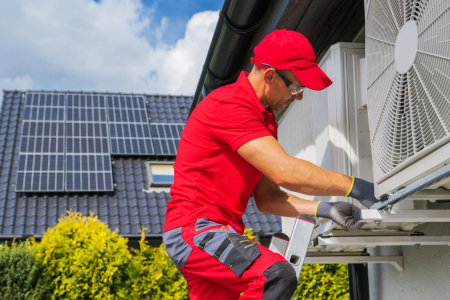
Nothing beats the relief of a cool home on a hot summer day. Schedule a professional HVAC inspection to ensure the air conditioning system in your home is prepared to handle the heat. Regular maintenance can prevent unexpected breakdowns and improve energy efficiency. Clean or replace air filters, check for refrigerant leaks, and ensure the thermostat works correctly.
Summer storms can bring heavy rain, wreaking havoc on your gutters. Clean out any debris, leaves, or twigs that may have accumulated during the spring. Inspect for any signs of sagging or damage and make the necessary repairs. Well-functioning gutters prevent water damage to your roof, siding, and foundation.
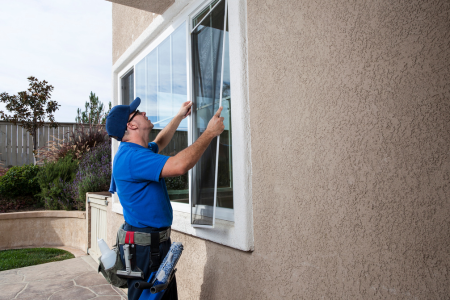
Windows and doors are vital areas where energy loss can occur. Check for any drafts and apply weather-stripping or caulk to seal gaps. Clean the windows inside and out to allow enough natural light and improve your home’s overall appearance. If any screens are damaged, replace them to keep bugs out while enjoying the summer breeze.
The exterior of your home faces a lot of wear and tear from the weather changes. Inspect your home’s exterior paint for any peeling or chipping. Freshly painted siding is protected from moisture and sun damage while boosting curb appeal. Select a good-quality paint that can withstand the summer heat and humidity.
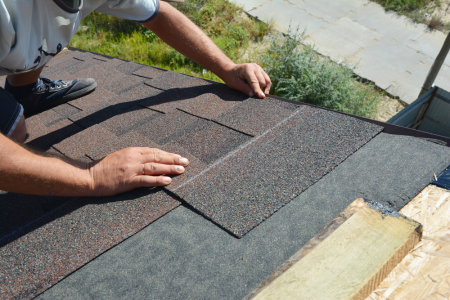
Your roof is your home’s first line of defense against the elements. Summer is a great time to inspect it for possible signs of damage, such as leaks, missing shingles, or cracks. Attending to these issues early can prevent eventual costly repairs. If necessary, hire a professional roofer to inspect thoroughly and repair.
Outdoor spaces like decks and patios are perfect for summer gatherings. To keep them looking their best, clean and seal your deck to protect it from the sun and rain. Remove any dirt, mold, or mildew, and check for loose boards or nails. Power wash the surface of patios and inspect for any cracks or damage. Consider applying a sealant to protect against future wear and tear.

A well-maintained garden and landscape can enhance the beauty of your home and provide a relaxing outdoor environment. Trim overgrown bushes, trees, and shrubs to prevent them from encroaching on your home.
Mow the lawn regularly, water plants early in the morning or late evening to minimize evaporation, and add mulch to retain moisture and suppress weeds. Also, consider installing a drip irrigation system to conserve water and ensure your plants get the hydration they need.
Summer can bring extreme weather conditions, including storms and hurricanes in some areas. Ensure your home is prepared with an emergency kit including essentials like water, non-perishable food, flashlights, batteries, and a first-aid kit. Create a family emergency plan and make sure everyone knows the steps to take in case of a disaster.
Taking the time to perform these summer maintenance tasks can save you money, prevent costly repairs, and enhance the comfort and safety of your home. Enjoy a worry-free summer by keeping your home in top condition and ready to handle whatever the season brings.
Source: Realty Executives
Realty Executives Midwest
1310 Plainfield Rd. Ste 2 | Darien, IL 60561
Office: 630-969-8880
E-Mail: experts@realtyexecutives.com
Realty Executives agents are real estate experts. They have the education and expertise you need to navigate through the process of buying or selling a home. From listing at the right price to making the best offer, our Executives have witnessed the best - and most regrettable - decisions homeowners and homebuyers can make. Every day, they are immersed in every aspect of real estate that includes comparable home price analysis, property surveys, credit reports, open houses, HOA agreements, lenders, title companies, homeowners’ insurance, walk-throughs, terms of sale or purchase, repairs, concessions and closing documents. Let our accomplished Executives help navigate you through the process of buying or selling a home.