Realty Executives Midwest

As the spring housing market kicks off, you likely want to know what you can expect this season when it comes to buying or selling a house. While there are multiple factors causing some uncertainty, including the conflict overseas, rising inflation, and the first rate increase from the Federal Reserve in over three years — the housing market seems to be relatively immune.
Here’s a look at what experts say you can expect this spring.
Freddie Mac reports the 30-year fixed mortgage rate has increased by more than a full point in the past six months. And despite some mild fluctuation in recent weeks, experts believe rates will continue to edge up over the next 90 days. As Freddie Mac says:
“The Federal Reserve raising short-term rates and signaling further increases means mortgage rates should continue to rise over the course of the year.”
If you’re a first-time buyer or a seller thinking of moving to a home that better fits your needs, realize that waiting will likely mean you’ll pay a higher mortgage rate on your purchase. And that higher rate drives up your monthly payment and can really add up over the life of your loan.
There may be some relief coming for buyers searching for a home to purchase. Realtor.com recently reported that the number of newly listed homes has grown for each of the last two months. Also, the National Association of Realtors (NAR) just announced the months’ supply of inventory increased for the first time in eight months. The inventory of existing homes usually grows every spring, and it seems, based on recent activity, the next 90 days could bring more listings to the market.
If you’re a buyer who has been frustrated with the limited supply of homes available for sale, it looks like you could find some relief this spring. However, be prepared to act quickly if you find the right home.
If you’re a seller, listing now instead of waiting for this additional competition to hit the market makes sense. Your leverage in any negotiation during the sale will be impacted as additional homes come to market.
Prices are always determined by supply and demand. Though the number of homes entering the market is increasing, buyer demand remains very strong. As realtor.com explains in their most recent Housing Report:
“During the final two weeks of the month, more new sellers entered the market than during the same time last year. . . . However, with 5.8 million new homes missing from the market and millions of millennials at first-time buying ages, housing supply faces a long road to catching up with demand.”
What does that mean for you? With the demand for housing still outpacing supply, home prices will continue to appreciate. Many experts believe the level of appreciation will decelerate from the high double-digit levels we’ve seen over the last two years. That means prices will continue to climb, just at a more moderate pace. Most experts are predicting home prices will not depreciate.
While some people may believe a 1% increase in mortgage rates will impact demand so dramatically that home prices will have to fall, experts say otherwise. Doug Duncan, Senior Vice President and Chief Economist at Fannie Mae, says:
“What I will caution against is making the inference that interest rates have a direct impact on house prices. That is not true.”
Freddie Mac studied the impact that mortgage rates increasing by at least 1% has had on home prices in the past. Here are the results of that study:
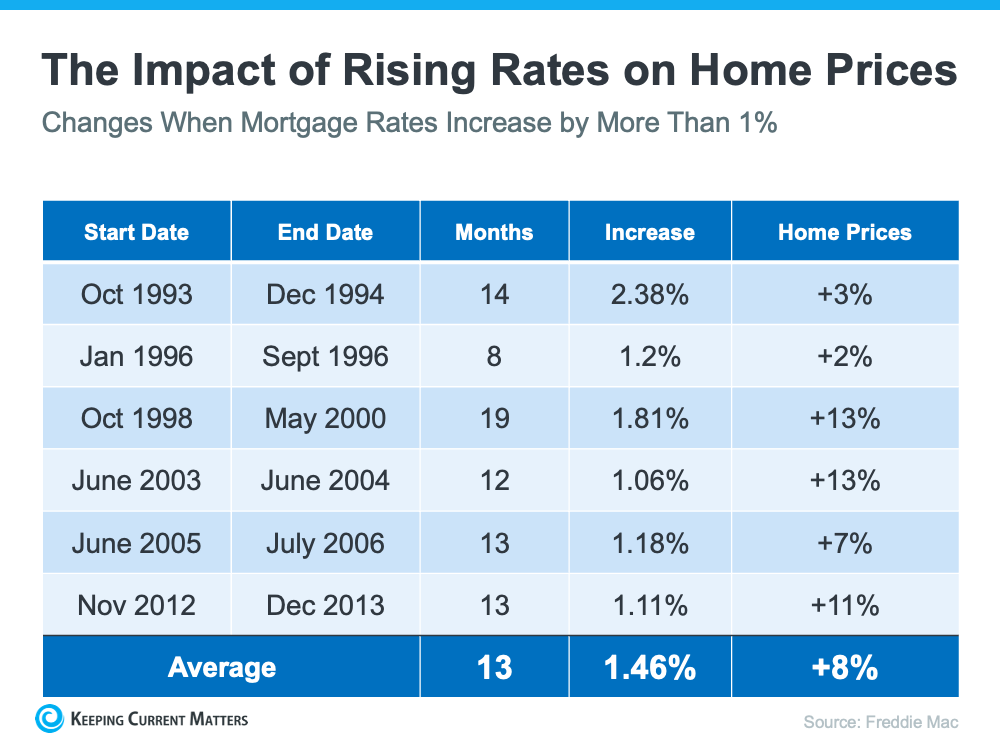
As the chart shows, mortgage rates jumped by at least 1% six times in the last thirty years. In each case, home values increased.
So again, if you’re a first-time buyer or a repeat buyer, waiting to buy likely means you’ll pay more for a home later in the year (as compared to its current value).
There are three things that seem certain going into the spring housing market:
If you’re thinking of buying, act now before mortgage rates and home prices increase further. If you’re thinking of selling, your best bet may be to sell soon so you can beat the increase in competition that’s about to come to market.
Source: Keeping Current Matters
Realty Executives Midwest
1310 Plainfield Rd. Ste 2 | Darien, IL 60561
Office: 630-969-8880
E-Mail: experts@realtyexecutives.com

As a homebuyer, it’s important to plan and budget for the expenses you’ll encounter when you purchase a home. While most people understand the need to save for a down payment, a recent survey found 41% of homebuyers were surprised by their closing costs. Here’s some information to help you get started so you’re not caught off guard when it’s time to close on your home.
One possible reason some people are surprised by closing costs may be because they don’t know what they are or what they cover. According to U.S. News and World Report:
“Closing costs encompass a variety of expenses above your property’s purchase price. They include things like lender fees, title insurance, government processing fees, upfront tax payments and homeowners insurance.”
In other words, your closing costs are a collection of fees and payments made to a variety of individuals and organizations who are involved with your transaction. According to Freddie Mac, while they can vary by location and situation, closing costs typically include:
Understanding what closing costs include is important, but knowing what you’ll need to budget to cover them is critical to achieving your homebuying goals. According to the Freddie Mac article mentioned above, the costs to close are typically between 2% and 5% of the total purchase price of your home. With that in mind, here’s how you can get an idea of what you’ll need to cover your closing costs.
Let’s say you find a home you want to purchase for the median price of $350,300. Based on the 2-5% Freddie Mac estimate, your closing fees could be between roughly $7,000 and $17,500.
Keep in mind, if you’re in the market for a home above or below this price range, your closing costs will be higher or lower.
Freddie Mac provides great advice for homebuyers, saying:
“As you start your homebuying journey, take the time to get a sense of all costs involved – from your down payment to closing costs.”
The best way to understand what you’ll need at the closing table is to work with a team of trusted real estate professionals. An agent can help connect you with a lender, and together they can provide you with answers to the questions you might have.
In today’s real estate market, it’s more important than ever to make sure your budget includes any fees and payments due at closing. Work with a local real estate professional to be sure you have the knowledge you need to be confident going into the homebuying process.
Source: Keeping Current Matters
Realty Executives Midwest
1310 Plainfield Rd. Ste 2 | Darien, IL 60561
Office: 630-969-8880
E-Mail: experts@realtyexecutives.com

If you’re thinking of buying a home today, you already know that the number of homes available for sale is low. But what does that really mean for you? As a buyer, low housing supply coupled with high buyer demand means you should be prepared to navigate a highly competitive market where homes sell fast and get multiple offers. Realtor.com has this to say:
“Homes also flew off the market at record pace as buyers put offers in the moment properties came up for sale….”
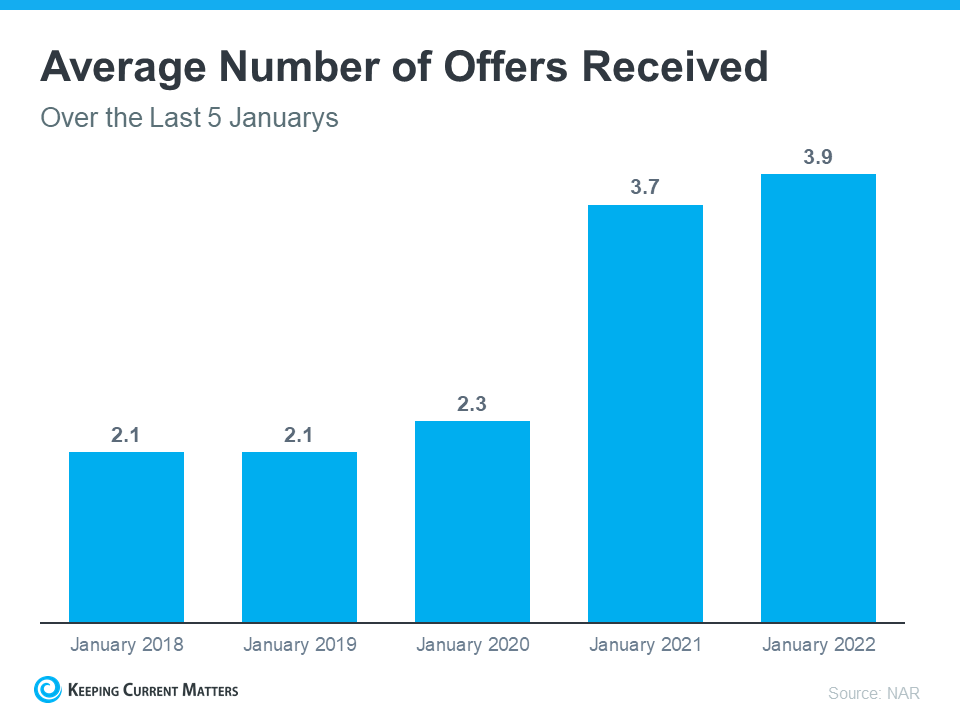
In a bidding war situation like this, doing everything you can to get ahead of the competition is a wise move. That’s because when you find a house and submit an offer, it’ll likely be up against strong offers from other buyers. According to the latest Realtors Confidence Index from the National Association of Realtors (NAR), homes today are receiving an average of 3.9 offers. That’s the most offers we’ve seen in January for the last 5 years (see graph below):
To help you navigate bidding wars with multiple offers, an expert real estate advisor is key. They know what’s worked for other buyers, what sellers are looking for, and how to help you prepare when it comes time to make an offer. Here are three tips to keep in mind that will help you make the best offer possible.
Knowing your budget and what you can afford is critical to your success as a homebuyer. The best way to understand your numbers is to work with a lender so you can get pre-approved for a loan. Pre-approval shows sellers you’re serious, which can give you a competitive edge. You should also know making an offer at the home’s asking price may not be enough. Homes today often sell for more than their listing price. An agent can help you understand the market value of the home and what other homes are selling for in your area.
Speed and the pace of sales are contributing factors to today’s competitive housing market. When homes are selling fast, it’s important to stay on top of the market and be ready to move quickly. Your agent will help you stay up to date on the latest listings and help you put together your best offer as soon as you find the home you want to buy.?
?When you’re up against other offers, putting your best offer forward from the start is key. Lean on your agent to write a strong offer and use their expertise on which levers you can pull to make your offer as enticing as possible. One option is to wave some of your contract contingencies (conditions you set that the seller must meet for the purchase to be finalized). Just remember there are certain contingencies you don’t want to give up, like the home inspection.
No matter what, your agent is your best resource for making an offer that stands out in a competitive market. If you’re ready to get started, reach out to a real estate professional to talk through what you can expect as a buyer and how to kick off a successful home search.
Source: Keeping Current Matters
Realty Executives Midwest
1310 Plainfield Rd. Ste 2 | Darien, IL 60561
Office: 630-969-8880
E-Mail: experts@realtyexecutives.com

Ah the love letter… in today’s raging hot market, with extremely low inventory and bidding wars becoming the new normal, it’s become almost a necessity for prospective buyers to include a love letter in their offer package to sellers. These love letters are written to essentially attract the sellers’ attention and explain the many reasons why they should pick you as the buyer.
However, as love letters become more popular there are also more warning signs being thrown up. The National Association of REALTORS® warns that sending love letters could open real estate professionals and their clients up to fair housing violations. In fact, last year, Oregon was the first state to ban buyer love letters.
There are, however, alternatives you can advise your clients to consider in order to get a leg up on the competition.
Money
Adding things to a love letter like photos of your clients and/or their pets is a novel approach, but that’ll likely have a negligible effect on the seller. At the end of the day, money talks. The best alternative to a love letter is cash. Be sure to always advise your buyers to make the highest offer that they are personally comfortable with, not the number that they think will be highest.
An alternative to this is the all-cash offer. Of course, making an all-cash offer is not possible for most buyers, and if another buyer can offer all cash, then they’ll likely be the buyers who end up purchasing that particular property. However, there are other avenues that you can advise your clients to take, including companies like Ribbon, Knock and FlyHomes that can lend them money to make an all–cash offer.
Waive Contingencies
In the current competitive market that's already full of contingencies, a great alternative to sending a love letter to the sellers is to waive one or two of these contingencies and reduce the burden on them.
Removing the financing contingency and/or the appraisal contingency can do a lot more to make your buyer’s offer more attractive compared to sending a love letter. During the height of the pandemic, many buyers even waived inspection contingencies, although this is never recommended and should only be considered by experienced homeowners.
Tighten the Terms
Another excellent way for your buyers to increase their chances of winning an offer is to tighten their terms. If it’s possible to reduce the timeline from when you submit their offer package to closing, your client's offer will be much more enticing to sellers. Some tactics for doing this is to shorten the length of the escrow period, as well as getting the loan pre-underwritten so that you can remove the financing contingency completely.
Use an Escalation Clause
Seller’s agents are usually tight-lipped when it comes to the exact number of offers and the highest offer their clients have received. An underused tactic that you can use to make your buyer's offer package more enticing to sellers is an escalation clause. This clause states the offer, but adds that they will beat any higher offers that are presented by the amount you specify.
This clause is incredibly useful because it gives your clients the opportunity to present the highest offer. However, be sure to advise your clients that they should cap their escalation clause at the highest sum they are willing and able to pay.
Build Rapport
Lastly, this step falls on you as the real estate professional. Building rapport with the seller’s agent is critical when it comes to increasing your client's chances of nailing that offer. Naturally, the longer you’re in the industry, the more connections and relationships you’ll make with other agents. But there are new agents entering the industry every day and you need to be able to build rapport with other professionals in a short period of time. This is a vital skill for any agent.
Although love letters are endearing and can have a very real impact on a seller’s decision when choosing an offer, the suggestions listed above are more actionable steps that you and your buyer can take to ease the stressful home-buying process.
Source: Rismedia's Housecall
Realty Executives Midwest
1310 Plainfield Rd. Ste 2 | Darien, IL 60561
Office: 630-969-8880
E-Mail: experts@realtyexecutives.com

In today’s housing market, there are far more buyers looking for homes than sellers listing their houses. Based on the concept of supply and demand, this means home prices will naturally rise. Why is that? When there are more people trying to buy an item than there are making that item available for sale, that drives prices up. And that’s exactly the case in today’s housing market. So, knowing what’s happening with the inventory of homes for sale and the demand for housing is crucial for today’s buyers and sellers.
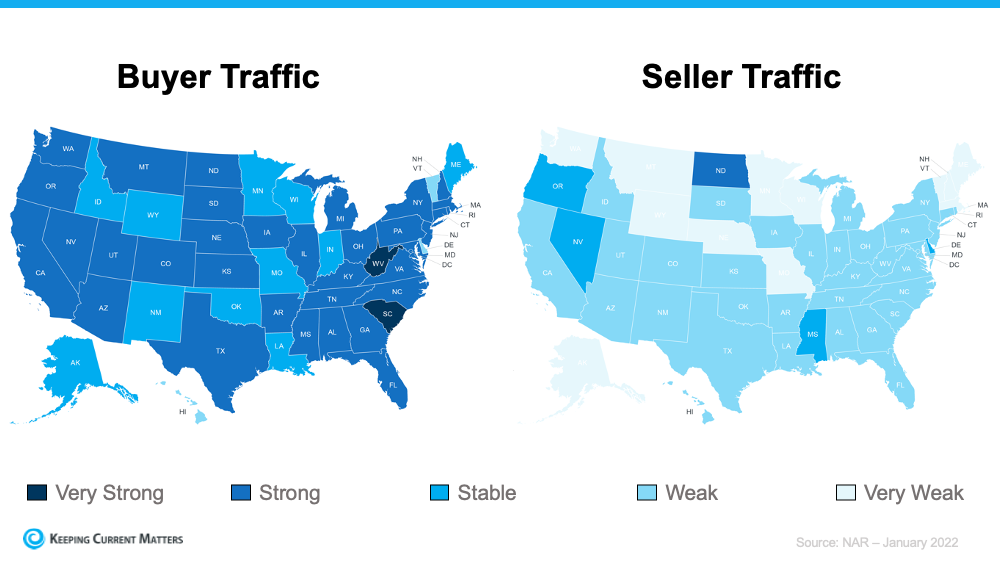
The latest buyer and seller activity data from the National Association of Realtors (NAR) indicates buyer traffic heavily outweighs seller traffic today, as shown in the maps below. There are far darker blues (strong buyer activity) on the left and much lighter blues (weak seller activity) on the right. In other words, this shows how the demand for homes is significantly greater than what’s available to purchase.
Supply is struggling to keep pace with demand. In fact, the inventory of homes for sale recently hit an all-time low. That gives you an incredible advantage when you sell your house. With so few listings, it’s likely more potential buyers will view your house – especially if you work with an agent to price it right. That means there’s a high chance you’ll receive multiple offers or buyers will enter a bidding war for your house. And that dynamic can drive the sale price of your home up.
As a buyer with fewer options available, you’re likely to see more competition, so you need to be strategic to win. First, make sure you have a trusted professional on your side. Your real estate agent will help you understand your local market and work with you to act quickly when the time is right. Even when it’s challenging to find a home, you can still succeed as a buyer today if you have a trusted advisor on your side every step of the way.
Whether you’re a homebuyer, seller, or both, knowledge truly is power. Connect with a trusted real estate professional so you can better understand what’s happening in your local market and achieve your homebuying and selling goals this year.
Source: Keeping Current Matters
Realty Executives Midwest
1310 Plainfield Rd. Ste 2 | Darien, IL 60561
Office: 630-969-8880
E-Mail: experts@realtyexecutives.com
Realty Executives agents are real estate experts. They have the education and expertise you need to navigate through the process of buying or selling a home. From listing at the right price to making the best offer, our Executives have witnessed the best - and most regrettable - decisions homeowners and homebuyers can make. Every day, they are immersed in every aspect of real estate that includes comparable home price analysis, property surveys, credit reports, open houses, HOA agreements, lenders, title companies, homeowners’ insurance, walk-throughs, terms of sale or purchase, repairs, concessions and closing documents. Let our accomplished Executives help navigate you through the process of buying or selling a home.