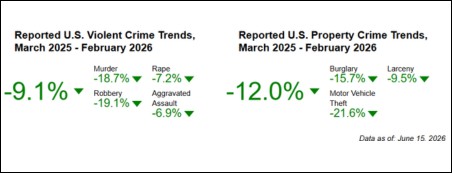
Realty Executives of Northern Arizona
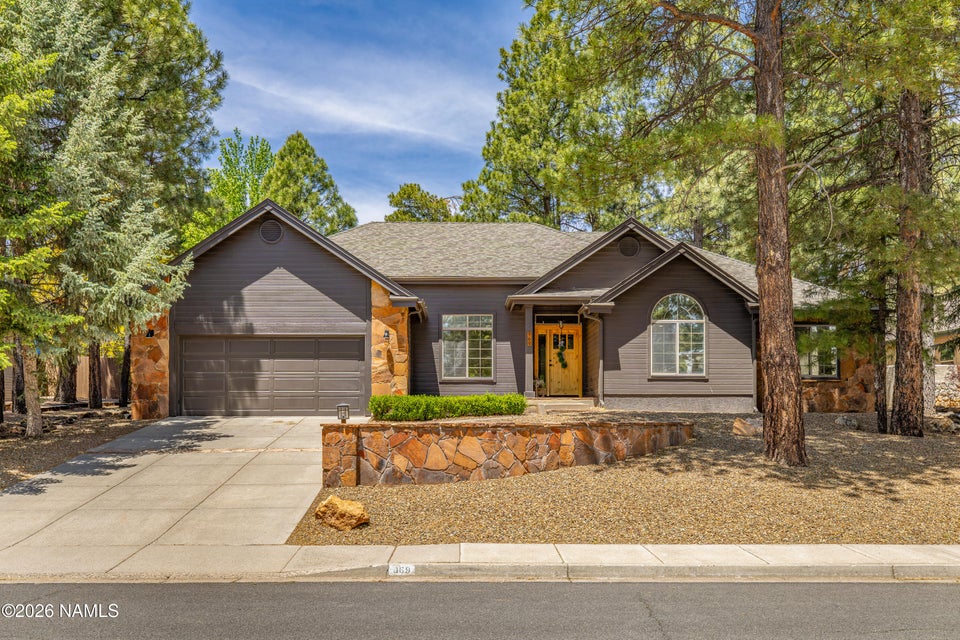
As our office is located in the heart of Flagstaff and northern Arizona, we are often asked about hidden gems that offer both privacy and convenience. One community that consistently tops the list for luxury buyers is Amberwood. Nestled on the southeastern edge of town, this pocket of 178 custom homes feels like a secluded mountain retreat. However, no neighborhood is perfect for every single buyer.
If you are eyeing a move to this gorgeous, tree-lined community, here is a realtor’s breakdown of the pros and cons of living in Amberwood.
The Pros: What Makes Amberwood Shine
The Cons: Important Considerations for Buyers
Let’s Look at Recent Sales in Amberwood:
969 N. Wakonda St.
Sold 6/26/2026 for $981,500
4 Beds/ 2 Baths/ 2,363 square feet
.33 Acre
6135 E. Abbey Rd.
Sold 5/22/2026 for $1,100,000
4 Beds/ 4 Baths/ 3,089 square feet
.7 Acre
The Verdict
Amberwood is an absolute dream for luxury buyers who prioritize natural beauty, quiet street, and high-end architecture without wanting a grueling 30-minute commute to the grocery store. However, if you are looking for an affordable starter home or a neighborhood with a highly active, amenity-dense clubhouse directly on-site, we might want to look at neighboring areas. Having an experienced Realtor® who is familiar with the northern Arizona area can help you look past the surface values of an area to evaluate the long-term lifestyle realities.
Give our office a call, or stop by and chat with one of our professional Realtors today!
*The properties featured were represented by Realty Executives of Northern Arizona agents.
Artificial intelligence now helps agents compare market data, spot patterns, organize client preferences, and evaluate neighborhoods faster. Final judgment still belongs to the agent who understands the place.
The useful question is not whether AI can replace an agent. It is whether agents can remove repetitive work and focus on decisions clients need help making.
This piece looks at how agents are using AI to research neighborhoods, read price trends, and understand buyers without giving up the expertise clients rely on.
Why AI Fits Real Estate Now
Real estate produces enormous amounts of information, often stored in separate places. Here are the reasons AI has become practical for everyday agent work:
Market data, listing photos, foot traffic, climate risk maps, school details, commute times, and buyer feedback connect quickly. Rather than opening 12 tabs, agents can use a system to uncover patterns, contradictions, and unusual shifts.
Clients also expect faster answers. They want to know why prices move, why one block differs from another, and whether a property fits their routines.
AI helps with that first pass. It can scan the haystack, but the agent still must identify the needle, check the context, and explain the result.
The strongest agents treat AI as an assistant. Software handles sorting while agents bring local knowledge, judgment, negotiation skills, and empathy.
Researching Neighborhoods With AI
Neighborhood research suits AI because the information is broad and scattered. Below are data sources agents can combine before confirming findings locally:
These tools create a baseline. They reveal where amenities cluster, how traffic changes, and where environmental exposure may influence maintenance, resale, or home insurance conversations.
Gregor Emmian, Deputy Chief Digital Growth Officer at Rise, regularly works with data, performance indicators, and digital tools to identify patterns that support better decisions.
He says, “Machine processing surfaces patterns humans would take weeks to compile, though it still misses the lived experience of a place. AI can scan demographics, crime statistics, and school ratings in seconds and give you a solid baseline. But it can’t tell you which street feels safe at night or where neighbors actually know each other. That local texture still comes from a realtor who walks those blocks.”
Numbers describe access, risk, and movement. They cannot capture a street at 7 p.m., a Saturday market, or school pickup interactions.
Good agents use the data, then visit. They observe traffic, verify labels, discuss objective property features, and follow fair housing rules. Machine speed and human observation together give clients a fuller picture.
Analyzing Price Trends With AI
Pricing benefits from large, consistent datasets because small changes become easier to see. These are the main signals valuation tools examine:
National and metro measures such as the S&P CoreLogic Case-Shiller Indices track price movements through a consistent methodology.
The Zillow Home Value Index uses machine-learned valuations to show regional direction. The Cotality Home Price Index Forecast provides near-term national and local forecasts, while the FHFA House Price Index offers another view based on conforming mortgage data.
Many systems use gradient-boosted trees, random forests, and time-series models. Software weighs small signals, compares earlier outcomes, and updates estimates as sales appear.
That check separates a useful forecast from a careless one. AI-powered property valuation may identify a range, but an agent may notice recent sales involving unusual renovations, family transfers, or distressed conditions.
Local context changes numbers. A new employer, school boundary, or road project may shift demand before the model understands why.
Use the forecast as a signal, not a verdict. Compare it with current listings, recent sales, property condition, seller goals, and buyer behavior this month.
Understanding Buyer Profiles With AI
AI can interpret buyer behavior without reducing the relationship to a formula. Below are three ways it can improve recommendations while preserving consent, privacy, and human judgment:
Learning from buyer behavior
With permission, modern customer relationship management systems can learn from saved searches, clicks, viewing time, rejected listings, and feedback. Property alerts improve as the buyer responds. The goal is not to define someone permanently but to notice changing preferences faster. A buyer who begins with downtown condos may reveal a stronger interest in outdoor space, shorter school trips, or quieter streets.
Turning preferences into better matches
The NAR’s 2025 REALTORS® Technology Survey found that 70% of Realtors use at least one emerging technology, with AI and generative AI leading adoption at 41%. Predictive consumer analytics is also used to understand preferences, improve interactions, and make recommendations more relevant.
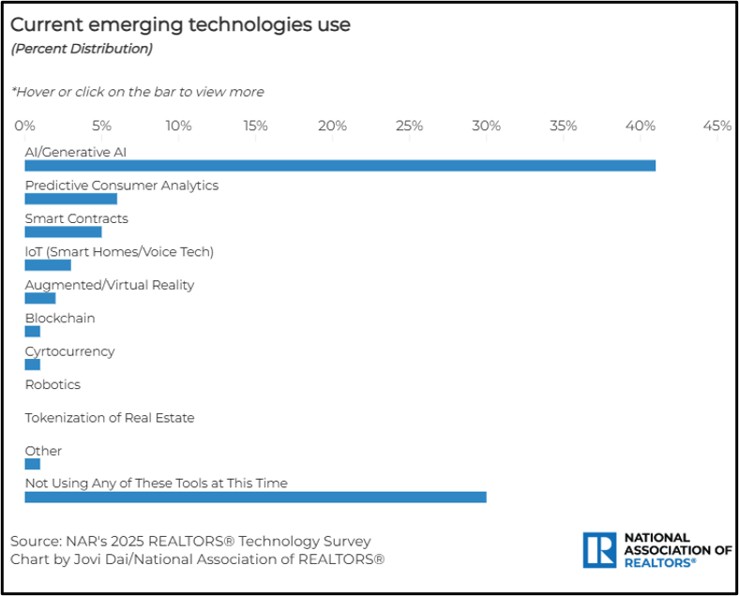
Smart filters may suggest areas fitting a commute and budget, while machine vision identifies features such as arched doorways, gas ranges, or mature trees. AI-assisted CRMs can then prioritize follow-ups and explain why a listing deserves attention.
Protecting privacy and fair access
Personalization must stay transparent. Agents should explain what information is collected and why it helps. They must follow the Fair Housing Act and avoid recommendations that create steering or discriminatory inferences. When a system produces a questionable pattern, pause, review the inputs, and ask whether the same method would be appropriate for every client.
AI can anticipate patterns, but it cannot experience a buyer’s reaction to a kitchen, backyard, staircase, or street. That response can change the shortlist in seconds.
An agent still has to listen. The best recommendation is not simply the listing with the highest score but the property fitting the buyer’s needs, limits, and reactions.
Balancing AI with Real Estate Expertise
AI handles repetitive analysis, but agents retain the most responsible work. Here are 4 areas where the combination is especially useful:
Jason Ledbetter, a growth strategist experienced in data-driven optimization, scalable systems, and hands-on execution, believes AI works best when it supports rather than replaces human judgment.
He says, “Let AI crunch the numbers, but rely on judgment at the negotiating table. Technology can set the stage, while the agent reads emotion, builds trust, and guides the deal. Professionals serious about staying relevant should keep learning these tools while strengthening the interpersonal skills that machines cannot replicate.”
That balance takes practice. Real estate agents can prepare thoroughly, communicate clearly, and clarify client choices.
Continuous learning matters. NAR education resources can strengthen technical knowledge and trust-based service. Agents do not need every platform, but they should question outputs, recognize weak assumptions, and explain recommendations plainly.
What Comes Next
More AI will become nearly invisible in real estate workflows. These are likely to become familiar parts of the client experience:
Convenience will rise, but so will responsibility. Agents must handle information ethically, explain automated processes, and carefully review decisions affecting access, pricing, or opportunity.
The Blueprint for an AI Bill of Rights offers a marker for rights-respecting systems. The FTC crackdown on deceptive AI claims and schemes reinforces the need for honest claims, bias checks, reproducible methods, and clear disclosures.
Treat AI like a capable assistant. Test its conclusions, ask better questions, and connect every output to the property, the market, and the client’s life.
That is how agents protect trust while delivering sharper guidance from the first search to closing.
Author’s Bio: Brooke Webber is a passionate advocate for a people-first strategy in HR. Her major focus areas are workplace psychology and employee listening, where she has built strong experience as a writer and industry voice.
Call or come by our office to talk with a friendly, knowledgeable Realtor® today!
Realty Executives of Northern Arizona - 15 E. Cherry Ave., Flagstaff, AZ 86001 - (928) 773-9300

Flagstaff sits at about 7,000 feet above sea level, surrounded by mountains, forests, and high plateaus. This elevation brings cooler temperatures year-round and allows for distinct seasonal changes—very unlike much of the rest of the state.
Winter in Flagstaff is unmistakably winter. Snow generally begins in late November or December and can continue through April, with occasional flurries into May.
Flagstaff ranks among the snowiest cities in Arizona, and winter brings plenty of opportunities for skiing, snowboarding, sledding, and scenic snowshoe hikes.
Spring in northern Arizona is a transitional season with lots to enjoy:
Snow can still fall in early spring—sometimes even into April—but by late April and May, the snowpack recedes, plants start blooming, and forests turn vibrant with color.

This mild weather makes Flagstaff a favorite summer destination for hiking, mountain biking, and exploring Grand Canyon Country without the intense heat seen farther south. Afternoon thunderstorms brought by the monsoon season (typically late July through August) are common, bringing short bursts of rain and dramatic skies daily.
As summer winds down, autumn arrives with cool, clear days:
Flagstaff’s surrounding ponderosa pine and aspen forests turn golden and orange, making fall a picturesque time to live in or visit northern Arizona. The cooler air and fewer crowds also make outdoor activities particularly enjoyable.
Flagstaff and northern Arizona truly offer four distinct seasons—an experience that’s both refreshing and dynamic. Residents enjoy:
Whether you’re a longtime resident, a potential home buyer, or someone relocating from a warmer climate, understanding these seasonal rhythms helps you appreciate what makes this region special—and prepares you for life in a place with real seasonal variety.
Looking for privacy, towering ponderosa pines, and postcard-worthy views of the San Francisco Peaks? The A-1 Mountain area—located just minutes west of downtown Flagstaff—is one of the region's most unique real estate markets. Let’s break it down with some Pros and Cons.
The Pros: Why Buyers Love It
The Cons: The Real Estate Realities
Let’s Look at Recent Sales in A1 Mountain:

Sold 1/16/2026 for $1,600,000
5 Beds/ 3.5 Baths/ 4,021 square feet
2.19 Acres

Sold 6/5/2026 for $1,760,000
5 Beds/ 3 Baths/ 3/459 square feet
2.14 Acres
The Verdict
A-1 Mountain is perfect for the independent buyer who craves a rugged, rural lifestyle without sacrificing a quick commute to dinner downtown. However, it is not a traditional turnkey suburb. Having an experienced Realtor® who is familiar with the northern Arizona area can help you look past the scenic beauty to evaluate the long-term lifestyle and financial realities of buying in any area.
Give our office a call, or stop by and chat with one of our professional Realtors® today!
*The properties featured are not representative of the brokerage’s transaction history.
If you’ve ever fallen for a neighborhood before you even set foot in a house, you’re not alone.
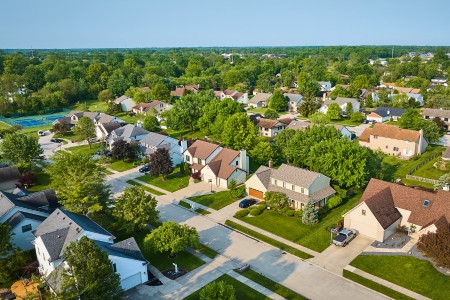
Spend ten minutes on a tree-lined block, and you can almost see your morning routine unfold. Hear a lively café, and you start picturing Friday nights.
That pull matters. Neighborhood choice quietly shapes:
And while we talk a lot about square footage and quartz counters, the biggest decision often happens outside the front door.
To understand the psychology behind why buyers choose one neighborhood over another, read on.
Understanding Buyer Psychology
Homebuyer psychology looks at how people make purchase decisions- not to mention the shortcuts and emotions influencing those choices. In real estate, that means the subtle forces that steer someone toward one neighborhood and away from another…even when the homes look similar on paper.
Cognitive biases appear constantly. Confirmation bias nudges us to notice only the details that match our initial impression of an area and to ignore those that don’t.
The availability heuristic makes a recent news story about crime feel more representative than long-term data really shows because it’s easy to recall. Loss aversion can spark “fear of missing out” in hot markets, pushing buyers to stretch for a place simply because others want it.
Underneath all of that sits Maslow’s hierarchy of needs. We start
with safety and stability. Then we look for a sense of belonging and esteem. And when we can, we reach for meaning and growth. (Credit: Illustration by Emily Roberts, Verywell)
In neighborhood terms, that might mean gravitating to places that feel safe, connected, or aligned with our identity. Buyers often evaluate neighborhoods based on how they remind them of (let’s say) positive childhood experiences or represent their aspirational identity.
For instance, a young professional might gravitate toward urban lofts. Why? Because they associate that environment with success and sophistication. Meanwhile, a growing family seeks tree-lined streets. Why? That echoes their own upbringing.
Key Factors for Neighborhood Selection
There are key factors that compel people to choose a particular neighborhood over another. Heed our advice: psychology is involved! That said, here’s what homebuyers usually consider:
We all look for clues we’ll fit in. It’s natural to scan for strollers or skateboards and pickup games or poetry nights and think, “these are my people.”
Social identity theory calls this mirroring. When we see bits of ourselves reflected in a community, the place feels more welcoming and less risky.
People naturally seek neighborhoods where they see themselves reflected, whether that’s through shared interests or common values.
For example, neighborhoods with active community gardens appeal to environmentally conscious buyers. Meanwhile, areas with strong youth sports programs draw families who prioritize those activities. This isn’t about labels. It’s about daily rhythms.
Perceived safety anchors decision-making. Buyers scan crime rates, lighting, foot traffic, and even how well-maintained the sidewalks look. It’s not just rational, it’s primal. Our brains prioritize environments that allow us to relax.
Data helps here. You can explore official statistics in the FBI’s Crime Data Explorer. Many cities publish neighborhood-level reports.
Schools also feed that sense of security. Sandra Black’s influential study found higher test scores measurably boost nearby property values, all else equal.
Buyers often use third-party school resources to start their research. Then, they follow up with visits and conversations. (Source: FBI Crime Data Explorer)
Shorter trips mean more life between trips. The average one-way commute in the U.S. hit 27.6 minutes before the pandemic. The longest on record at the time.
That’s nearly an hour a day. It’s no surprise why proximity to work, childcare, groceries, and parks appear as a must-have for many buyers.
Lifestyle alignment matters, too. Some people thrive on the energy of city blocks and late-night ramen. Others exhale when they reach a quiet cul-de-sac at dusk.
The rise of hybrid and remote work shifted those priorities again:
Many buyers now trade shorter commutes for bigger yards or trail access. Meanwhile, others double down on walkable, amenity-rich hubs.
Clean streets, consistent architecture, cared-for public spaces, and green environments tell our brains a neighborhood is stable and loved.
Research continues to link access to urban green space with lower stress and better mental health. The World Health Organization (WHO) summarizes the benefits of urban green spaces for health– from increased physical activity to improved social connection.
Walkability also has a measurable pull. Higher walk scores correlate with higher home values in many markets. Even after accounting for the home’s size and age. This makes sense. Walking to coffee or a corner store turns errands into micro-adventures, and we tend to pay for that daily delight.
Most buyers build a mental map online before they ever lace up their shoes. Social media turns local coffee shops into mini billboards. Neighborhood forums surface both gems and gripes. And proptech tools like AI-powered property valuation make invisible things visible.
For example, someone researching health and fitness topics online may seek neighborhoods with easy access to healthcare services and wellness clinics. Online tools and data can help buyers quickly identify areas that fit their needs.
Further, virtual neighborhood tours and heat maps showing everything from walkability scores to coffee shop density give buyers unprecedented insight before they ever visit in person. These tools help buyers validate their emotional reactions with concrete data.
Affordability sets the stage for everything else. Monitoring mortgage rates, property taxes, homeowner’s insurance, and HOA dues all shape a buyer’s map.
When rates rise, buyers often broaden their search or adjust their feature preferences. When rates fall, urgency can creep in. The Freddie Mac Primary Mortgage Market Survey provides weekly rate data.
Market mood plays with our heads, too. In a hot cycle, bidding wars can trigger herd behavior and the sense that “everyone wants in here, so should I.” In slower markets, the same block might feel “less desirable,” even when nothing about daily life there changed.
Long-term fundamentals still matter, like property values and neighborhood resilience over time. The FHFA House Price Index tracks price movements across regions.
The Bottom Line
Neighborhood decisions run on a blend of heart and head. We look for safety and stability, but we also chase identity and belonging. Small daily joys like strolling to coffee or waving to the same dog walker each evening make a difference. The trick is to notice those pulls, then sanity-check them with data and on-the-ground visits.
If you’re shopping now, pause and ask: What does a great weekday look like here? What tradeoffs am I making on purpose? Which of my assumptions need a reality check?
When you balance psychology with practical facts, you’ll pick a place that fits not just your budget, but your life.
About the Author: David Abraham is an accomplished tech lawyer and legal marketing expert with a robust background in artificial intelligence, fintech, human rights law, and digital marketing. An active sports enthusiast, avid reader, and chess player, David combines his legal expertise with marketing acumen to drive innovation at the intersection of law, tech, and business.
~Realty Executives International, Alysia Heun
In the coming months, we will bring the different neighborhoods around Flagstaff into focus. Check back to learn more about our lovely northern Arizona!
Where the Experts are - Serving Flagstaff and Northern Arizona since 1977
 |
|
 |