(Published on - 11/21/2025 11:04:39 PM)
And Why Your 1990s Gem Might Want to Hit the Market Yesterday
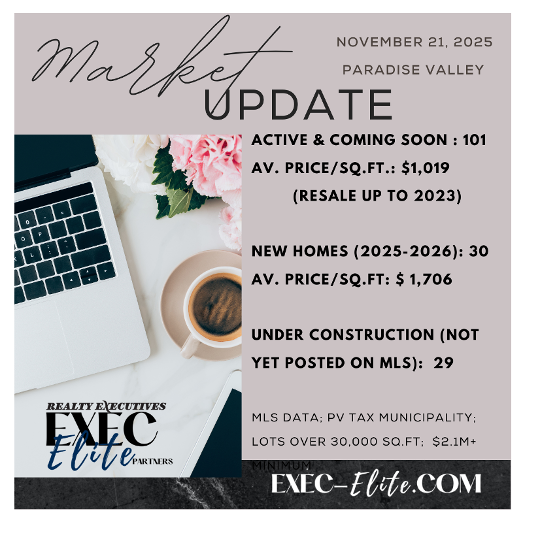
If you're selling a resale home in Paradise Valley right now, here are the stats that should keep you up at night: There are 101 active and coming-soon move-in ready listings of PV homes built in 2023 or earlier, averaging a cool $1,019 per square foot. Solid deals, right? But that does not include the 30 brand-new builds (2025–2026 vintage) already listed at a blistering $1,706 per square foot. And then there are those unpublished, unlisted 29+ homes under construction currently in PV for 2026 delivery.
Do the math: That's 59 shiny new competitors flooding the market—nearly 60% as many as the existing resale inventory. Sellers holding out for post-holiday magic? Buckle up. By January, you'll be swimming upstream against a tidal wave of turnkey palaces that make your 1995 beauty look like it's auditioning for a HGTV reno special. The thesis is simple: Sell now, before Paradise Valley logs its largest new-home inventory in history. Cash buyers are already circling, and they're not here to negotiate—they're here to pounce on the deals.
Buyers aren't blind to this. They've toured those gleaming new builds and come away with expectations dialed to 11. Every bedroom? Ensuitified like a Four Seasons hotel room. "Dirty" kitchens? More like butler pantries on HGH—hidden prep zones with pro-grade appliances and zero sightlines to the main event. Primary closets? We're talking 400+ square feet: his-and-hers islands, built-in jewelry vaults, and enough space for a six-person family reunion. Oh, and the wellness suite: infrared saunas steaming up, cold plunges at Arctic perfection, red-light therapy panels glowing like a sci-fi spa, plus circadian lights that sync your circadian rhythm to the saguaros outside.
Denise van den Bossche, a 40-year Paradise Valley real estate vet, nails the dilemma: "The biggest competition right now is new construction. Buyers have seen so much new inventory that their vision is completely skewed. They walk into a beautiful resale and immediately start mentally renovating it to match what they just toured for $1,700 a square foot. Most can't swing the new one outright, but that doesn't stop them from procrastinating on the resale—because in their heads, it's now 'lacking' those must-haves."
Enter buyer freeze: They crave the full wellness retreat, but their wallet whispers "1998 vibes only." So they tour endlessly, dream-scroll Zillow at 2 a.m., and ghost your showing. Days on market? Stretching from 30 to 90... to "let's just Airbnb it for the winter." Price cuts? They sting like the wasp we never realized we were allergic to.
That's where cash buyers strut in like the villains of a real estate thriller. No lender drama, no appraisal roulette, no 45-day limbo. They spot your stalled 1990s stunner—gorgeous bones, that epic mountain-view pool, zero HOA headaches—and think: Discounted canvas for my custom wellness wing. Their offer? Asking price minus $500K–$1M for the "upgrades" (read: gutting the master for a plunge pool and sauna cathedral). It's not personal; it's physics. With 59 new beasts incoming, they're betting you'll blink first.
The irony? Those cash offers often close faster than a Tesla Supercharger. And the new-build holdouts? They're the ones truly paralyzed, overpaying for features half of them won't use (looking at you, unused cold plunge gathering dust).
Paradise Valley sellers: If your home was born in the pre-iPhone era, listen up. An avalanche of brand-new, wellness-loaded spec houses is roaring down the mountain straight into 2026. Soon, every buyer who walks through your meticulously cared-for estate will be armed with a wish list they can’t actually afford—and they’ll happily dock your price for every missing cold plunge and sauna they’ve been hypnotized into believing is “standard.”
Cash is still king, “new” is the new crack, and right now your resale is being treated like the side salad nobody ordered. List today, while the competition is only 30 deep instead of double that. Beat the wave, grab the motivated (and slightly less delusional) buyers holiday shopping to beat the end of the year deadlines, and let the wellness warriors fight over the scraps next spring.
The clock is ticking louder than a red-light therapy panel.
 This Month's National Luxury Home Marketing Report
The Luxury Market nationwide has continued to flourish throughout 2025. According to this month's stats from the national Luxury Housing Market Institute, “Luxury single-family sales in North America continued their upward momentum in October, with transactions rising 9.9% year-over-year and 6.5% month-over-month. This reinforces the pattern to date for 2025, where sales activity has outperformed 2024, suggesting a more engaged and motivated buyer pool.”



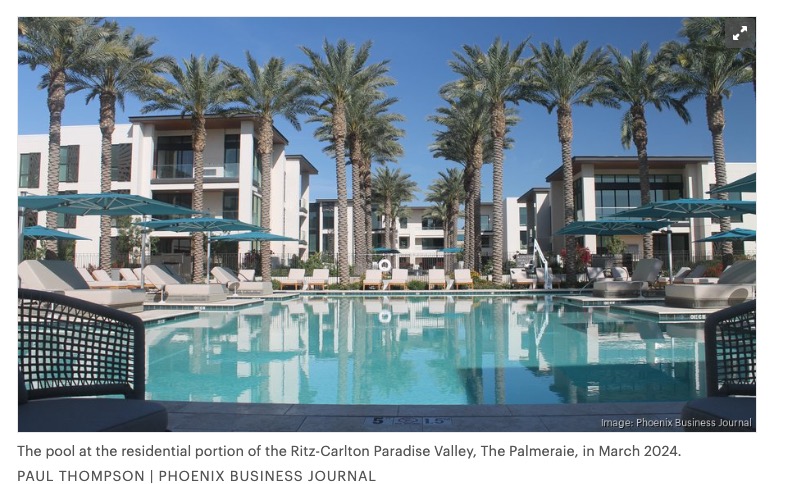 The developer behind the Ritz-Carlton Paradise Valley is facing foreclosure and is once again engaged in litigation. According to the Phoenix Business Journal, Five Star Development filed for Chapter 11 bankruptcy protection on November 4 in the Southern District of Texas.