

Realty Executives Exceptional Realtors®

Nicole Monahan

Regional Branch Manager (570) 470-9006

Nicole Monahan

Regional Branch Manager

Realty Executives Exceptional Realtors®

Blog

The Truth About Where Home Prices Are Heading

(Published on - 7/11/2025 12:01:13 PM)

The Truth About Where Home Prices Are Heading


There are plenty of headlines these days calling for a housing market crash. But the truth is, they’re not telling the full story. Here’s what’s actually happening, and what the experts project for home prices over the next 5 years. And spoiler alert – it’s not a crash.

Yes, in some local markets, prices are flattening or even dipping slightly this year as more homes hit the market. That’s normal with rising inventory. But the bigger picture is what really matters, and it’s far less dramatic than what the doom-and-gloom headlines suggest. Here’s why.

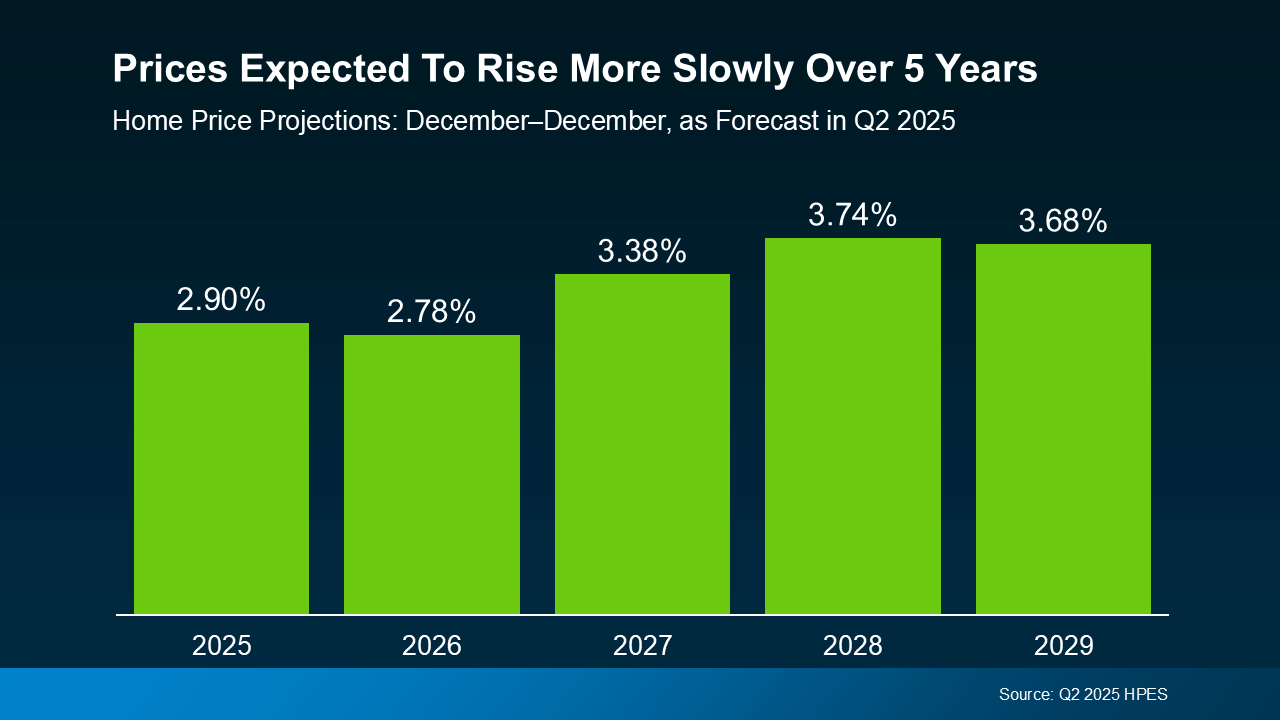
Over 100 leading housing market experts were surveyed in the latest Home Price Expectations Survey (HPES) from Fannie Mae. Their collective forecast shows prices are projected to keep rising over the next 5 years, just at a slower, healthier pace than what we’ve seen more recently. And that kind of steady, sustainable growth should be one factor to help ease your fears about the years ahead (see graph below):
 

And if you take a look at how the various experts responded within the survey, they fall into three main categories: those that were most optimistic about the forecast, most pessimistic, and the overall average outlook.

Here’s what the breakdown shows:
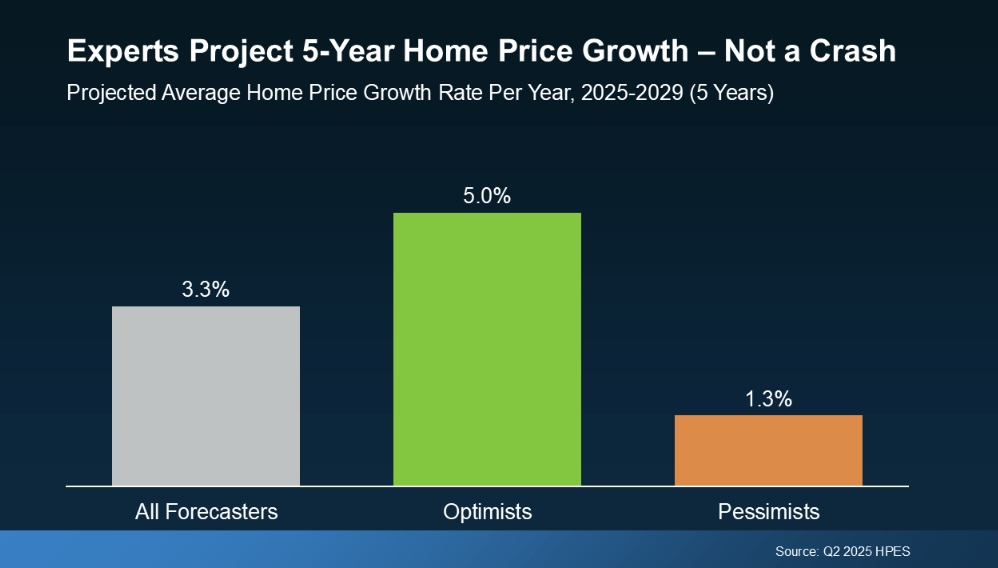
 

  • The average projection is about 3.3% price growth per year, through 2029.
  • The optimists see growth closer to 5.0% per year.
  • The pessimists still forecast about 1.3% growth per year.

Do they all agree on the same number? Of course not. But here’s the key takeaway: not one expert group is calling for a major national decline or a crash. Instead, they expect home prices to rise at a steady, more sustainable pace.

That’s much healthier for the market – and for you. Yes, some areas may see prices hold relatively flat or dip a bit in the short term, especially where inventory is on the rise. Others may appreciate faster than the national average because there are still fewer homes for sale than there are buyers trying to purchase them. But overall, more moderate price growth is cooling the rapid spikes we saw during the frenzy of the past few years.

And remember, even the most conservative experts still project prices will rise over the course of the next 5 years. That’s also because foreclosures are low, lending standards are in check, and homeowners have near record equity to boost the stability of the market. Together, those factors help prevent a wave of forced sales, like the kind that could drag prices down. So, if you’re waiting for a significant crash before you buy, you might be waiting quite a long time.

 

Bottom Line

If you’ve been on the fence about your plans, now’s the time to get clarity. The market isn’t heading for a crash. It’s on track for steady, slow, long-term growth overall, with some regional ups and downs along the way.

Want to know what that means for our neighborhood? Because national trends set the tone, but what really matters is what’s happening in your zip code. Let’s have a quick conversation so you can see exactly what our local data means for you.


Selling and Buying at the Same Time? Here’s What You Need To Know

(Published on - 7/10/2025 12:11:12 PM)

Selling and Buying at the Same Time? Here’s What You Need To Know


If you're a homeowner planning to move, you're probably wondering what the process is going to look like and what you should tackle first:

  • Is it better to start by finding your next home?
  • Or should you sell your current house before you go out looking?

Ultimately, what’s right for you depends on a lot of factors. And that’s where an agent’s experience can really help make your next step clear.

They know your local market, the latest trends, and what’s working for other homeowners right now. And they’ll be able to make a recommendation based on their expertise and your needs.

But here’s a little bit of a sneak peek. In many cases today, getting your current home on the market first can put you in a better spot. Here’s why that order tends to work best (and how an agent can help).


The Advantages of Selling First

1. You’ll Unlock Your Home Equity

Selling your current home before you try to buy your next one allows you to access the equity you've built up – and based on home price appreciation over the past few years, that’s no small number. Data from Cotality (formerly CoreLogic) shows the average homeowner is sitting on $302K in equity today.

And once you sell, you can use that equity to pay for the down payment on your next house (and maybe even more). You could even have enough to buy your next house in cash. That’s a big deal, and it could make your next move a whole lot easier on your wallet.

2. You Won't Be Juggling Two Mortgages

Trying to buy before you sell means you could wind up holding two mortgages, even if just for a few months. That can get expensive, fast – especially if there are unexpected repairs or delays. Selling first removes that stress and helps you move forward without the financial strain. As Ramsey Solutionssays:

“It’s best to sell your old home before buying a new one to avoid unnecessary risks and possible headaches.”

3. You’ll Be in a Stronger Position When You Make an Offer

Sellers love a clean, simple offer. If you’ve already sold your house, you don’t need to make your offer contingent on that sale – and that can help you stand out. Your agent can position your offer to be as strong as possible, so you have the best shot at getting the home you want.

This can be a big advantage in competitive markets where sellers prefer buyers with fewer strings attached.


One Thing To Keep in Mind

But, like with anything in life, there are tradeoffs. As you weigh your options, consider this potential drawback, too:

1. You May Need a Place To Stay (Temporarily)

Once your house sells, you may need a short-term rental or to stay with family until you can move into your next home. Your agent can help you negotiate things like a post-closing occupancy (renting the home from the buyer for a set period) or flexible closing dates to help smooth out that transition as much as possible.

Here’s a simple visual that can help you think through your options (see below):

But the best way to determine what’s best for you and your specific situation? Talk to a trusted local agent.


Bottom Line

In many cases, selling first doesn’t just give you clarity, it gives you options. It helps you buy with more confidence, more financial power, and less pressure.

If you're ready to make a move but you’re not sure where to begin, let’s talk. We can walk through your potential equity, your timing, and your local market conditions so you can decide what’s right for you.


What You Should Know About Getting a Mortgage Today

(Published on - 7/8/2025 11:51:31 AM)

What You Should Know About Getting a Mortgage Today


If you’ve been putting off buying a home because you thought getting approved would be too hard, know this: qualifying for a mortgage is starting to get a bit more achievable, but lending standards are still strong.

Lenders are making it slightly easier for well-qualified buyers to access financing, which is opening more doors for people ready to make a move.

So, if strict requirements were holding you back, this shift could be the opportunity you’ve been waiting for, without repeating the risky lending practices that led to the housing crash back in 2008.


Lenders Are Opening More Doors

Banks are offering credit to more people in an effort to boost activity in the housing market, including buyers who have lower credit scores or smaller down payments. And that means more people are getting approved for mortgages.

But it doesn’t mean we’re heading for another crash like 2008. Even with the slight easing lately, lending standards today are still much tighter than they were back then.

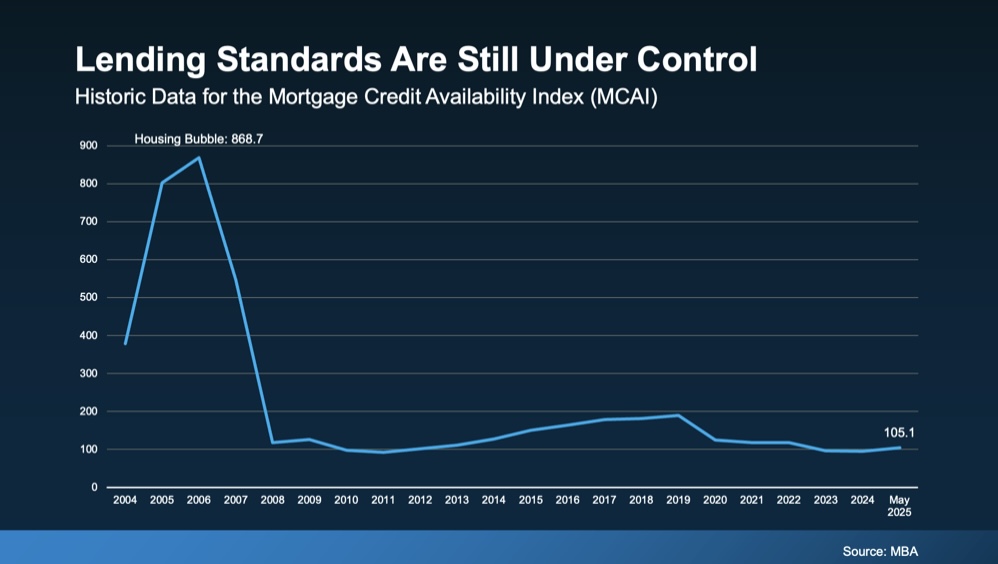
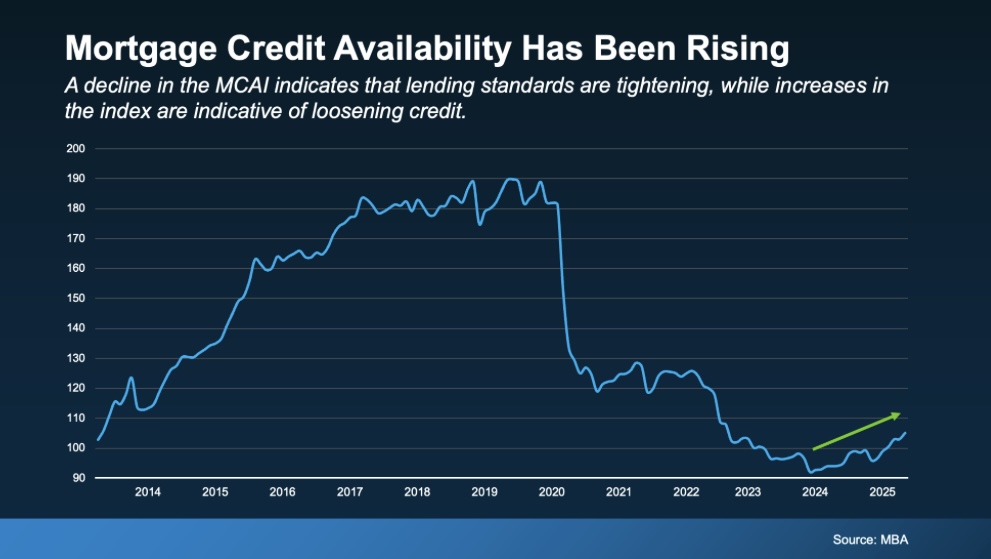
According to the Mortgage Bankers Association (MBA), the Mortgage Credit Availability Index (MCAI) has been going up. This index shows how easy or hard it is for people to get a mortgage.

When the index rises, it means banks are easing their lending standards. And in May, credit availability hit its highest point in almost three years (see graph below):

Why does this matter to you? It means you may now be able to qualify for a mortgage that you wouldn’t have just a few months ago. The National Association of Underwriters (NAMU) explains:

“Mortgage credit availability surged in May, reaching its highest level since August 2022. The uptick signals that lenders are increasingly willing to loosen underwriting standards, providing borrowers with greater access to financing options . . .

But What About 2008?

Now, you might be thinking, “Didn’t looser lending standards play a role in the 2008 housing crash?” That’s a smart question – and an important one. But here’s the difference. While credit availability is rising, lending standards are still under control.

Based on MCAI data going all the way back to 2004, today’s lending levels are still way below what they were leading up to the housing bubble (see graph below):

So, increasing mortgage credit availability right now isn’t a concern. It’s just a good thing for anyone looking to buy a home. As Brett Hively, SVP of Mortgage, Finance, and Strategy at Ameris Bancorp, recently said:

“This uptick is opening the door for many borrowers to move forward with a home purchase or a refinance program.”

Bottom Line

So, if you’ve been holding back because you thought you couldn’t get approved for a mortgage, it’s worth finding out what’s possible today. Let’s talk with a lender about your options and see if you’re ready to take that next step toward homeownership.


Think No One’s Buying Homes Right Now? Think Again.

(Published on - 7/3/2025 12:04:09 PM)

Think No One’s Buying Homes Right Now? Think Again.


If you’ve seen headlines saying home sales are down compared to last year, you might be thinking – is it even a good time to sell? 

Here’s the thing. Sure, the pace of the market has cooled compared to the frenzy we saw just a few years ago, but that’s not a red flag. It’s a return to normal. And normal doesn’t mean nothing’s happening. Buyers are still out there – and homes are still selling.

Why? Because real life doesn’t pause for perfect conditions. There are always people who need to buy – and this year is no exception. Buyers who are in the middle of a big change in their lives, a new marriage, a growing family, or a new job still need to move, no matter where mortgage rates are. And they may be looking for a home just like yours.


Every Minute 8 Homes Sell

Let’s break it down using the latest sales data from the National Association of Realtors (NAR). Based on the current pace, we’re on track to sell 4.03 million homes this year (not including new construction).

  • 4.03 million homes ÷ 365 days = 11,041 homes sell per day
  • 11,041 homes ÷ 24 hours = 460 homes sell per hour
  • 460 homes ÷ 60 minutes = roughly 8 homes sell every minute

That means in the time it takes to read this, another 8 homes will sell. Let that sink in. Every minute, buyers are making moves – and sellers are closing deals.


The Right Agent Makes All the Difference

If you’ve been holding off on selling your house because you think buyers aren’t out there, let this reassure you – there are still buyers looking to buy.

But since the market is balancing out, selling today takes more than just putting up a sign in the yard. You’ve got to price your house right, market it well, and know how to reach the buyers who are ready to act. That’s where a trusted local agent comes in.

They’ll help you navigate this market, position your home to stand out, and guide you through every step.


Bottom Line

The market hasn’t stopped. Buyers are still buying. Life is still happening. And if selling your home is part of your next chapter, let’s make it happen.

Roughly 11,000 homes are selling every day – and yours could be next. When you’re ready to take the next step, let’s connect.


Why Big Investors Aren’t a Challenge for Today’s Homebuyer

(Published on - 7/2/2025 11:26:36 AM)

Why Big Investors Aren’t a Challenge for Today’s Homebuyer


Remember the chatter in the headlines about all the homes big institutional investors were buying? If you were thinking about buying a home yourself, you may have wondered how you’d ever be able to compete with that. Here’s the thing. That’s not the challenge so many people think it is – especially right now.

Let’s break down what’s really going on and why the recent shift in the approach investors are taking could tip the scales in your favor.


Large Investors Are Pulling Back

The truth is institutional investors never represented as big a share of the housing market as people think. And now, they’re backing off even more.

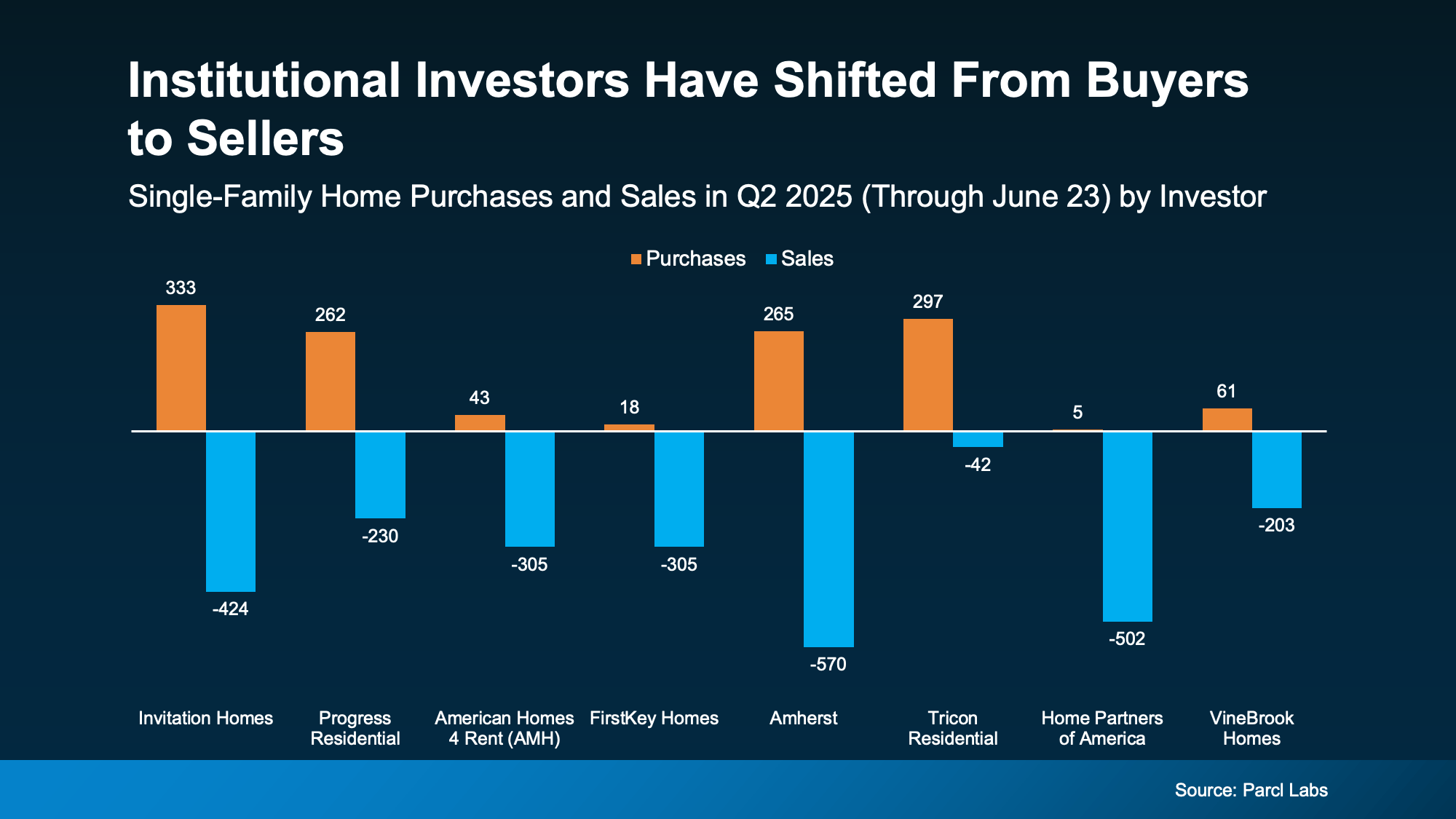
Today, big real estate investors aren’t buying as many homes. In fact, they’re actually selling more than they’re buying.

According to data from Parcl Labs, 6 out of 8 of the largest institutional single-family rental investment companies in America sold more homes than they bought in the second quarter of 2025 (see graph below):


And here’s the stat that really puts it in perspective. According to Dominion Financial, for every home being bought by big investors, about 1.75 are being sold.


What’s Causing Big Investors To Change Course?

The reason institutional investors aren’t buying as many homes now compared to recent years is actually pretty simple. It’s because home values aren’t rising as fast as they were a few years ago, but the costs associated with rental maintenance are.

Since most institutional investors buy homes to rent them out, those higher costs eat into their margins. Remember, to investors, homebuying is a business.

But you’re not buying a home just for this year or next. You’re buying a place to build a life, and that’s a long-term play.

Historically, home values tend to rise over time. So, while investors may be sidelined by what’s happening right now, you’re in a different position entirely. You have the chance to buy while competition is lower and benefit from potential long-term price appreciation – something most investors are choosing not to wait for as they focus on shorter-term returns.


What Does All This Mean for You?

According to a recent survey, about 55% of real estate investors have no plans to grow their rental portfolios now or in the near future. With big investors stepping back, that means less competition from deep-pocketed buyers. And since they’re adding to today’s for-sale inventory, it also creates more options for you.


Bottom Line

If you’ve been holding off on buying, now might be the time to take another look. Let’s connect so you can get expert guidance on what’s available and what might be a good fit for you.

What kind of home would you be excited to make yours this year?


Posts

;

Questions? Need Advice? Complete this form for more information.

Contact Information::


Copyright 2025 Realty Executives All Rights Reserved

Regional Branch Manager

Nicole Monahan

Contact
Disclaimer: Each office independently owned and operated. Please disregard this message if you are already under contract with another real estate professional.