Mark Sotir
Broker
Realty Executives Midwest

With forbearance plans coming to an end, many are concerned the housing market will experience a wave of foreclosures similar to what happened after the housing bubble 15 years ago. Here are a few reasons why that won’t happen.
After the last housing crash, about 9.3 million households lost their homes to a foreclosure, short sale, or because they simply gave it back to the bank.
As stay-at-home orders were issued early last year, the fear was the pandemic would impact the housing industry in a similar way. Many projected up to 30% of all mortgage holders would enter the forbearance program. In reality, only 8.5% actually did, and that number is now down to 2.2%.
As of last Friday, the total number of mortgages still in forbearance stood at 1,221,000. That’s far fewer than the 9.3 million households that lost their homes just over a decade ago.
Due to rapidly rising home prices over the last two years, of the 1.22 million homeowners currently in forbearance, 93% have at least 10% equity in their homes. This 10% equity is important because it enables homeowners to sell their homes and pay the related expenses instead of facing the hit on their credit that a foreclosure or short sale would create.
The remaining 7% might not have the option to sell, but if the entire 7% of those 1.22 million homes went into foreclosure, that would total about 85,400 mortgages. To give that number context, here are the annual foreclosure numbers for the three years leading up to the pandemic:
The probable number of foreclosures coming out of the forbearance program is nowhere near the number of foreclosures that impacted the housing crash 15 years ago. It’s actually less than one-third of any of the three years prior to the pandemic.
When foreclosures hit the market back in 2008, there was an oversupply of houses for sale. It’s exactly the opposite today. In 2008, there was over a nine-month supply of listings on the market. Today, that number is less than a three-month supply. Here’s a graph showing the difference between the two markets.
The data indicates why Ivy Zelman, founder of the major housing market analytical firm Zelman and Associates, was on point when she stated:
“The likelihood of us having a foreclosure crisis again is about zero percent.”

Mortgage rates are one of several factors that impact how much you can afford if you’re buying a home. When rates are low, they help you get more house for your money. Within the last year, mortgage rates have hit the lowest point ever recorded, and they’ve hovered in the historic-low territory. But even over the past few weeks, rates have started to rise. This past week, the average 30-year fixed rate was 3.14%.
What does this mean if you’re thinking about making a move? Waiting until next year will cost you more in the long run. Here’s a look at what several experts project for mortgage rates going into 2022.
“The average 30-year fixed-rate mortgage (FRM) is expected to be 3.0 percent in?2021 and 3.5 percent in 2022.”
“Right now, we forecast mortgage rates to average 3.3 percent in 2022, which, though slightly higher than 2020 and 2021, by historical standards remains extremely low and supportive of mortgage demand and affordability.”
“Consensus forecasts predict that mortgage rates will hit 3.2 percent by the end of the year, and 3.7 percent by the end of 2022.”
If rates rise even a half-point percentage over the next year, it will impact what you pay each month over the life of your loan – and that can really add up. So, the reality is, as prices and mortgage rates rise, it will cost more to purchase a home.
As you can see from the quotes above, industry experts project rates will rise in the months ahead. Here’s a table that compares other expert views and gives an average of those projections:
Whether you’re thinking about buying your first home, moving up to your dream home, or downsizing because your needs have changed, purchasing before mortgage rates rise even higher will help you take advantage of today’s homebuying affordability. That could be just the game-changer you need to achieve your homeownership goals.
If you’re thinking of buying or selling over the next year, it may be wise to make your move sooner rather than later – before mortgage rates climb higher.

With mortgage rates climbing above 3% for the first time in months, serious buyers are more motivated than ever to find a home before the end of the year. Lawrence Yun, Chief Economist for the National Association of Realtors (NAR), puts it best, saying:
"Housing demand remains strong as buyers likely want to secure a home before mortgage rates increase even further next year."
But the sense of urgency they feel is complicated by the lack of homes for sale in today’s market. According to the latest Existing Home Sales Report from NAR:
“From one year ago, the inventory of unsold homes decreased 13%. . . .”
With buyers eager to purchase but so few homes available, sellers who list their houses this fall have a tremendous advantage – also known as leverage – when negotiating with buyers. That’s because, in today’s market, buyers want three things:
These three buyer needs give homeowners a leg up when selling their house. You might already realize this leverage enables you to sell at a good price, but it also means you can negotiate the best terms to suit your needs.
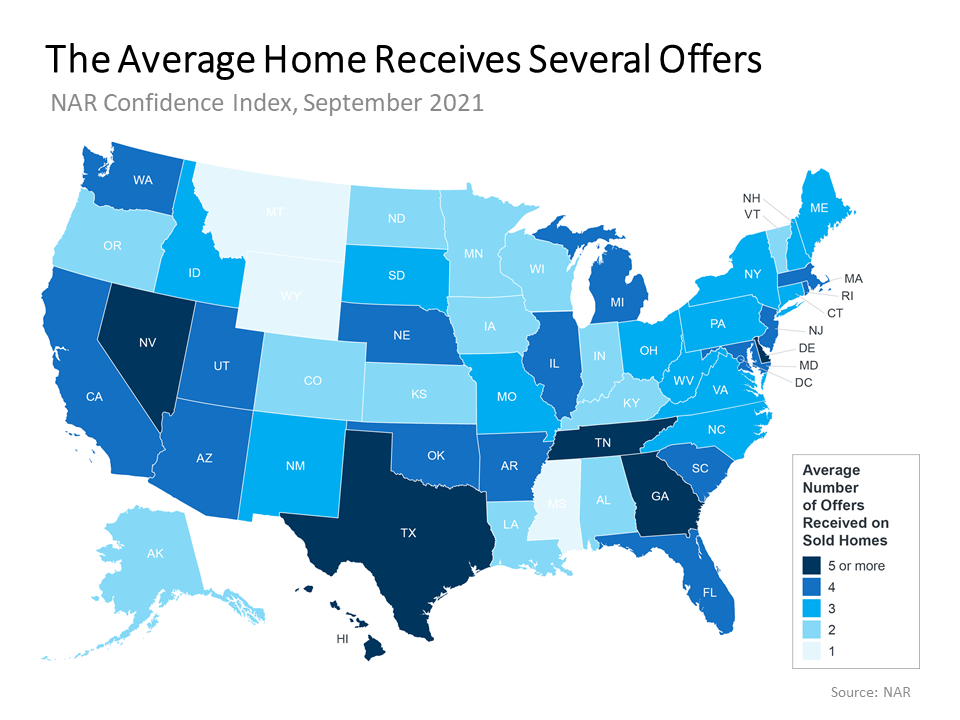
And since buyer demand is still high, there’s a good chance you’ll get offers from multiple buyers who are willing to compete for your house. When you do, look closely at the terms of each offer to find out which one has the best perks for you.
If you have questions about what’s best for your situation, your trusted real estate advisor can help. They have the expertise and are skilled negotiators in all stages of the sales process.
Today’s buyers are motivated to purchase a home this year, and that’s great news if you’re thinking of selling. Let’s connect today to discuss how much leverage you have as a seller in today’s market.

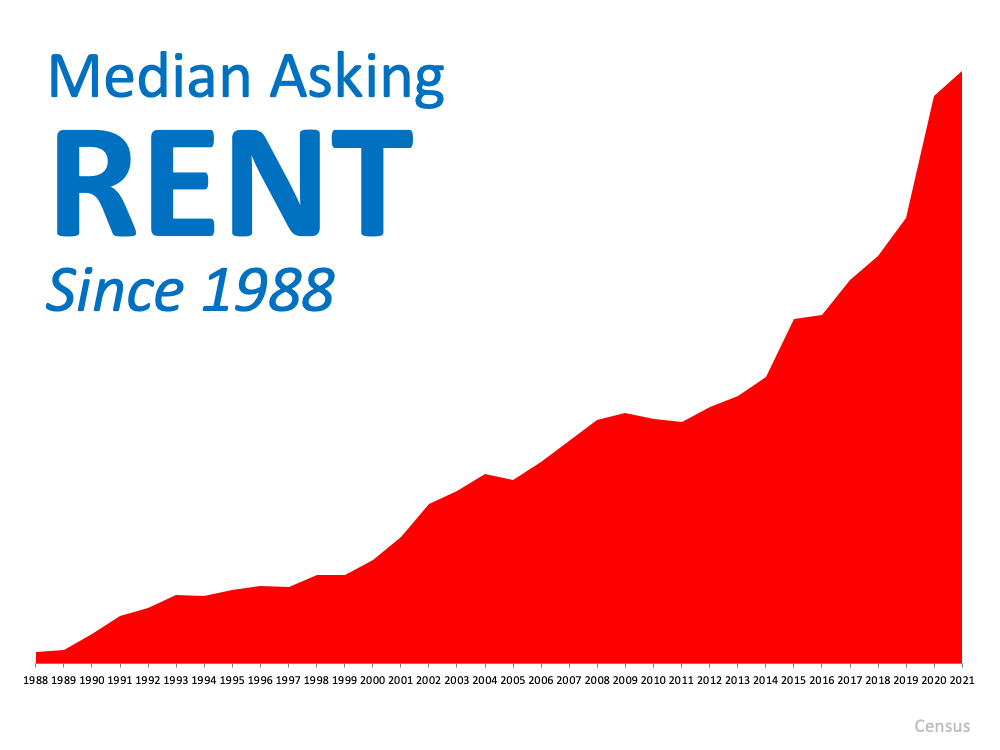
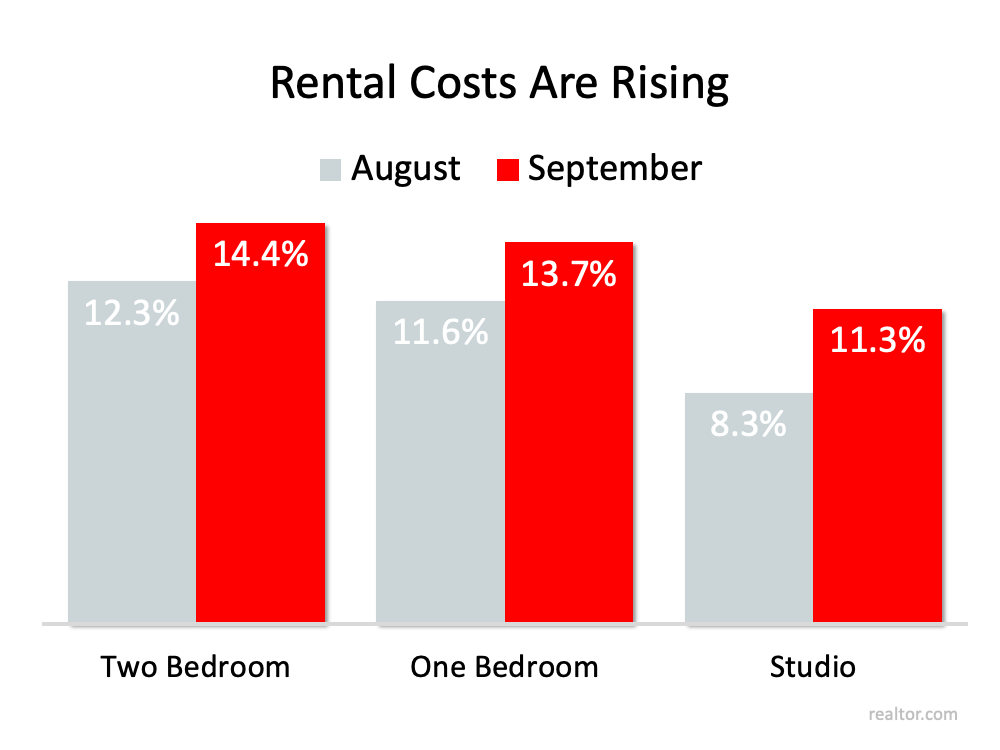
Rents have increased significantly this year. The latest National Rent Report from Apartmentlist.com shows rents are rising at a rate much higher than the three years leading up to the pandemic:
“Since January of this year, the national median rent has increased by a staggering 16.4 percent. To put that in context, rent growth from January to September averaged just 3.4 percent in the pre-pandemic years from 2017-2019.”
Looking back, we can see rents rising isn’t new. The median rental price has increased consistently over the past 33 years (see graph below):
If you’re thinking of renting for another year, consider that rents will likely be even higher next year. But that alone doesn’t paint the picture of the true cost of renting.
A homeowner’s monthly mortgage payment pays for their shelter, but it also acts as an investment. That investment grows in the form of equity as a homeowner makes their mortgage payment each month to pay down what they owe on their home loan. Their equity gets an additional boost from home price appreciation, which is at near-record levels this year.
The latest Homeowner Equity Insights report from CoreLogic found homeowners gained significant wealth through their home equity this past year. The research shows:
“. . . the average homeowner gained approximately $51,500 in equity during the past year.”
As a renter, you don’t get the same benefit. Your rent payment only covers the cost of shelter and any included amenities. None of your monthly rent payments come back to you as an investment. That means, by renting this year, you likely paid more in rent than you did in the previous year, and you also missed out on the potential wealth gain of $51,500 you could have had by owning your own home.
When deciding whether you should rent or buy in the future, keep in mind how much renting can cost you. Another year of renting is another year you’ll pay rising rents and miss out on building your wealth through home equity. Let’s connect today to talk more about the benefits of buying over renting.

The rise in remote work is changing what many Americans want in their homes. Many companies are choosing to delay reopening or go remote full-time, and today’s buyers are looking for homes with more space to support their work needs.
As a seller, if you no longer need the extra room you have in your home, rest assured there are buyers who do.
Remote work remains a reality for many Americans. A recent poll from Garter, Inc. shows many organizations have not yet returned their offices:
“. . . 66% of organizations are delaying reopening their offices due to new COVID-19 variants.”
And it’s not just companies that are choosing to remain remote for the time being – workers are seeking more flexibility. According to research from PricewaterhouseCoopers, nearly one-fifth of employees want to be fully remote in the future. The study also finds that many people are leaving jobs to seek out remote work opportunities:
“Among employees looking for new jobs, almost one in ten say it’s because they moved away from the office while working remotely and don’t want to go back on-site.”
That’s leading today’s buyers to prioritize finding homes with more space so they can comfortably work from home. The 2021 Home Design Trends Survey from the American Institute of Architects finds that 69% of surveyed individuals still want at least one office at home. However, it also shows that more people are looking for multiple spaces in their home for remote work and virtual meetings (see graph below):
If your house has extra space that you no longer need, buyers are interested, and now may be the perfect time to sell.
Your trusted real estate advisor can help you highlight many of the most sought-after features in your listing, including home offices. On the other hand, if you have extra room without a purpose, consider staging it as an area where remote work can happen. Your agent can help you with this as well by evaluating and preparing your space for potential buyers. They’ll make recommendations for how to stage the room, where to draw the eye, and what other sellers are doing to make their houses stand out.
With the continued rise in remote work, more buyers are looking for homes that can support multiple home offices. If you have extra room you’re no longer using, consider selling. Let’s connect today to discuss the unique features in your house and how you can capitalize on any extra space to appeal to today’s buyers.