Mark Sotir
Broker
Realty Executives Midwest

If you’re planning to sell this year, you’re probably thinking about what you’ll need to do to get your house ready to appeal to the most buyers. It’s crucial to work with a trusted real estate professional who knows your local market to get your home ready to sell. But there are a few things you should consider when deciding what to renovate and update before listing this season. Here are three things to keep top of mind as you’re making your list of projects to tackle this year.
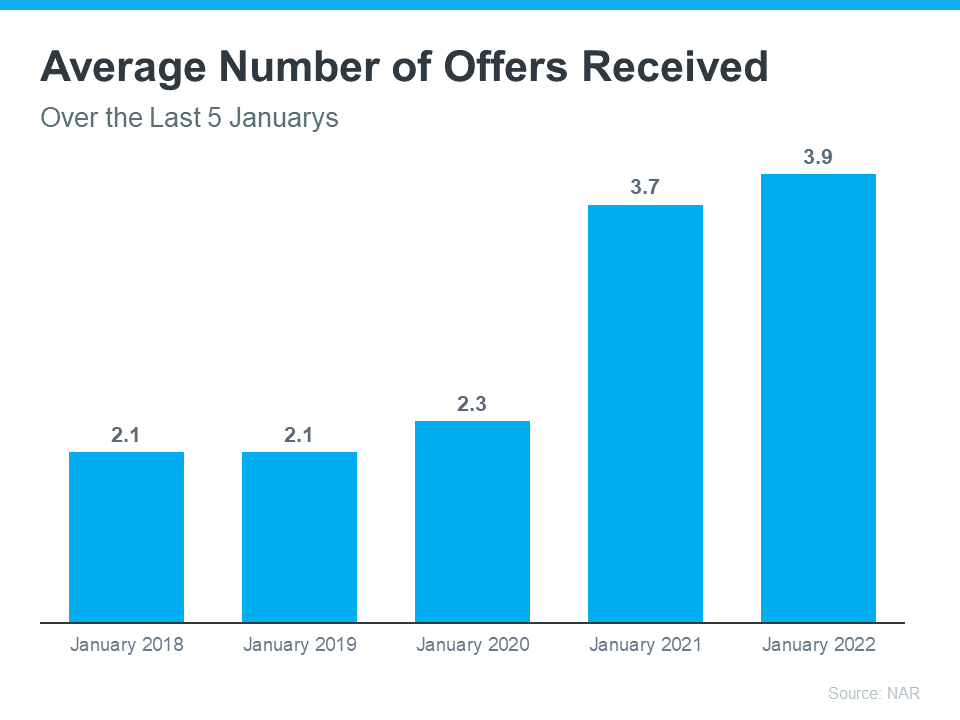
Housing inventory sits far below what is normally considered a balanced market. In fact, according to the National Association of Realtors (NAR), the latest data indicates inventory is hitting an all-time low. Because there’s such a limited supply of homes available for sale, you’re in a unique position when you sell your house to benefit from multiple offers and a quick process.
But you want to do so while buyers are still scooping homes up as fast as they’re being listed. Spending time and money on renovations before you sell could mean you’ll miss your key window of opportunity. Of course, certain repairs may be important or even necessary. The best way to determine where to spend your time – and your money – is to work with a real estate advisor to confirm which improvements are truly needed and which ones aren’t likely to be deal-breakers for buyers.
Today, many buyers are more willing to take on home improvement projects themselves to get the house they’re after, even if it means putting in a little extra work. A recent survey from Freddie Mac finds that:
“. . . nearly two-in-five potential homebuyers would consider purchasing a home requiring renovations.”
If more buyers are willing to tackle repairs on their own, it may be wise to let the future homeowners remodel the bathroom or the kitchen to make design decisions that are best for their specific taste and lifestyle. Depending on the structural condition of your house, your efforts may be better spent working on small cosmetic updates, like refreshing some paint and power washing the exterior to make sure the home stands out. Instead of over-investing in upgrades, the buyer may change anyway, work with a real estate professional to determine the key projects to tackle that will give you the greatest return on your investment.
Over the past year, many people made a significant number of updates to their homes. The most recent State of Home Spending report finds:
“Home improvement spending rose 25% year-over-year to $10,341. Homeowners who invested in home improvement did an average of 3.7 projects, up from 2.7 in 2020, . . .”
With more homeowners taking on more projects in the past 12 months, there’s a good chance you’ve already made updates to your home that could appeal to buyers. If that’s the case, your real estate advisor will find ways to highlight those upgrades in your listing.
The same is true for any projects you invest in moving forward. No matter what, before you renovate, contact a local real estate professional for expert advice on what work needs to be done and how to make it as appealing as possible to future buyers. Every home is different, so a conversation with your agent is mission-critical to make sure you make the right moves when selling this season.
In a sellers’ market like today’s, it’s important to spend your time and money wisely when you’re getting ready to move. Let’s connect today so you can find out where to target your efforts before you list.

Financial benefits are always a key aspect of homeownership, but it’s also important to understand that the nonfinancial and personal benefits are why so many people genuinely fall in love with their homes. When you own your home, you likely feel a sense of emotional attachment because of the comfort it provides, but also because it’s a space that’s truly yours.
Over the past two years, we’ve learned to love our homes even more as we’ve stayed home more than ever due to the ongoing pandemic. As a result, the personal and emotional benefits our homes provide have become even more important to us.
As the most recent State of the American Homeowner from Unison puts it:
“Despite the upheaval and uncertainty of the past year, one thing has stayed the same: the home continues to be of the utmost importance and a place of security and comfort.”
When the health crisis began, the world around us changed almost overnight, and our homes were redefined. Our needs shifted, and our shelters became a place that protected us on a whole new level. The same study from Unison notes:
It’s no surprise this study also reveals that homeowners now love their homes even more as our emotional attachments to them have grown:
That sense of emotional connection genuinely reaches far beyond the financial aspect of homeownership. Because they’re our shelters – ones that we can genuinely call our own. Our homes touch our hearts and can also positively impact our mental health.
As JD Esajian, President of CT Homes, LLC, says:
“Aside from the financial factors, there are several social benefits of homeownership and stable housing to consider. It has long been thought that buying a home contributes to a sense of accomplishment. Still, most individuals fail to realize that homeownership can benefit your mental health and the community around you.”
Whether you’re thinking of buying your first home, moving up to your dream home, or downsizing to something that better fits your changing lifestyle, take a moment to reflect on what Mark Fleming, Chief Economist at First American, notes:
“Buying a home is not just a financial decision. It’s also a lifestyle decision.”
There are so many reasons to fall head over heels for homeownership. Your home will provide a place to customize and call your own, in addition to stability and security. If you’re ready to fall in love with homeownership, let’s connect so you can get started on your homebuying journey today.
![How To Win as a Buyer in a Sellers’ Market [INFOGRAPHIC] | MyKCM](https://files.mykcm.com/2022/02/10091346/20220211-MEM-1046x2408.png)

When you’re selling any item, you usually want to sell it for the greatest profit possible. That happens when there’s a strong demand and a limited supply for that item. In the real estate market, that time is right now. If you’re thinking of selling your house this year, here are two reasons why now’s the time to list.
A recent article in Inman News explains:
“Spring, the hottest time of year for homebuyers and sellers, has started early, according to economists. . . . ‘Home shopping season appears to already be in full swing!’”
And they aren’t the only ones saying buyers are already out in full force. That claim is backed up with data released last week by ShowingTime. The ShowingTime Showing Index tracks the average number of monthly buyer showings on active residential properties, which is a highly reliable leading indicator of current and future trends for buyer demand. The latest index reveals this December was the most active December in five years (see graph below):
As the data indicates, buyers are very active this winter. Last December saw even more showings than December of 2020, which was already a stronger-than-usual winter. And remember – you want to sell something when there’s a strong demand for that item. That time is now.
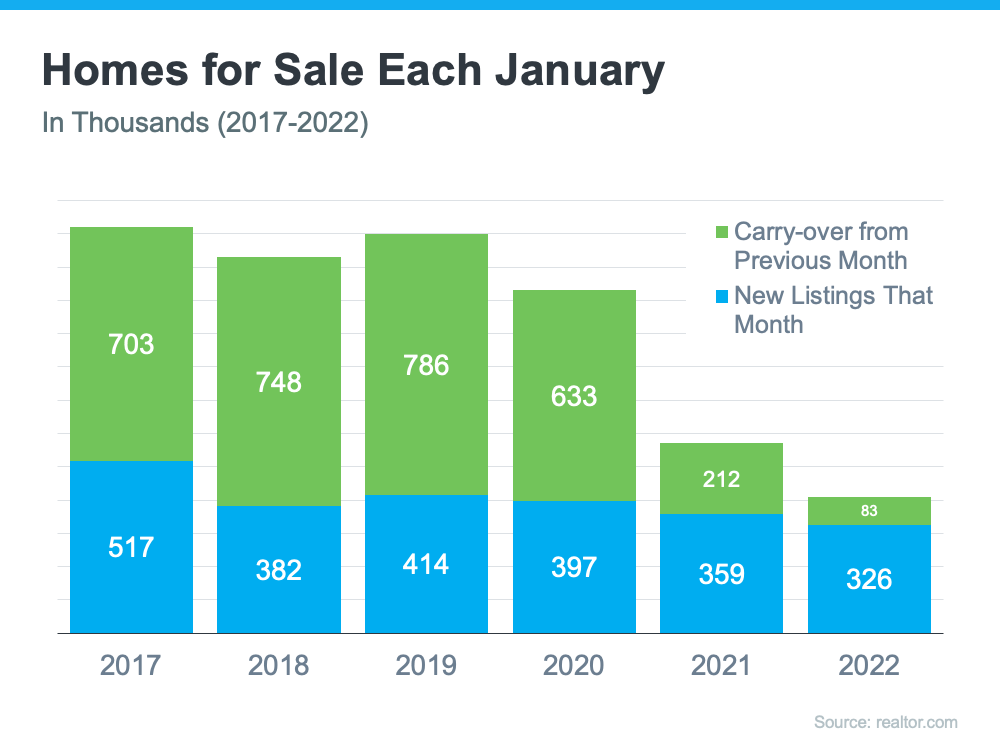
Each month, realtor.com releases data on the number of active residential real estate listings (listings currently for sale). Their most recent report reveals the latest monthly number is the lowest we’ve seen in any January since 2017 (see graph below):
And don’t forget, the best time to sell an item is when there’s a limited supply of it available. This graph clearly shows how extremely low housing supply is today.
According to the latest Existing Home Sales Report from the National Association of Realtors (NAR), existing-home sales totaled 6.12 million in 2021 – the highest annual level since 2006. This means the market is hot and homeowners are in a great place to sell now while sales are so strong.
NAR also reports available listings by calculating the current months’ supply of inventory. They explain:
“Months’ supply refers to the number of months it would take for the current inventory of homes on the market to sell given the current sales pace.”
The current 1.8-months’ supply is the lowest ever reported. Here are the December numbers over the last five years (see graph below):
The ratio of buyers to sellers favors homeowners right now to a greater degree than at any other time in history. Buyer demand is high, and supply is low. That gives sellers like you an incredible opportunity.
If you agree the best time to sell anything is when demand is high and supply is low, let’s connect to begin discussing the process of listing your house today.

If you’re looking to buy a home, you may be wondering how your student loan debt could impact those plans. Do you have to wait until you’ve paid off your student loans before you can buy your first home? Or could you qualify for a home loan with that debt?
To give you the answers you’re searching for, let’s take a look at what recent data shows. That way, you know what to expect and what to do next to achieve your dream of becoming a homeowner. While everyone’s situation is unique, your goal may be more within your reach than you realize.
If you’re worried your student loans mean you have to put your homeownership goals on hold, you’re not alone. In fact, many first-time buyers believe they have to delay their plans. According to data from the National Association of Realtors (NAR):
“When asked specifically about purchasing a home, half of nonhomeowners say student loan debt is delaying them from purchasing a home (51%).”
When asked why their student loans are putting their plans on the back burner, three key themes emerged:
No matter which reason resonates most with you, you should know a delay may not be necessary. Here’s why.
In the same NAR report, data shows many current homeowners have student loan debt themselves:
“Nearly one-quarter of all home buyers, and 37% of first-time buyers, had student debt, with a typical amount of $30,000.”
That means other people in a similar situation were able to qualify for and buy a home even though they also had student loan debt. You may be able to do the same, especially if you have a steady source of income. Apartment Therapy drives this point home:
“. . . buying a home with student loans is possible, experts say. The proof is in the numbers, too: Some 40 percent of first-time homebuyers have student loan debt, according to the NAR study.”
The best way to make a decision about your goals and next steps is to talk to the professionals. A real estate advisor can walk you through your specific situation, your options, and what has worked for other buyers like you. They can also connect you with other professionals in the industry who can help. You don’t have to figure this out on your own – lean on the experts so you have the information you need to make an informed, confident decision.
Many other buyers with student loan debt are already achieving their homeownership dreams. Maybe it’s time to take the next step toward making yours a reality. Let’s connect to discuss your options and find out how close you are to achieving your goal.