


Realty Executives Exceptional Realtors®

Nicole Monahan

Regional Branch Manager (570) 470-9006

Nicole Monahan

Regional Branch Manager

Realty Executives Exceptional Realtors®

Blog

Mortgage Rates Down a Full Percent from Recent High

(Published on - 8/7/2024 12:38:56 PM)

Mortgage Rates Down a Full Percent from Recent High


Mortgage rates have been one of the hottest topics in the housing market lately because of their impact on affordability. And if you’re someone who’s looking to make a move, you’ve probably been waiting eagerly for rates to come down for that very reason. Well, if the past few weeks are any indication, you may be getting your wish.


Mortgage Rates Trend Down in Recent Weeks

There’s big news for mortgage rates. After the latest reports on the economy, inflation, the unemployment rate, and the Federal Reserve’s recent comments, mortgage ratesstarted dropping a bit. And according to Freddie Mac, they’re now at a level we haven’t seen since February. To help show the downward trend, check out the graph below:
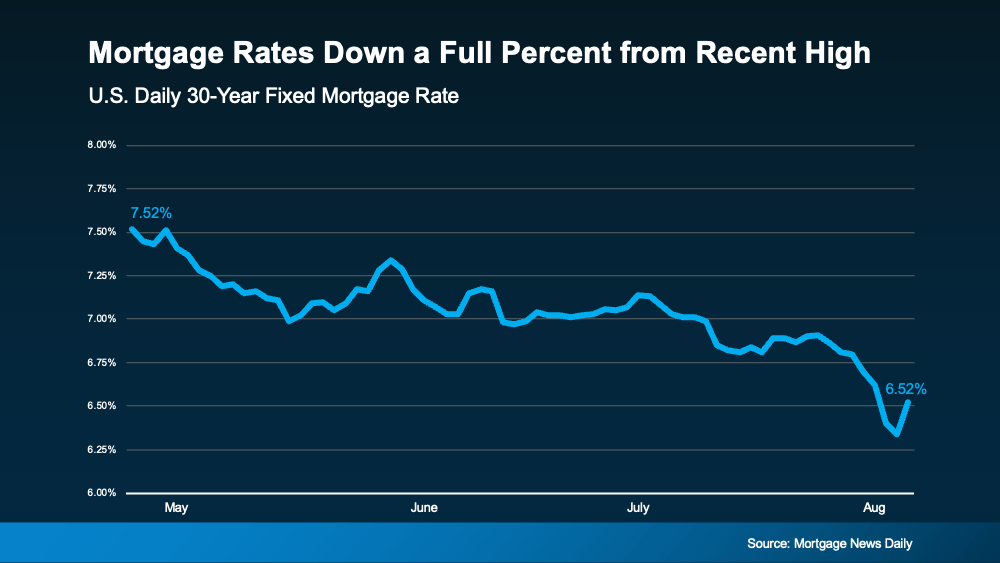
 

Maybe you’re seeing this and wondering if you should ride the wave and see how low they’ll go. If that’s the case, here’s some important perspective. Remember, the record-low rates from the pandemic are a thing of the past. If you’re holding out hope to see a 3% mortgage rate again, you’re waiting for something experts agree won’t happen. As Greg McBride, Chief Financial Analyst at Bankrate, says: 

“The hopes for lower interest rates need the reality check that 'lower' doesn't mean we're going back to 3% mortgage rates. . . the best we may be able to hope for over the next year is 5.5 to 6%.”

And with the decrease in recent weeks, you’ve got a big opportunity in front of you right now. It may be enough for you to want to jump back in. 


The Relationship Between Rates and Demand 


If you wait for mortgage rates to drop further, you might find yourself dealing with more competition as other buyers re-ignite their home searches too.


In the housing market, there’s generally a relationship between mortgage rates and buyer demand. Typically, the higher rates are, the lower buyer demand is. But when rates start to come down, things change. Buyers who were on the fence over higher rates will resume their searches. Here’s what that means for you. As a recent article from Bankrate says:

If you’re ready to buy, now might be the time to strike. Home prices have been rising primarily because of a longstanding shortage of homes for sale. That’s unlikely to change, and if mortgage rates do fall below 6%, it’s possible buyers would enter the market en masse, further pushing up prices and resurrecting bidding wars.”
Bottom Line


If you’ve been waiting to make your move, the recent downward trend in mortgage rates may be enough to get you off the sidelines. Rates have hit their lowest point in months, and that gives you the opportunity to jump back in before all the other buyers do too.

If you’re ready and able to start the process, reach out and let’s get started.


Helpful Negotiation Tactics for Today’s Housing Market

(Published on - 8/6/2024 11:37:21 AM)

Helpful Negotiation Tactics for Today’s Housing Market


If you haven’t already heard, homebuyers are regaining some negotiating power in today’s market. And while that doesn’t make this a buyer’s market, it does mean buyers may be able to ask for a little more. So, sellers need to be ready for that possibility and know what they’re willing to negotiate.

Whether you’re looking to buy or sell a house, here’s a quick rundown of potential negotiations that may pop up during your transaction. That way, you’re prepared no matter which side of the deal you’re on.


What Can You Negotiate?


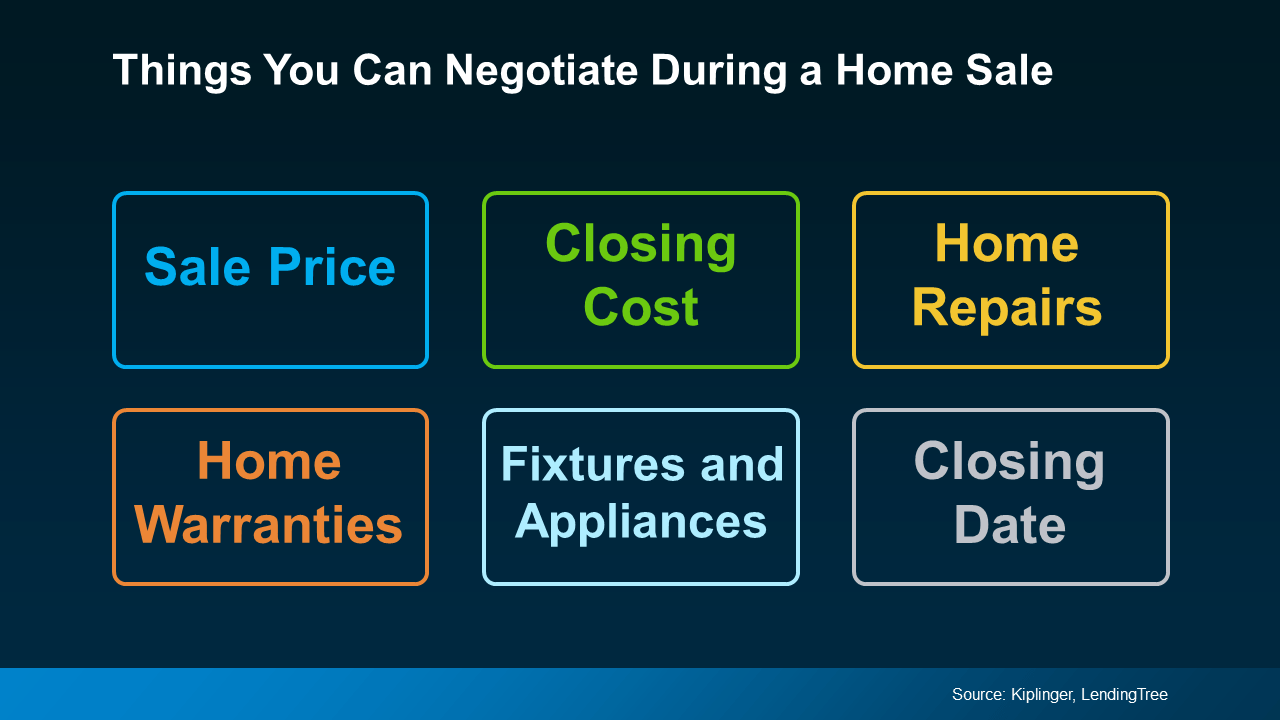
Most things in a home purchase are on the negotiation table. Here’s a list of just a few of those options, according to Kiplinger and LendingTree:


  • Sale Price: The most obvious is the price of the home. And that lever is being pulled more often today. Buyers don’t want to overpay when affordability is already so tight. And sellers who aren’t realistic about their asking price may have to consider adjusting their price.
  • Home Repairs: Based on the inspection, a buyer is within their rights to ask the seller to make reasonable repairs. If the seller doesn’t want to do that, they could offer to reduce the home price or cover some closing costs, so the buyer has the money to take them on themselves.
  • Fixtures: Buyers can also ask for appliances or furniture to convey when the house changes hands. Having the seller throw in the washer and dryer cuts down on expenses the buyer would have when moving in. As the seller, you could leave your existing ones behind to sweeten the deal for your buyer, and get yourself new ones for your next place.
  • Closing Costs: Closing costs typically run about 2-5% of the home’s purchase price. Buyers can ask the seller to pay for some or all of these expenses to offset the cash the buyer has to bring to the table. 
  • Home Warranties: Buyers can also ask the seller to pay for a home warranty. This is great for buyers worried about the maintenance costs that may pop up after taking possession of the home. And since this concession usually isn’t terribly expensive for the seller, it can be a good option for both parties.
  • Closing Date: Buyers can ask for a faster or extended closing window based on their own timetable. The seller can also advocate for what they need based on their move to find the right compromise.

One thing is true whether you’re a buyer or a seller, and that’s how much your agent can help you throughout the process. Your agent is your go-to for any back-and-forth. They’ll handle the conversations and advocate for your best interests along the way. As Bankrate says:

“Agents have expert negotiating skills. Without one, you must negotiate the terms of the contract on your own.”

They may also be able to uncover what the buyer or seller is looking for in their discussions with the other agent. And that insight can be really valuable at the negotiation table. 


Bottom Line


Buyers are regaining a bit of negotiation power in today’s market. Buyers, knowing what levers you can pull will help you feel confident and empowered going into your purchase. Sellers, having a heads up of what they may ask for gives you the chance to think through what you’ll be willing to offer.

Want to chat more about what to expect and the options you have? Let’s connect. 


What Every Homeowner Should Know About Their Equity

(Published on - 8/5/2024 11:45:59 AM)

What Every Homeowner Should Know About Their Equity


Curious about selling your home? Understanding how much equity you have is the first step to unlocking what you can afford when you move. And since home prices rose so much over the past few years, most people have much more equity than they may realize.


Here’s a deeper look at what you need to know if you’re ready to cash in on your investment and put your equity toward your next home.


Home Equity: What Is It and How Much Do You Have?


Home equity is the difference between how much your house is worth and how much you still owe on your mortgage. For example, if your house is worth $400,000 and you only owe $200,000 on your mortgage, your equity would be $200,000.


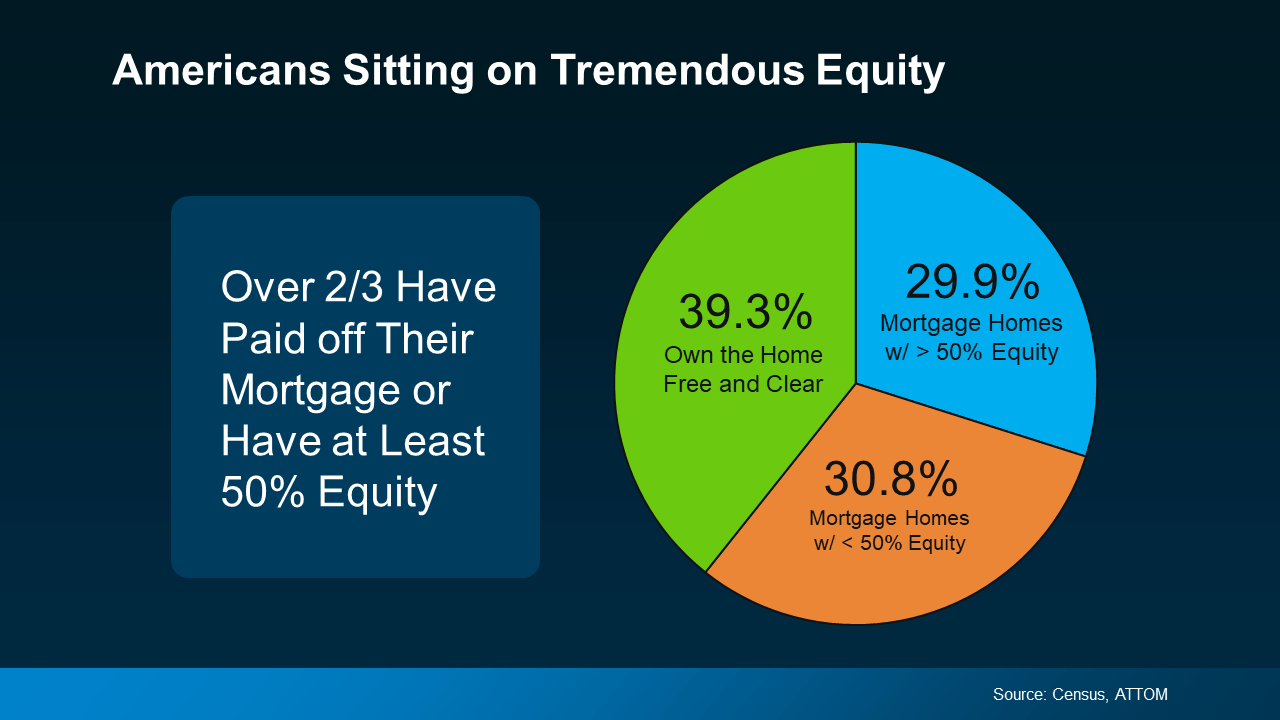
Recent data from the Census and ATTOMshows Americans have significant equity right now. In fact, more than two out of three homeowners have either completely paid off their mortgages (shown in green in the chart below) or have at least 50% equity in their homes (shown in blue in the chart below):


Today, more homeowners are getting a larger return on their homeownership investments when they sell. And if you have that much equity, it can be a powerful force to fuel your next move.


What You Should Do Next


If you’re thinking about selling your house, it’s important to know how much equity you have, as well as what that means for your home sale and your potential earnings. The best way to get a clear picture is to work with your agent, while also talking to a tax professional or financial advisor. A team of experts can help you understand your specific situation and guide you forward.


Bottom Line


Home prices have gone up, which means your equity probably has too. Let’s connectso you can find out how much you have in your home and move forward confidently when you sell.


Why the Sandwich Generation Is Buying Multi-Generational Homes

(Published on - 8/1/2024 10:55:27 AM)

Why the Sandwich Generation Is Buying Multi-Generational Homes


Are you a part of the Sandwich Generation? According to Realtor.com, that’s a name for the roughly one in six Americans who take care of their children and their parents or grandparents at the same time.

If that sounds familiar to you, juggling all the responsibilities involved certainly must have its challenges. But it turns out there’s one pretty significant benefit: it can actually make it a bit easier for you to buy a home.


How Can It Help You Buy a Home?


Realtor.com asked members of the Sandwich Generation if they agree or disagree that taking care of children and parents at the same time is helping them afford a home. A third of respondents said their situation made it easier to buy (see graph below):

Here are a few ways their caretaking situation might be helping those 33% buy a home:

  • Sharing Expenses: If you live in a multi-generational household, you can pool your resources and split the costs. Your parents might contribute to the mortgage or help with other bills. This can make a big difference, especially in today’s housing market. It may help you afford a larger home than you could on your own.
  • Built-In Childcare: Having grandparents in the home could also save you money on childcare. They can help watch your kids while you’re at work, which means you can save on daycare costs too.

Beyond just the financial reasons, buying a multi-generational home has other advantages. The Profile of Home Buyers and Sellers from the National Association of Realtors (NAR) highlights some of the most popular, including:

  • Easier To Care for Aging Parents: It’s more convenient to take care of someone when you live with them. Also, your elderly parents may very well be happier and healthier, thanks to more social interaction and a feeling of connectedness.
  • Spending More Time Together: Once you live together, you get to spend more time and create even more lasting memories with your loved ones.

The Mortgage Reports sums it up this way:

“Buying a house with your parents can be a great way to ease caregiving, support young children, or simply bring loved ones closer together. And considering the steep rise in home prices over the last few years, it can make homeownership a lot more affordable.”

How a Real Estate Agent Can Help


If you’re in the Sandwich Generation and thinking about buying a multi-generational home, working with a local real estate agent is essential. Finding a home that works for so many people can be tricky. An agent will use their expertise to help you find one that meets the needs of, and has enough space for, everyone who’s going to live there.


Bottom Line


Being a part of the Sandwich Generation comes with its challenges – but it also might come with one truly great perk. If you’re looking to buy a home, your caregiving situation can actually make it a bit easier for you to afford a home. To learn more, let’s connect.


Should You Rent Out or Sell Your House?

(Published on - 7/31/2024 11:40:00 AM)

Should You Rent Out or Sell Your House?


Figuring out what to do with your house when you're ready to move can be a big decision. Should you sell it and use the money for your next adventure, or keep it as a rental to build long-term wealth?

It's a question many homeowners face, and the answer isn't always straightforward. Whether you're curious about the potential income from renting or worried about the responsibilities of being a landlord, there’s a lot to consider.

Let’s walk through some key questions to ask to help you make the best decision for your situation.


Is Your House a Good Fit for Renting?


Even if you're interested in becoming a landlord, your current house might not be ideal for renting. Maybe you're moving far away, so keeping up with the ongoing maintenance would be a hassle, the neighborhood isn't great for rentals, or the house needs significant repairs before you could rent it out.

If any of this sounds like it might apply, sellingmight be your best option.


Are You Ready for the Realities of Being a Landlord?


Managing a rental property isn't just about collecting rent checks. It's a time-consuming and sometimes challenging job.

For example, you may get calls from tenants at all hours of the day with maintenance requests. Or you may find a tenant causes damage you have to repair before the next lease starts. You may even have to deal with people falling behind on payments or breaking their lease early. Investopediahighlights:

"It isn’t difficult to find horror stories of landlords troubled with more headaches than profits. Before deciding to rent, consider talking to other landlords and doing a detailed cost analysis. You might find that selling your home is a better financial decision and less stressful.”


Do You Have a Good Understanding of What It’ll Cost?


If you're thinking about renting out your home primarily to generate extra income, remember that there are additional costs you’ll want to plan for. As an article from Bankrate explains:

  • Mortgage and Property Taxes: You still need to pay these expenses, even if the rent doesn't cover all of it.
  • Insurance: Landlord insurance costs about 25% more than regular home insurance, and it's necessary to cover damages and injuries.
  • Maintenance and Repairs: Plan to spend at least 1% of the home's value annually, more if the home is older.
  • Finding a Tenant: This involves advertising costs and potentially paying for background checks.
  • Vacancies: If the property sits empty between tenants, you'll lose rental income.
  • Management and HOA Fees: A property manager can ease the burden, but typically charges about 10% of the rent. HOA fees are an additional cost too, if applicable.

Bottom Line

To sum it all up, selling or renting out your home is a personal decision that depends on your circumstances. Whatever you decide, taking the time to evaluate your options will help you make the best choice for your future.

Make sure to weigh the pros and cons carefully and consult with professionals so you feel supported and informed as you make your decision. That’s what we’re here for.


Posts

;

Questions? Need Advice? Complete this form for more information.

Contact Information::


Copyright 2026 Realty Executives All Rights Reserved

Regional Branch Manager

Nicole Monahan

Contact
Disclaimer: Each office independently owned and operated. Please disregard this message if you are already under contract with another real estate professional.