


Realty Executives Exceptional Realtors®

Nicole Monahan

Regional Branch Manager (570) 470-9006

Nicole Monahan

Regional Branch Manager

Realty Executives Exceptional Realtors®

Blog

Home Price Growth Is Moderating – Here’s Why That’s Good for You

(Published on - 2/10/2025 2:43:13 PM)

Home Price Growth Is Moderating – Here’s Why That’s Good for You


Over the past few years, home prices skyrocketed. That’s been frustrating for buyers, leaving many wondering if they’d ever get a shot at owning a home. But here’s some welcome news: that whirlwind pace of home price growth is slowing down.


Home Prices Are Rising at a Healthy Pace

At the national level, home prices are still going up, but at a much more moderate, normal pace. For example, in November, the year-over-year increase in home prices was just 3.8% nationally, accordingto Case-Shiller. That’s a far cry from the double-digit spikes that occurred in 2021 and 2022 (see graph below):
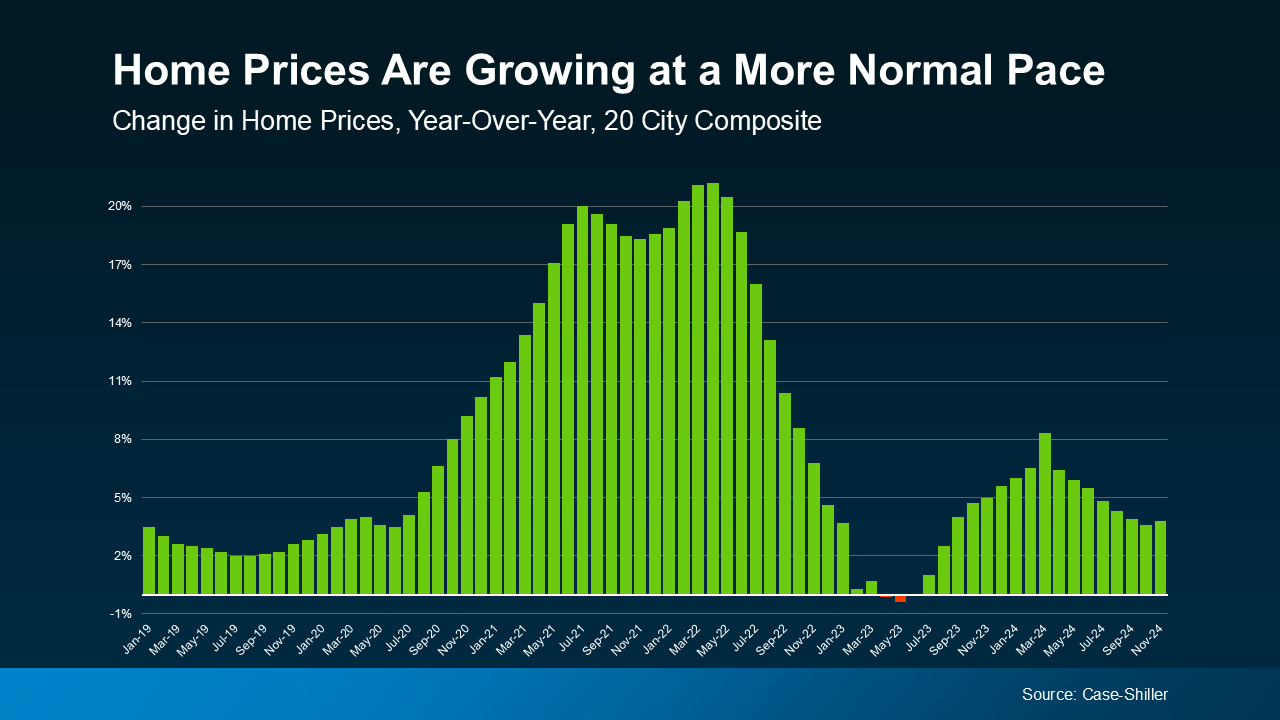
a graph of green and white linesThis more normal home price growth might make buying a home feel more attainable for many buyers. You won’t face the same sticker shock or rapid price jumps that made it hard to plan your purchase just a few years ago.

At the same time, steady growth means the home you buy today will likely appreciate in value over time.


Prices Vary from Market to Market

While the national story is one of moderate price growth, it’s important to remember that all real estate is local. Some markets are seeing stronger growth, while others are cooling off or even seeing slight declines. As Selma Hepp, Chief Economist at CoreLogic, notes:

“Regionally, variations persist, as some affordable areas – including smaller metros in the Midwest — remain in high demand and continue to see upward home price pressures.”

Meanwhile, other regions saw slight month-over-month declines in November, according to Federal Housing Finance Agency (FHFA) data (see graph below):
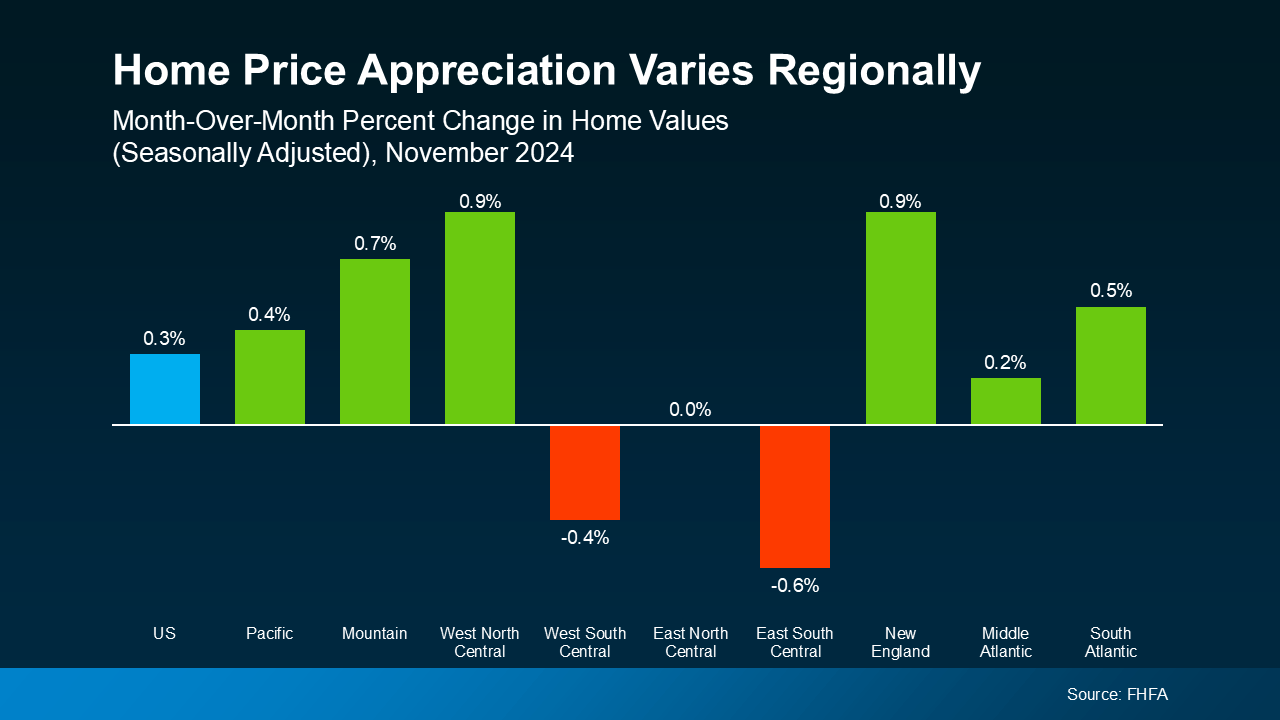
a graph of a graph showing different colored squaresWhat does this mean for you? It’s crucial to understand what’s happening in your local market. A national average can’t tell the whole story. That’s where working with a local real estate agent can really help. They have the tools and expertise to give you the full picture of what’s happening in your area and how to plan for that in your move.
 

Bottom Line

Home prices are growing at a more manageable pace, and working with a local real estate agent can help you navigate the ups and downs of your specific market.

How have changing home prices impacted your plans to buy? Let’s talk about it.


The Perks of Buying a Fixer-Upper

(Published on - 2/6/2025 2:23:13 PM)

The Perks of Buying a Fixer-Upper


There’s no denying affordability is tough right now. But that doesn’t mean you have to put your plans to buy a home on the back burner.

If you’re willing to roll up your sleeves (or hire someone who will), buying a house that needs some work could open the door to homeownership. Here’s everything you need to know so you can decide if this is the right move for you.


What’s a Fixer-Upper?


A fixer-upper is a home that’s livable but requires some renovations. Think cosmetic updates like wallpaper removal and new flooring or more extensive repairs like replacing a roof or updating plumbing.

While fixer-uppers need a little TLC, here’s why they may be worth considering, especially right now:

  1. They Usually Have a Lower Price Point. Because of the repairs involved, these homes are usually less expensive up front than move-in-ready options. According to a survey from StorageCafe, fixer-uppers come with price tags that are about 29% lower, making them a solid choice if you’re having trouble finding anything in your budget.
  2. Less Competition. When you’re ready to make an offer, you’re less likely to deal with competition from other buyers who are focused on move-in-ready homes.
  3. Build Equity Faster. From choosing how to redo the floors to picking which cabinets you want in the kitchen, a fixer-upper allows you to design a space that fits your needs and style. And with smart renovations, you can increase your home’s value faster and potentially see a big return on your investment.

As The Mortgage Reports notes:

“If you’re a house hunter who’s not afraid of sweat equity, buying a fixer-upper could be your ticket to homeownership. Doing so could lead to big savings, even in some of the nation’s largest and most popular housing markets. Plus, adding the right features could help your investment.”

What To Know About Buying a Fixer-Upper


The possibilities that come with a fixer-upper are exciting, but there are a few things to think about first.

  • Do You Have a Gameplan? Consider if you have the time, skills, or budget to tackle renovations. Be honest about what you can handle yourself, what you’ll need to hire out, and if a fixer-upper is truly a good fit for your lifestyle. Remember, you’ll likely be living in a construction zone at least for a little while.
  • Prioritize the Repairs and Upgrades: Don't stress yourself out thinking you’ve got to do all the work up front. Space out renovations over time in a way that makes sense for your budget and what’s most important to tackle first.
  • Location Matters: You want the money you’re spending to fix up a house to be worth the investment. So, make sure the home is in an area with increasing home values and amenities locals love, like parks and restaurants.
  • Get a Home Inspection: Hiring an inspector to do a thorough inspection before you buy is a must. What they find will help you understand what needs to be updated, renovation costs, and if it’s a project you want to take on.
  • Budget for Surprises: Renovations rarely go as planned. So, be sure to set aside extra money to cover things like extended repair timelines, an increase in the cost of materials, or other unknowns that may come up.

Talk to a Lender About Financing Options: There are some renovation mortgages designed for homes that need a little work. But they may have requirements like spending and timeline limits, so talk to a trusted lender to understand the fine print.


Bottom Line

Fixer-uppers aren’t for everyone, but if you’re open to doing a bit of work, they can be a great way to overcome today’s affordability hurdles and find something in your budget.

With the right mindset and careful planning, you could turn a less-than-perfect house into the perfect home for you.

If you found a fixer-upper that fits your budget and goals, would you consider taking the plunge? If so, let’s connect to explore what’s out there. 


The 3 Biggest Mistakes Sellers Are Making Right Now

(Published on - 2/5/2025 1:11:15 PM)

The 3 Biggest Mistakes Sellers Are Making Right Now


If you want to sell your house, having the right strategies and expectations is key. But some sellers haven’t adjusted to where the market is today. They’re not factoring in that there are more homes for sale or that buyers are being more selective with their budgets. And those sellers are making some costly mistakes.

Here’s a quick rundown of the 3 most common missteps sellers are making, and how partnering with an expert agent can help you avoid every single one of them.

1. Pricing the Home Too High

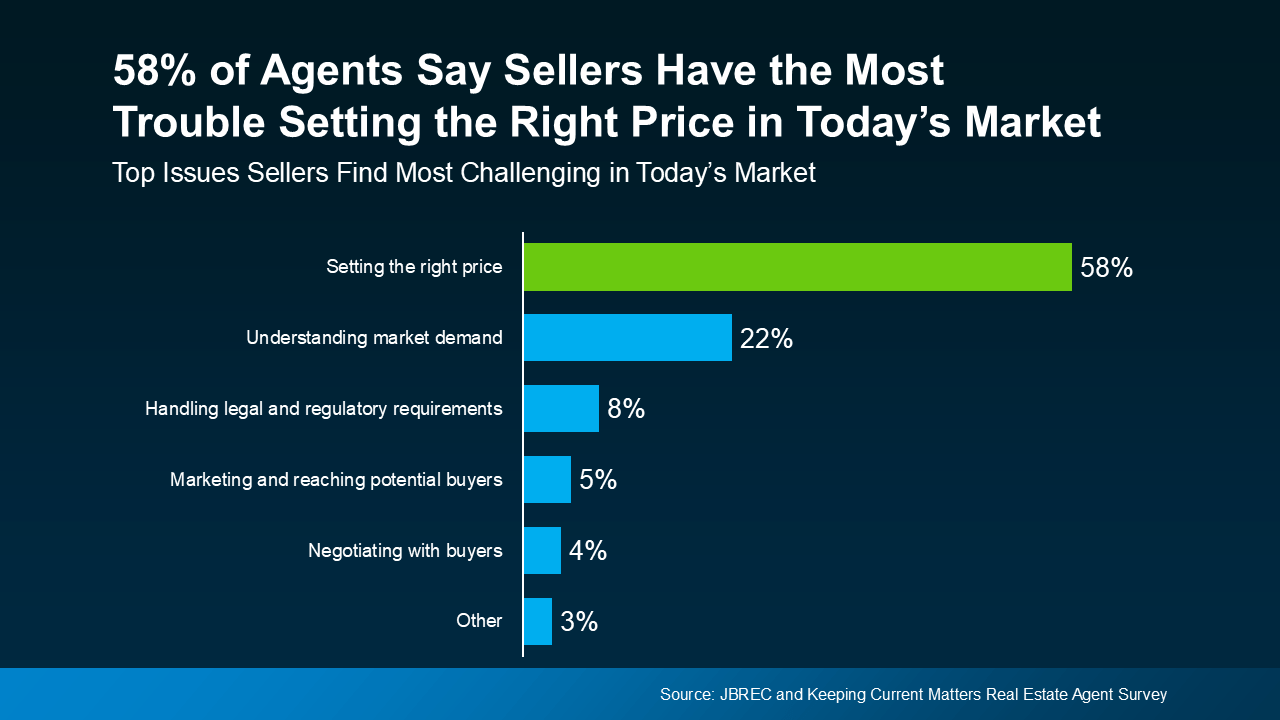
According to a survey by John Burns Real Estate Consulting (JBREC) and Keeping Current Matters (KCM), real estate agents agree the #1 thing sellers struggle with right now is setting the right price for their house (see graph below):

a graph of salesAnd more often than not, homeowners tend to overprice their listings. If you aren’t up to speed on what’s happening in your local market, you may give in to the temptation to price high so you can have as much wiggle room as possible to negotiate. You don’t want to do this.
Today’s buyers are more cautious due to higher rates and tight budgets, and a price that feels out of reach will scare them off. And if no one’s looking at your house, how’s it going to sell? This is exactly why more sellers are having to do price cuts.

To avoid this headache, trust your agent’s expertise from day 1. A great agent will be able to tell you what your neighbor’s house just sold for and how that impacts the value of your home.

2. Skipping Repairs

Another common mistake is trying to avoid doing work on your house. That leaky faucet or squeaky door might not bother you, but to buyers, small maintenance issues can be red flags. They may assume those little flaws are signs of bigger problems — and it could cost you when offers come in lower or buyers ask for concessions. As Investopedia says:

Sellers who do not clean and stage their homes throw money down the drain. . . Failing to do these things can reduce your sales price and may also prevent you from getting a sale at all. If you haven’t attended to minor issues, such as a broken doorknob or dripping faucet, a potential buyer may wonder whether the house has larger, costlier issues that haven’t been addressed either.”

The solution? Work with your agent to prioritize anything you’ll need to tackle before the photographer comes in. These minor upgrades can pay off big when it’s time to sell.

3. Refusing To Negotiate

Buyers today are feeling the pinch of high home prices and mortgage rates. With affordability that tight, they may come in with an offer that’s lower than you want to see. Don’t take it personally. Instead, focus on the end goal: selling your house. Your agent can help you negotiate confidently without letting emotions cloud your judgment.

At the same time, with more homes on the market, buyers have options — and with that comes more negotiating power. They may ask for repairs, closing cost assistance, or other concessions. Be prepared to have these conversations. Again, lean on your agent to guide you. Sometimes a small compromise can seal the deal without derailing your bottom line. As U.S. News Real Estate explains:

“If you’ve received an offer for your house that isn’t quite what you’d hoped it would be, expect to negotiate . . . the only way to come to a successful deal is to make sure the buyer also feels like he or she benefits . . . consider offering to cover some of the buyer’s closing costs or agree to a credit for a minor repair the inspector found.”

The Biggest Mistake of All? Not Using a Real Estate Agent

Notice anything? For each of these mistakes, partnering with an agent helps prevent them from happening in the first place. That makes trying to sell your house without an agent’s help the biggest mistake of all.


Bottom Line

Avoid these common mistakes by starting with the right plan — and the right agent. Let’s connect so you don’t fall into any of these traps.


Buyer Bright Spot: There Are More Homes on the Market

(Published on - 2/4/2025 12:28:46 PM)

Buyer Bright Spot: There Are More Homes on the Market


The past few years have been challenging for homebuyers, especially with higher home prices and mortgage rates. And if you’re trying to buy a home, it’s easy to worry you won’t be able to find something in your budget.

But here’s what you need to know. The number of homes for sale has grown a whole lot lately and that’s true for both existing (previously lived-in) and newly built homes. Here’s a look at those two bright spots for buyers right now and why they may make it a bit easier to find the home you’re been looking for.


1. There Are 22% More Existing Homes for Sale

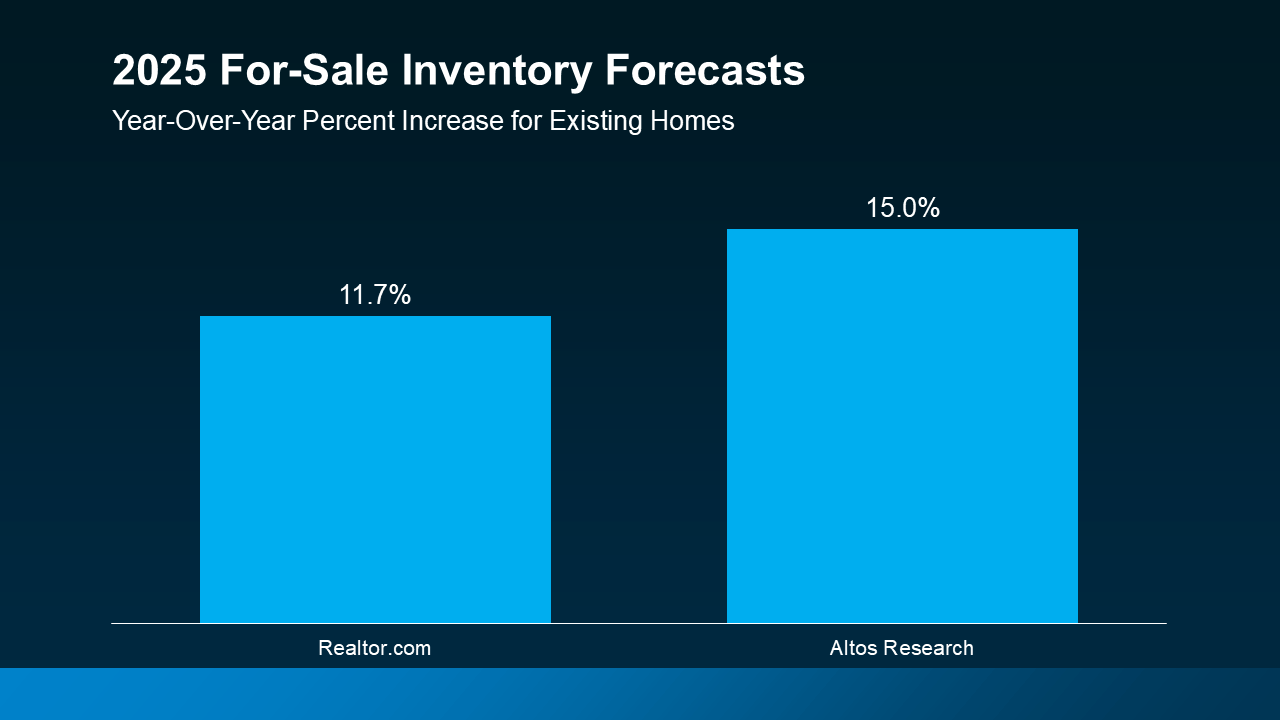
Data from Realtor.com says the number of existing homes for sale improved by an impressive 22% in 2024. And experts say your pool of options is expected to get even better this year. Forecasts showinventory is projected to grow another 11-15% by the end of this year (see graph below):

a graph of sales in inventoryHere’s why this is so good for your search. If you haven’t seen a house with all the features you need, just know that, as the number of homes for sale grows, you’ll have more options to choose from. That means a better chance of finding a home that checks all your boxes. As Ralph McLaughlin, Senior Economist at Realtor.com, says:
It could be a particularly good time to get out into the market . . . you're going to have more choice. And that's not something that buyers have really had much over the past several years.”


2. There Are More Newly Built Homes on the Market

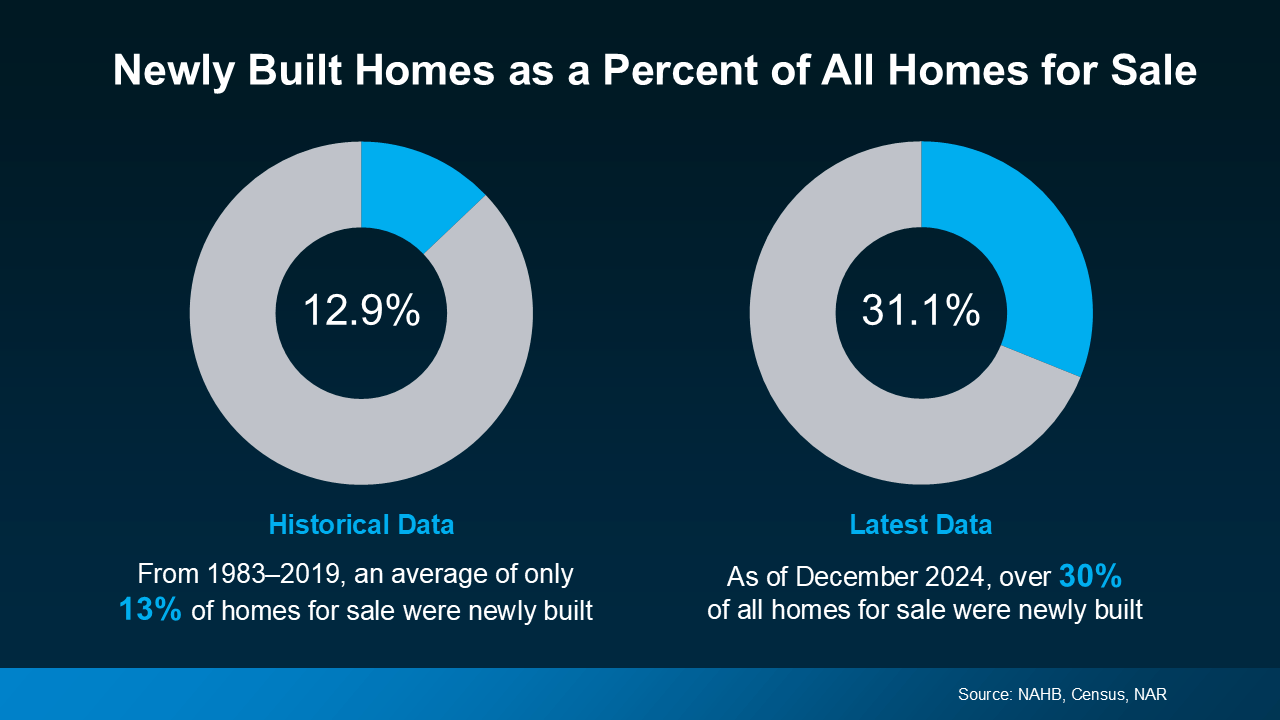
According to data from the Census and the National Association of Realtors (NAR), 31.1%, or roughly 1 in 3, homes on the market right now are newly built homes. That’s more than the norm (see charts below). But don't worry, that's not because builders are overdoing it – it’s just that they’re trying to catch up after years of underbuilding.

a graph of a pie chartAnd the best part is, since builders have been focusing on smaller homes with lower price points, you may actually find out new builds are less expensive than you’d expect. So, while a lot of people write off new construction because it’s easy to assume the costs are way higher, lately, that price gap isn’t as big as you’d think. As CNET says:
“If you live in an area where there's a lot of new construction happening . . . you might be able to purchase a new house for a price similar to or even less than a pre-owned one.”

If you haven’t been able to find a home that’s in your budget, it’s time to ask your agent about new builds. If you don’t, you may have been cutting your pool of options by about a third.


Bottom Line

More choices could be the key to unlocking your homebuying goals in 2025. Reach out if you want to see what’s available in and around our area.

What features are you looking for in your next home? Let me know and I’ll put together a list of homes you’d love.


The Real Benefits of Buying a Home This Year

(Published on - 2/3/2025 1:09:36 PM)

The Real Benefits of Buying a Home This Year


Have you been wondering whether you should keep renting or finally make the leap into homeownership? It’s a big decision, and let’s be real — renting can feel like the easier option, especially if buying a home feels out of reach.

But here’s the thing: a recent report from Bank of America highlights that 70% of prospective buyers fear the long-term consequences of renting, including not building equity and dealing with rising rents.

Maybe you’re feeling that too — concerned about where renting might leave you down the road, but still unsure if you'd even be able to buy right now. The truth is, if you’re able to make the numbers work, buying a home has powerful long-term financial benefits.

Let’s break down why homeownership is worth considering in 2025 and beyond, and how it can help set you up for the future.


Buying Builds Wealth Over Time

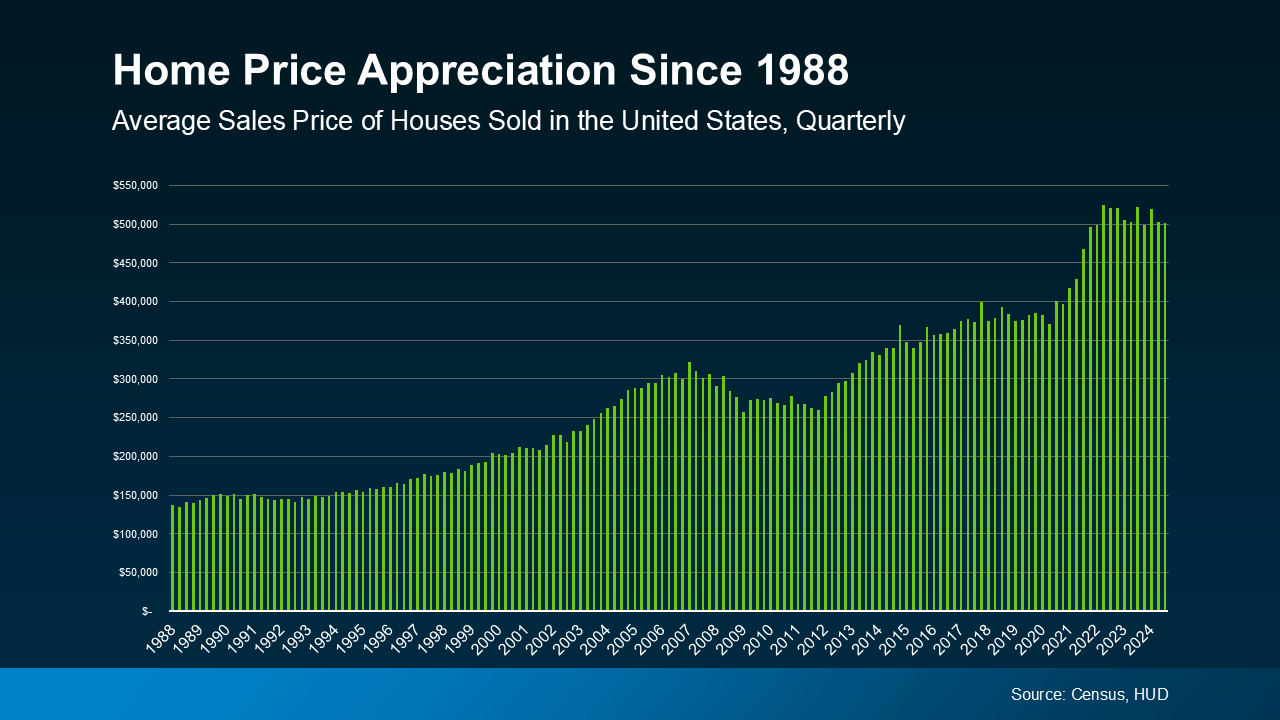
Buying a home allows you to turn your monthly housing costs into a long-term investment. That’s because, as shown in data from the Census and the Department of Housing and Urban Development (HUD), home prices tend to increase over time (see graph below):

a graph of a price of houses sold in the united statesRising home prices directly benefit homeowners. That’s because when you own a home, you build equity — meaning your ownership stake in your home grows as you pay down your mortgage and your home's value appreciates. And that, in turn, makes your net worth grow too.
Maybe that’s why, according to the National Association of Realtors (NAR), 79% of buyers believe owning a home is a good financial investment.


Renting Comes with Rising Costs

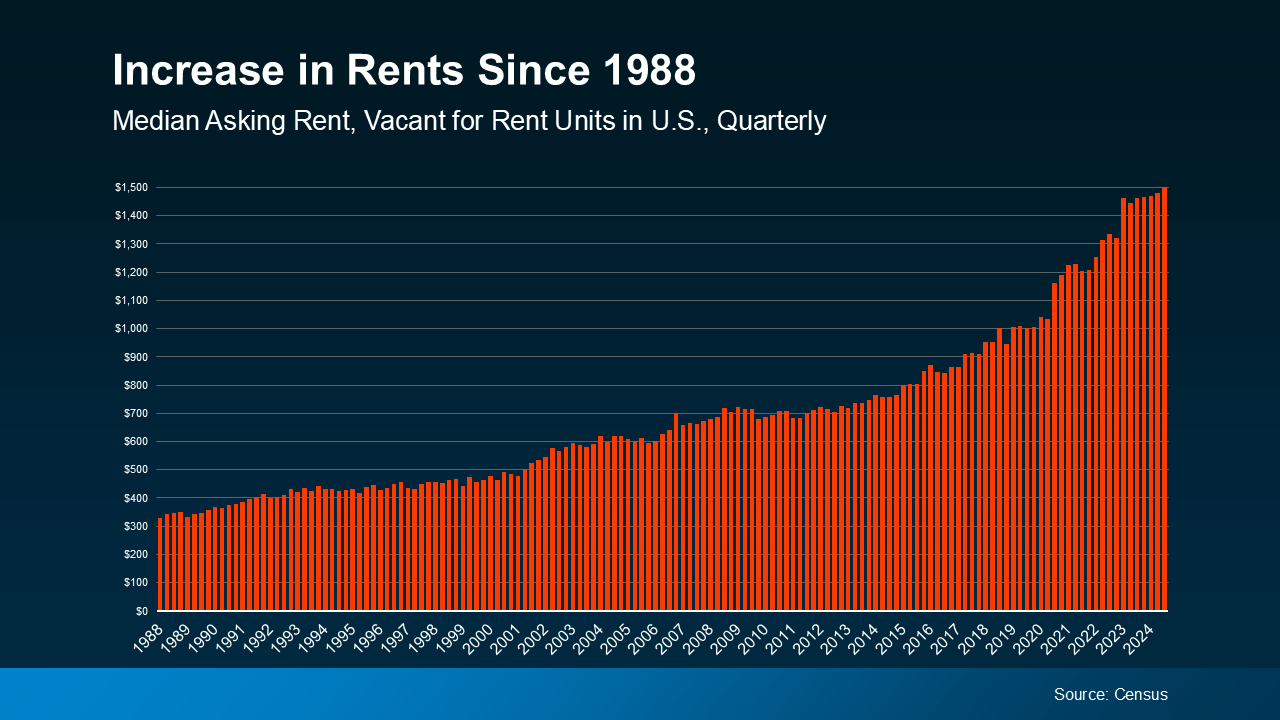
Renting may feel more affordable in the short term, especially right now with today’s home prices and mortgage rates. But the reality is, over time, rent almost always goes up too. Take a look at the data and you can see that play out. According to Census data, rents have significantly increased over the decades (see graph below):

a graph of a number of peopleThis means if you decide to rent, you’ll likely face growing expenses each time you renew or sign a new lease – and that’ll happen without building any wealth in return. Plus, those rising costs may make it harder to save up to buy a home down the road.


Renting vs. Buying: The Long-Term Impact

When you own a home, your payments are an investment in your future. Renting, on the other hand, means your money is gone for good — it helps your landlord build equity, not you.

Renting works for those not ready (or able) to buy today. But if you are able to make the numbers work, buying a home builds equity and sets you up for long-term financial success. So, even though renting may seem easier now, it can’t match the benefits of homeownership.


Bottom Line

If you can afford it, take control of your financial future by making homeownership part of your plan. It’s an investment you won’t regret.

Do you want to see what starter homes are available in our market?Let’s connect today to explore your options.


Posts

;

Questions? Need Advice? Complete this form for more information.

Contact Information::


Copyright 2026 Realty Executives All Rights Reserved

Regional Branch Manager

Nicole Monahan

Contact
Disclaimer: Each office independently owned and operated. Please disregard this message if you are already under contract with another real estate professional.