

Realty Executives Exceptional Realtors®

Nicole Monahan

Regional Branch Manager (570) 470-9006

Nicole Monahan

Regional Branch Manager

Realty Executives Exceptional Realtors®

Blog

Are You Saving Up To Buy a Home? Your Tax Refund Can Help

(Published on - 4/15/2025 11:23:56 AM)

Are You Saving Up To Buy a Home? Your Tax Refund Can Help


You’ve been working on your savings and dreaming of that moment when you finally have keys to a place that’s truly yours. What you might not realize is that your tax return could give you a little extra cash to help you get there sooner. As Freddie Mac notes:

“ . . . your tax refund from the IRS can be a useful supplement to your homebuying budget.” 

So, if you’re getting a tax refund this year, you can use it to help you pay for some of the upfront costs that come with buying a home, like the down payment and closing costs. And here’s the best part.

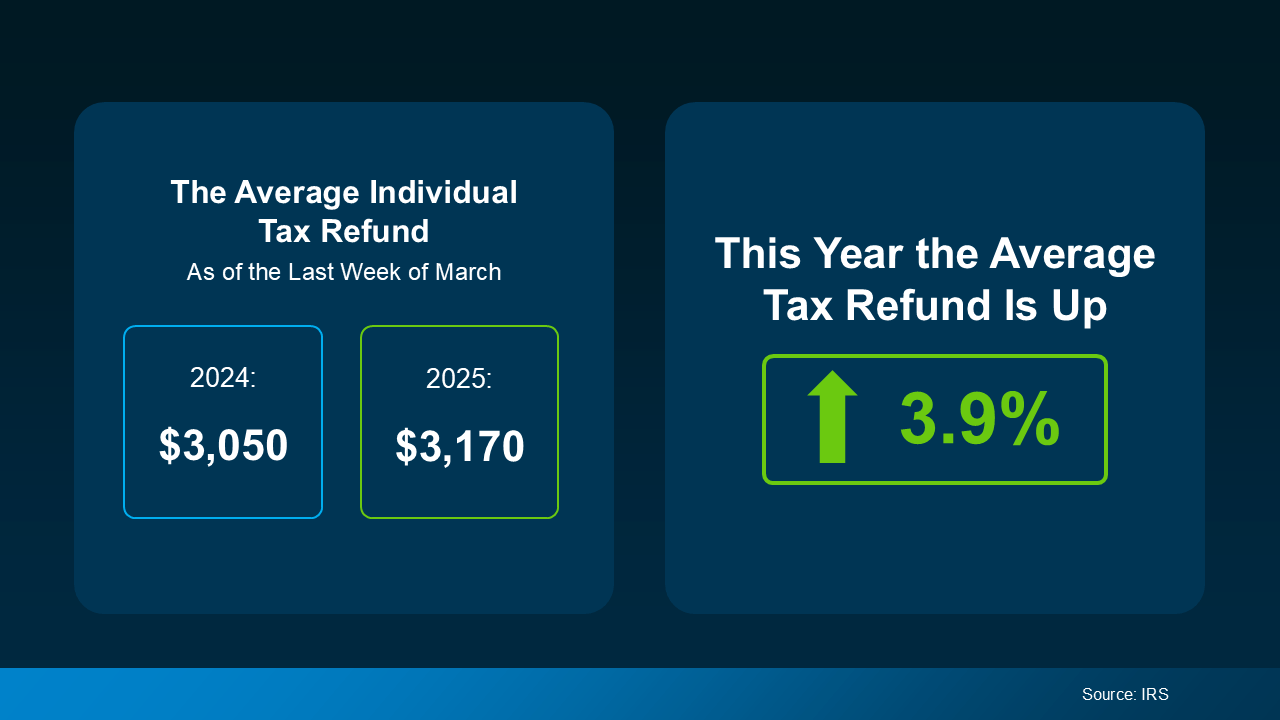
On average, people are getting even more money back in their refunds than they did last year. While it’s not a big increase, the visual below uses datafrom the Internal Revenue Service (IRS) to show the average individual’s refund is 3.9% higher this year:
 

Of course, how much money you may get in your tax refund is going to vary. But when it comes to buying a home, any extra cash can help move things forward. Here are a few examples of how you can put that money to good use, according to Freddie Mac:

  • Save for a down payment – Saving for a down payment can be one of the biggest hurdles for buyers. Setting aside your tax refund for this expense could help you get to your goal faster. Just remember, it’s typically not required to put 20% down.
  • Pay for closing costs – Closing costs include fees for things like the appraisal, title insurance, and underwriting of your loan. They’re generally between 2% and 5% of the total purchase price of the home. So, putting your refund toward these costs can make things more manageable on closing day.
  • Lower your mortgage rate – Your lender might give you the option to buy down your mortgage rate. If you qualify for this option, you could pay up front to have a lower rate on your mortgage. If affordability is tight for you at today’s rates and home prices, this may be worth exploring.

But you don’t have to figure it all out on your own. Working with a team of trusted real estate professionals who understand the homebuying process, what you need to save, and any resources you can tap into will help you make sure you’re ready to buy when the time comes.
 

Bottom Line

When it comes to saving for a home, every dollar gets you one step closer to your goal. While your tax refund may not be enough to change the game, it can help give your homebuying fund a boost.

What would having your own home mean for you or your family this year? Let’s talk about it and we’ll come up with a strategy for success.


4 Ways To Make an Offer That Stands Out This Spring

(Published on - 4/14/2025 11:35:33 AM)

4 Ways To Make an Offer That Stands Out This Spring


Now that spring is here, more and more buyers are jumping back into the market, and competition is heating up.

If you’re serious about landing a home you’ll love, you need more than just a wish list. You need a smart strategy – and that starts with working with a great agent who can help you put together a strong offer.

Here are some top tips your agent will share with you that are helping buyers stand out (and win) in today’s market.


1. Don’t Lowball on Price

It’s tempting to start with a super low offer in an attempt to save money. But in a competitive spring market, that could backfire. If the price isn’t reasonable, you could offend the seller and lose out to a better bid. As NerdWallet says:

“If you really want the property, you should avoid offending the seller. So, be wary of placing a so-called lowball offer. One of the most obvious risks of making a lowball offer is outright rejection. . . As a buyer, you’ll need to find a balance between making a fair offer and running the risk of losing the property.

Your agent can help you understand local pricing trends and what a fair, yet strong offer looks like this season.


2. Consider an Escalation Clause

If you’re worried about competing bids, an escalation clause can help. If you have an escalation clause and the seller gets another offer, it increases yours up to a certain max amount you set. That way you don’t lose out over a small difference. Investopedia explains it like this:

“An escalation clause is a way to automatically escalate your bid by a certain dollar amount, up to a certain ceiling, to compete with other bids.”

Work with your agent to decide if this tactic fits your situation and budget. Just be sure not to stretch beyond what you’re truly comfortable spending and that the home is likely to appraise for the amount you offer.

If the appraisal comes in lower than your offer, you may have to make up the difference out of pocket. Your agent can help you weigh these risks and determine the best approach for your specific situation.


3. Be Intentional About the Concessions You Ask For

While some concessions (like help with closing costs) might be possible, too many demands could make another buyer’s cleaner offer more attractive. As the National Association of Realtors (NAR) notes:

“There are many factors up for discussion in any real estate transaction—from price to repairs to possession date. A real estate professional who’s representing you willlook at the transaction from your perspective, helping you negotiate a purchase agreement that meets your needs . . .

An agent who knows what’s working for other buyers in your area can help you prioritize the most important asks – and avoid ones that could turn off the seller.


4. Consider a Timeline That Appeals to the Seller

Sometimes, it’s not just about price, it’s about timing. Does the seller need extra time to move out? Or do they want to move as soon as possible? Flexibility here can work in your favor. By adjusting your timeline (if you’re able to), you could stand out against other offers. According to Atlas Van Lines:

“Everyone will have a unique timeline depending on the size of the move, the distance they are moving from or to, and personal preferences. It is important to be flexible and adapt the timeline as needed while ensuring you allocate enough time for each step.”

Your agent can communicate with the seller’s agent to find out what matters most, including timing.


Bottom Line

Spring is here – and more buyers are entering the market. Let’s work together to make sure your offer stands out.

What’s one thing you want to feel confident about before making an offer this spring?


Does Your Current Home Fit Your Retirement Plans?

(Published on - 4/9/2025 11:36:35 AM)

Does Your Current Home Fit Your Retirement Plans?


Retirement isn’t just a milestone. It's the beginning of something really special. After years of hard work, it’s finally time to slow down, explore new passions, and live life on your own terms.

But with this exciting chapter comes some big choices. And one of the biggest is this: does your current home still make sense for the lifestyle (and budget) you want in this next phase of life?

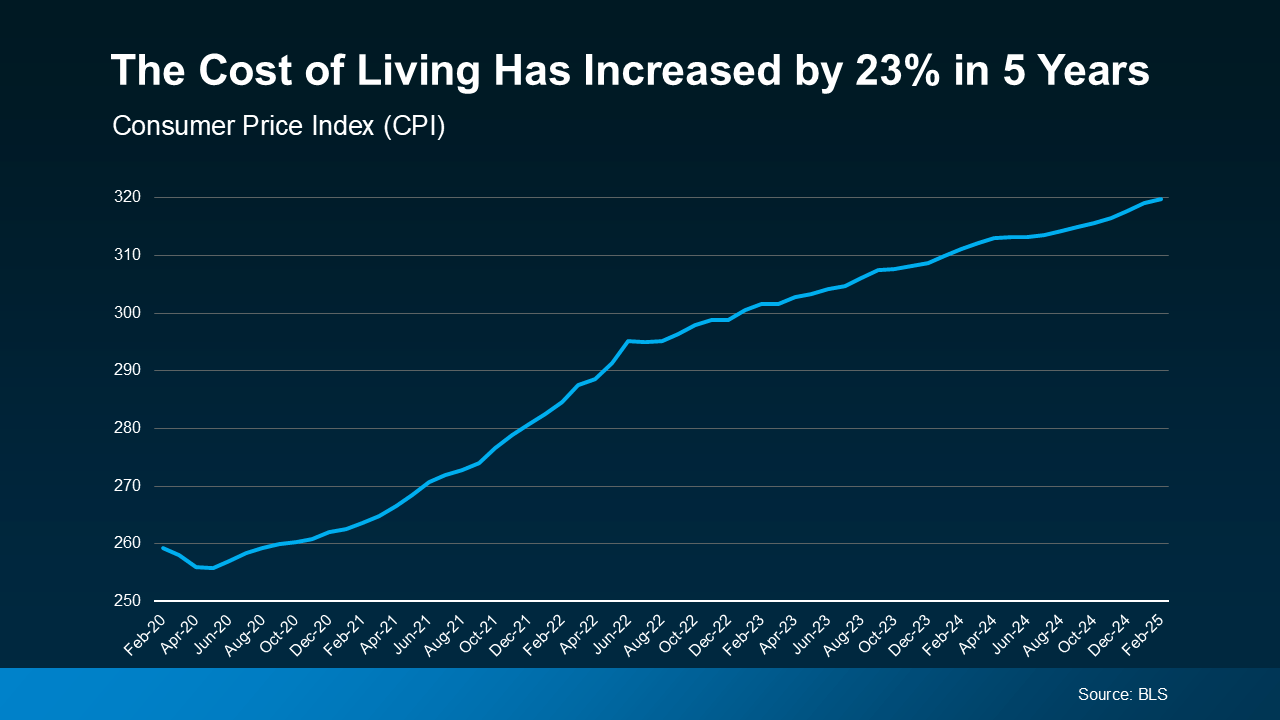
That’s an especially important question right now. Just in the past five years, the cost of living has jumped by 23%according to the Bureau of Labor Statistics (BLS). That’s based on theConsumer Price Index (CPI), which is how changes are tracked in the average price consumers pay for goods and services (see graph below):

When you’re thinking about how to make your retirement savings last, those rising expenses matter. And if you’ve started to wonder whether your money will stretch as far as you need it to go, don’t worry. You may have more control than you think.

One way many retirees are protecting their savings is by relocating. Because your dollars do go further in some places.

Moving to an area with a lower cost of living can help you save on regular expenses like your housing, utilities, and taxes – especially if you downsize at the same time.

And that can free up room in your budget for the things that make retirement some of the best years of your life: travel, hobbies, spoiling your grandkids, or any of the other things you’ve been dreaming about doing in this next phase.

That’s not to say you have to move. It just means you’ll want to think about where you plan to live and make sure you’ve got enough savings to cover actually living there. It's all about planning. As Go Banking Rates explains:

“How much you should have saved for retirement depends on a few key factors, including your location. Where you choose to spend your golden years is critical.”

And you don’t always have to go far. Sometimes it’s out of state, but other times moving to the suburbs instead of living near the city can make a big difference. And that’s worth thinking about as you plan for your next chapter.

Whether you’re considering downsizing, moving closer to your grandkids, or heading to an area where you can stretch your savings, a real estate agent can help. They’ll work with you to explore the options that make sense for your goals – and can help make selling your current house easier. They can also connect you with trusted agents in other parts of the country if you're considering a big move.


Bottom Line

You’ve worked hard to build a future you can enjoy. If your current home or location no longer supports that, it may be time to explore what’s next.

What does your ideal retirement look like? And could a move help make it even better? Let’s talk about how to make that vision a reality.


The Truth About Newly Built Homes and Today’s Market

(Published on - 4/8/2025 11:37:36 AM)

The Truth About Newly Built Homes and Today’s Market


Headlines are talking about the inventory of new homes and how we’re back at the levels not seen since 2009. And maybe you’re reading that and thinking: oh no, here we go again. That’s because you remember the housing crash of the late 2000s and you’re worried we’re repeating the same mistakes.

But before you let fear take hold, remember: headlines are designed to be clickbait. And a lot of the time, they do more to terrify than clarify. That’s because they don’t always give you all the context you need. So, let’s take a step back and look at what the data really says.

Why This Isn’t Like 2008

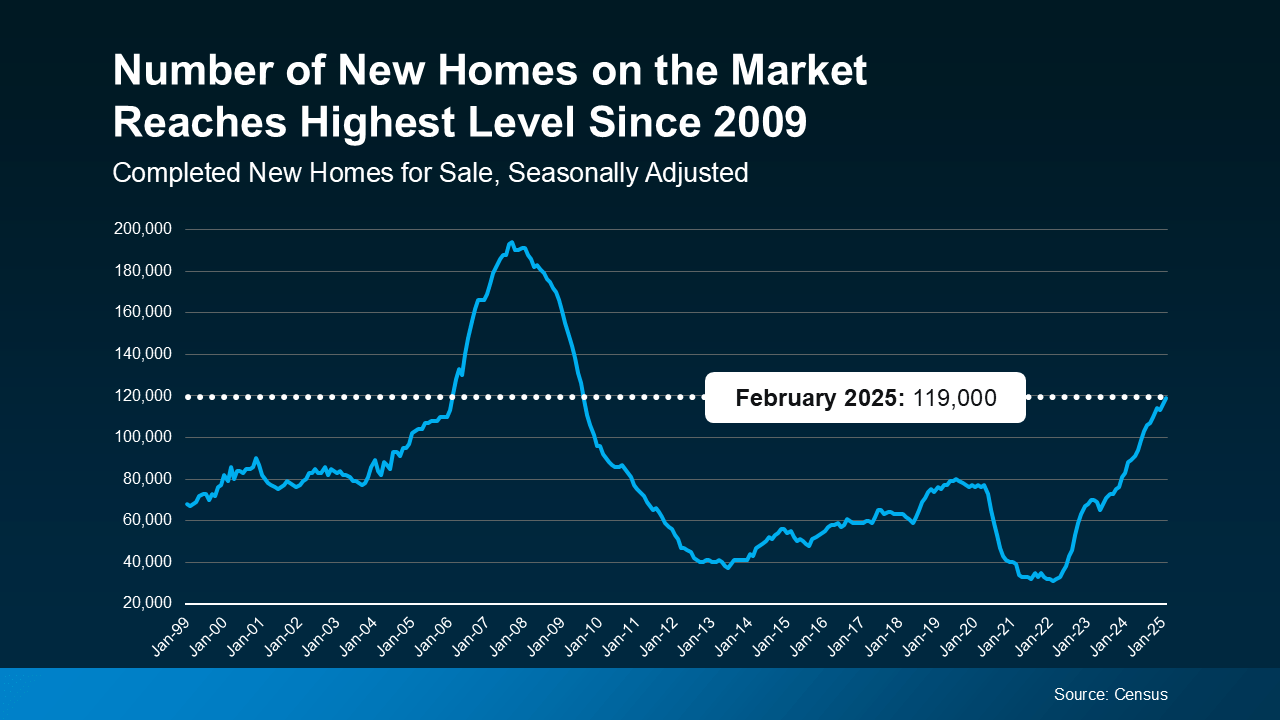
While it’s true the number of new homes on the market has reached its highest level since 2009, that’s not a cause for alarm.

Here’s the context that matters most. When the data is turned into a graph, it’s clear the amount seen in 2009 wasn’t the peak of oversupply – not even close. That high point came earlier in 2007-2008. If anything, 2009 was when the number of new homes being built was really starting to slide back down (see graph below):

The overbuilding that contributed to the housing crash happened in the years leading up to 2008. Not in 2009. At that point, construction was already slowing down. So, saying we’ve hit 2009 levels isn't the same thing as saying we’re overbuilding like we did the last time.


Builders Have Actually Underbuilt for Over a Decade

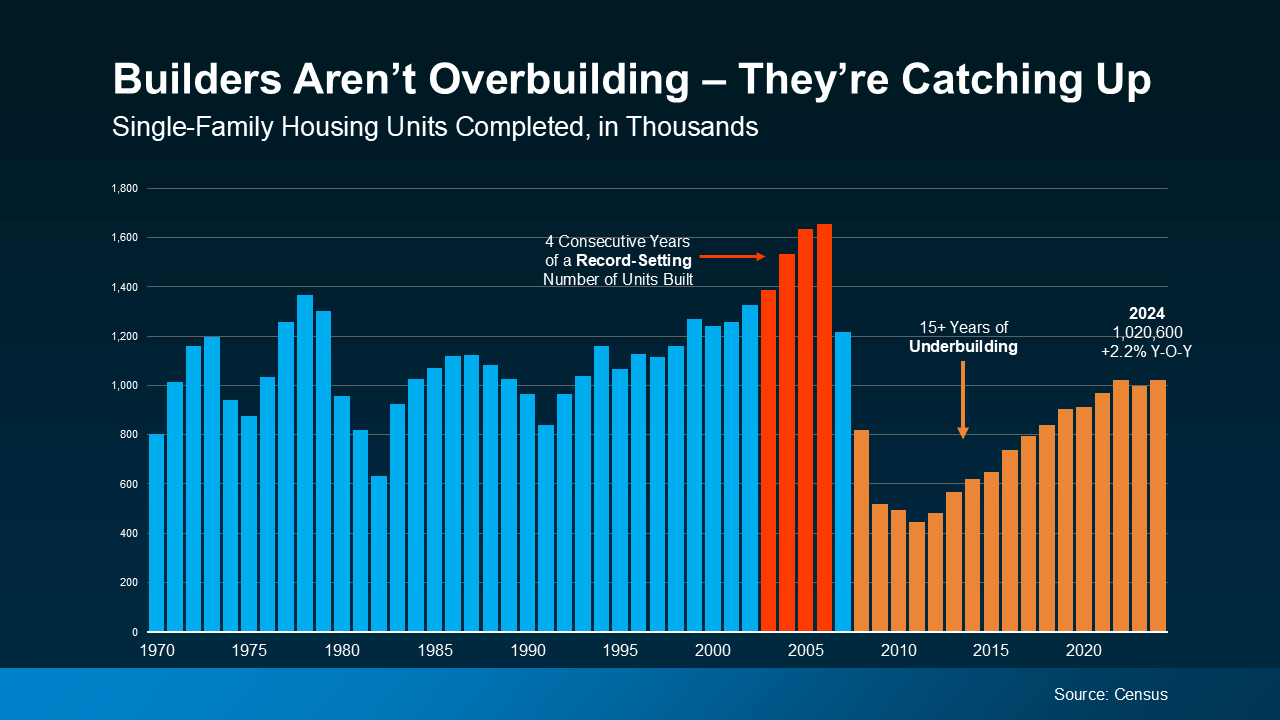
Here’s some more data to prove it to you. After the crash, builders pulled production way back. As a result, they built far fewer homes than the market needed. And that was a consistent problem that lasted for over a decade. That long stretch of underbuilding created a major housing shortage, which is still a challenge today.

The graph below uses Census data to show the number of new homes built each year over the past 52 years. You can clearly see the overbuilding leading up to the crash (in red), the period of underbuilding that followed (in orange), and how we’re only now getting back to a more normal level of construction:


Today’s situation is different. Builders aren’t overbuilding – they’re catching up.

In a recent article, Odeta Kushi, Deputy Chief Economist at First American,highlights this deficit and speaks to why the recent ramp-up in construction is actually good for today’s market, especially buyers:

This means more homes on the market and more options for home buyers, which is good news for a housing market that has been underbuilt for over a decade.”

Of course, like anything else in real estate, the level of supply and demand will vary by market. Some markets may have more newly built homes, some less. But, nationally, there’s nothing to worry about. This isn’t like the last time.


Bottom Line

No matter what you’re reading or seeing, the growing number of newly built homes on the market isn’t a red flag nationally – it's a sign builders are starting to make up for years of underbuilding. If you want to talk about what’s happening in our market, let’s connect.


House Hunting Just Got Easier – Here’s Why

(Published on - 4/7/2025 11:25:34 AM)

House Hunting Just Got Easier – Here’s Why


If you’ve been frustrated by the lack of homes for sale over the past few years, here’s some good news. You have more options, so it may finally be time to kick off your home search again. As Daryl Fairweather, Chief Economist at Redfin, explains:

Now is the best time to buy in the last two years. Mortgage rates are comparable to what they were two years ago, and prices remain high. However, there is significantly more inventory . . .

The number of homes for sale has grown compared to last year, and even more options are on the way. While this is typical for the busy spring season, here’s why this is so important right now.

Homeowners are listing their houses at the highest pace we’ve seen in a while.


New Listings Are on the Rise

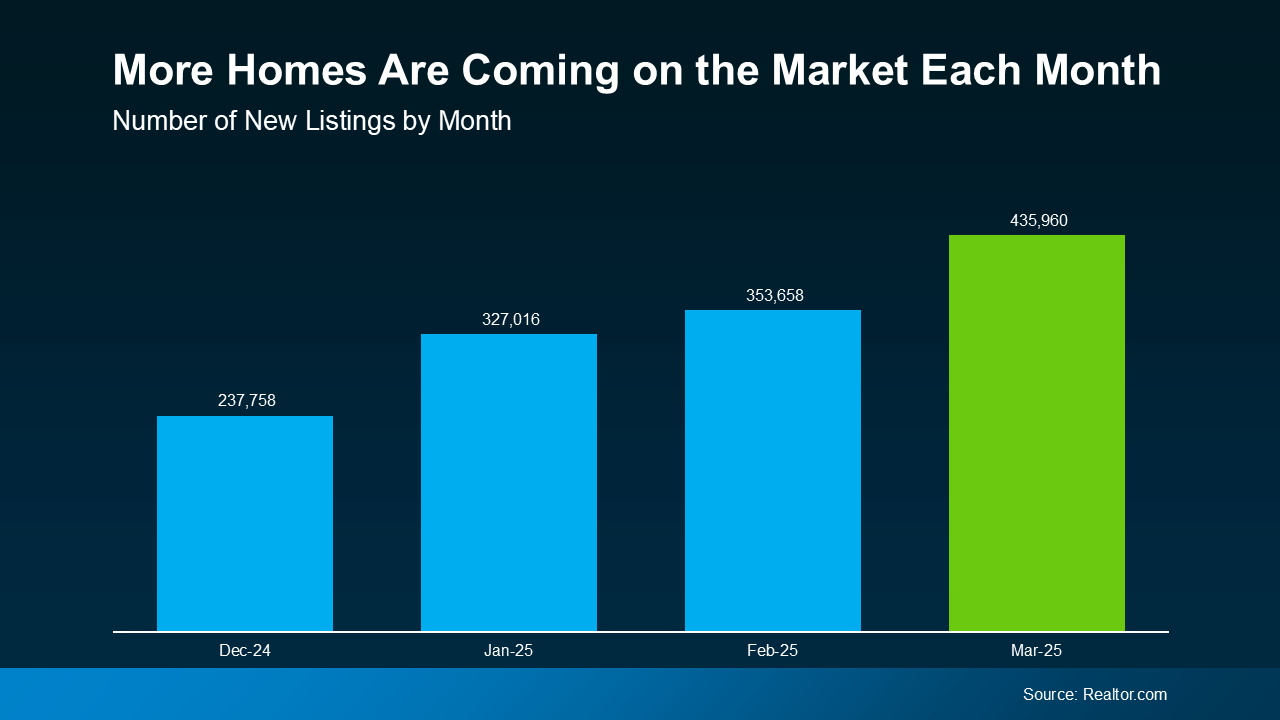
Over the past few months, the number of new listings, or homes that have recently been put on the market for sale, has been steadily rising (see graph below):

Basically, more people are putting their homes on the market each month – whether they’re moving up, downsizing, or relocating. And this trend is a positive sign for the housing market.

Sellers who may have been on the fence the past few years are starting to jump back in. That’s helping to boost overall inventory and create better opportunities for both buyers and move-up sellers alike.

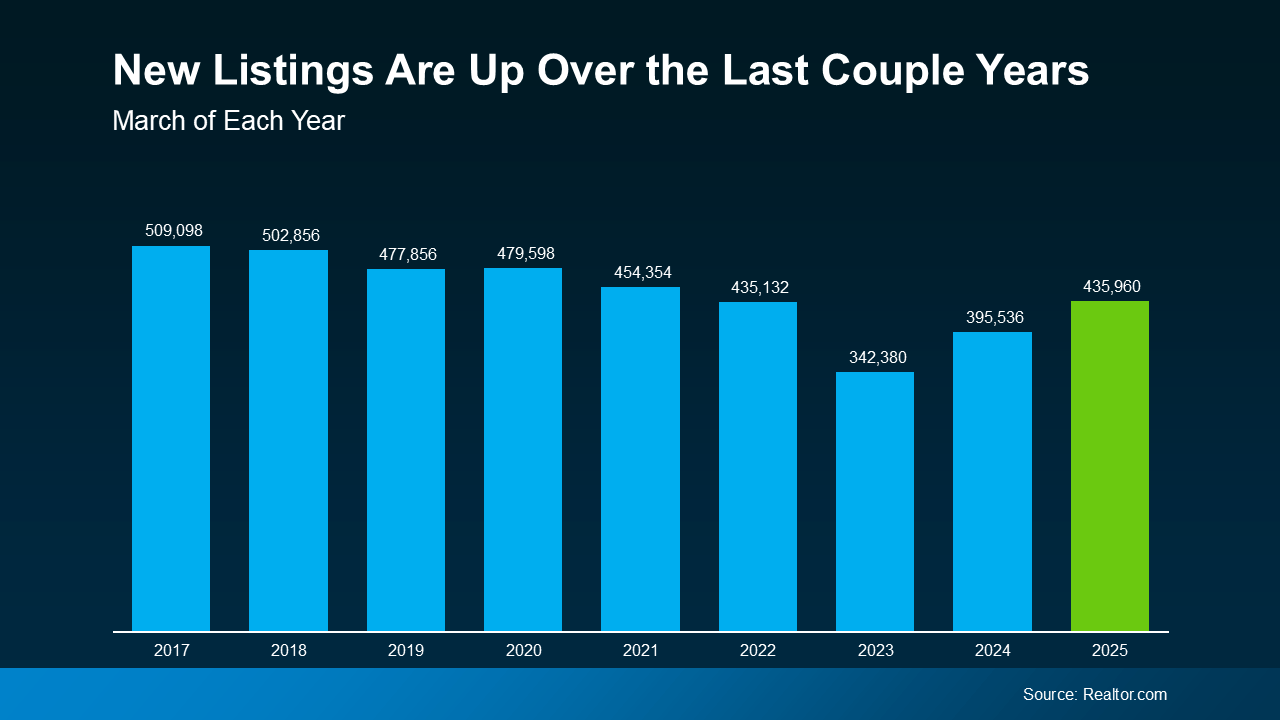
But it’s not just that the number of fresh options is up month-over-month; there’s also been a jump compared to last year.

According to Realtor.com, new listings in March were 10.2% higher than last year, making it the biggest March for new listings since 2021 (see graph below):

For anyone who’s been waiting for more choices, this is exactly what you’ve been hoping for – because more homes coming onto the market means more options and a better shot at finding one that fits your needs.

To make sure you don't miss out on any of the latest listings for your area, lean on a local real estate agent.


Posts

;

Questions? Need Advice? Complete this form for more information.

Contact Information::


Copyright 2026 Realty Executives All Rights Reserved

Regional Branch Manager

Nicole Monahan

Contact
Disclaimer: Each office independently owned and operated. Please disregard this message if you are already under contract with another real estate professional.