Maple Knoll Realty
Realtor/ Sales Associate
Realty Executives Exceptional Realtors®
Staging is less about decorating for your own taste and more about helping buyers understand the home. The goal is to make rooms feel clean, cared for, easy to navigate, and ready to photograph. For homeowners preparing to sell in Livingston or elsewhere across North Jersey, that usually starts with three priorities: remove distractions, complete visible repairs, and let each space show its purpose.
The effort can make a meaningful difference in how buyers experience a listing. In the National Association of REALTORS® 2025 Profile of Home Staging, 83% of buyers’ agents said staging made it easier for buyers to visualize a property as a future home. That does not mean every seller needs rented furniture or a major redesign. Often, thoughtful editing and consistent upkeep are the most valuable first steps.
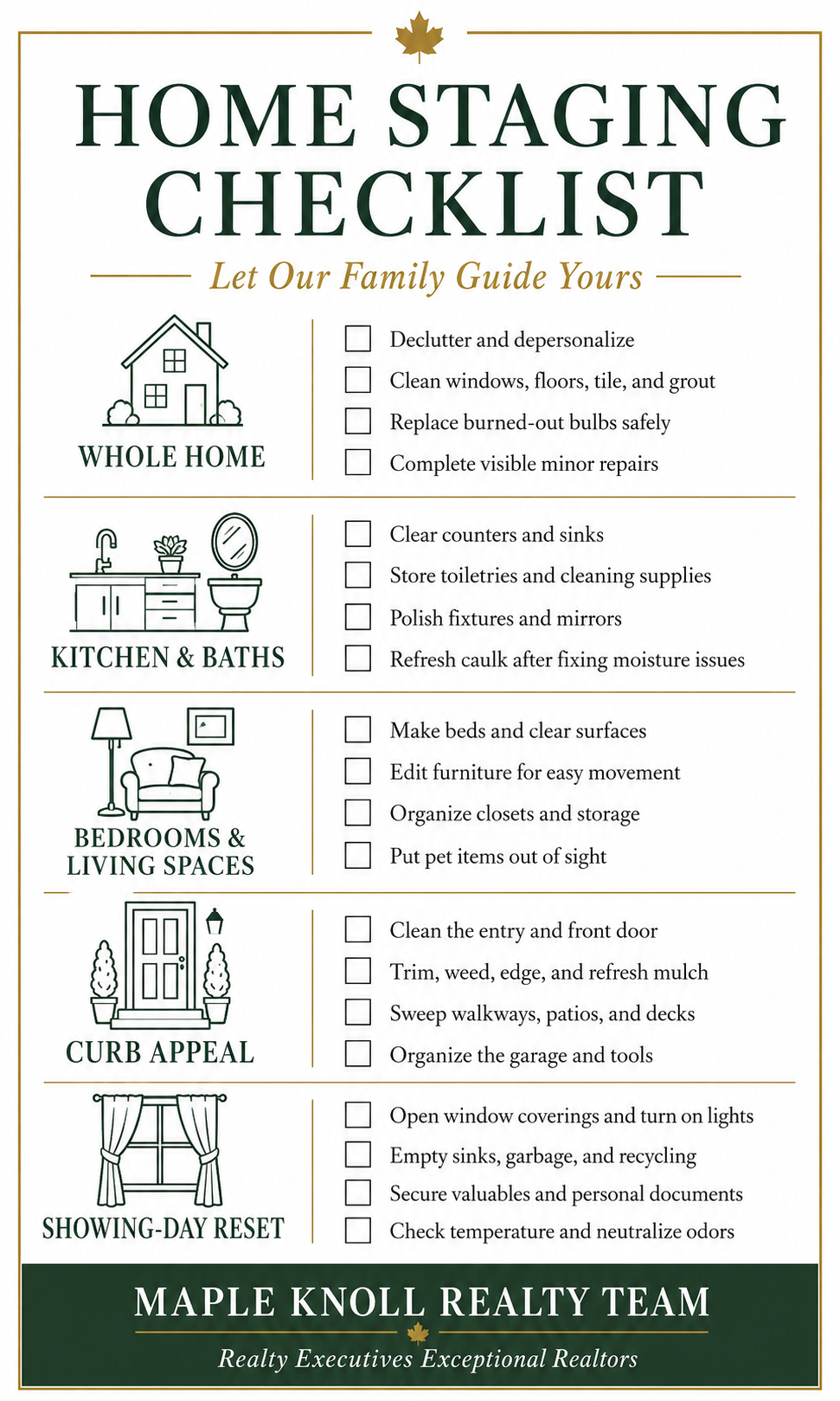
Use this checklist as a practical starting point. Your final plan should reflect the home’s condition, price range, likely buyer expectations, and the way the property will appear in professional photography.
Before working room by room, address the details buyers will notice throughout the house. These tasks create a cleaner visual baseline and prevent small distractions from competing with the home’s strongest features.
Quick priority: If your time is limited, begin with the living room, primary bedroom, and kitchen. These are among the rooms buyers and sellers’ agents most often prioritize in staging, according to NAR’s 2025 report.
Bathrooms look their best when surfaces are nearly empty and every detail feels intentional. Clear toiletries from counters and shower ledges, then store them in drawers, cabinets, or a portable basket you can move before showings.
A bedroom should communicate rest, storage, and comfortable circulation. Make every bed before photos and showings, use simple bedding, and keep the floor clear.
Buyers often open closets, cabinets, and built-in storage. Overfilled spaces can make storage feel limited, even when the dimensions are generous. Consider packing off-season clothing and items you will not need before the move.
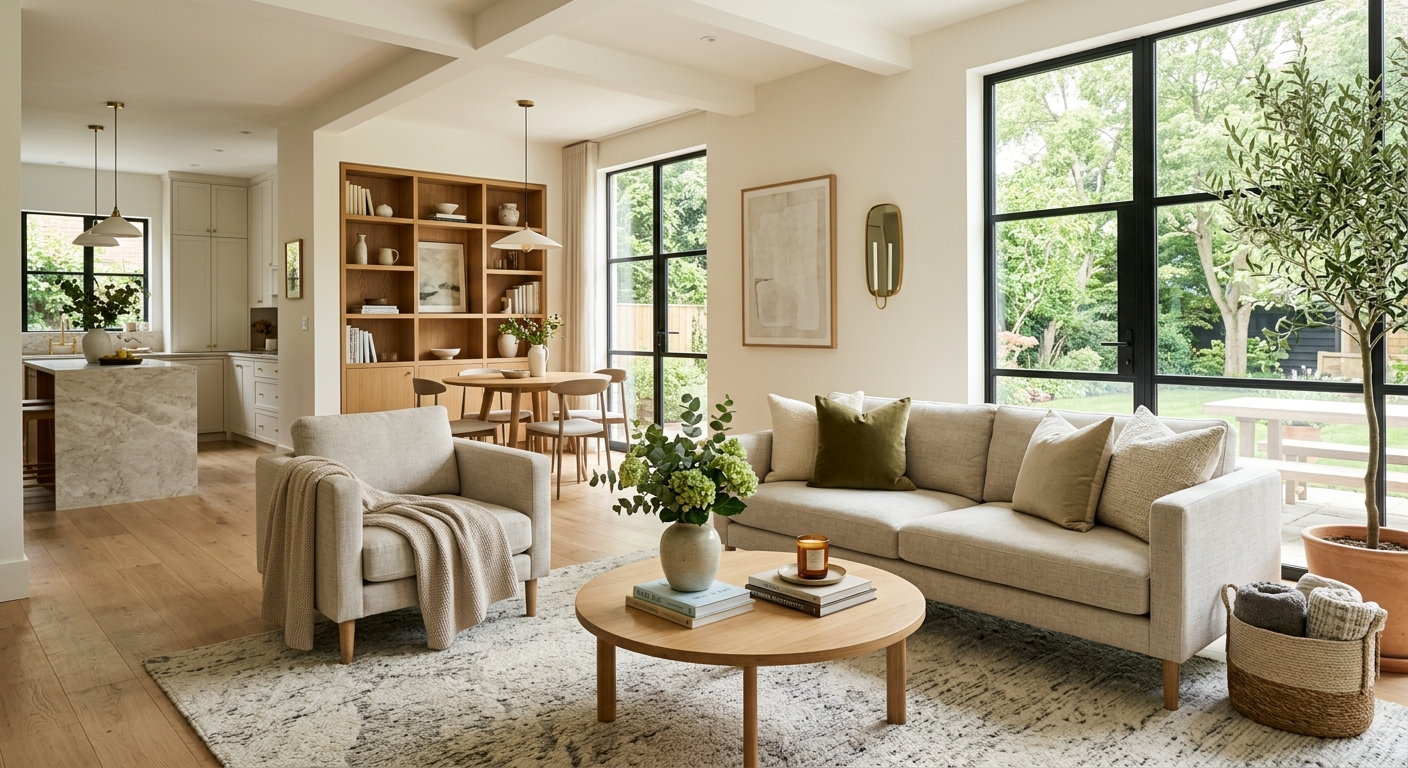
In the den, family room, living room, or sunroom, furniture placement should clarify how the room works. Remove pieces that block windows, doorways, fireplaces, or natural paths through the space.
A dining room needs very little styling. Clear the table and use one low centerpiece, a bowl, or a restrained arrangement. Remove table leaves when doing so improves circulation and suits the room’s scale. Store extra chairs elsewhere rather than lining the walls.
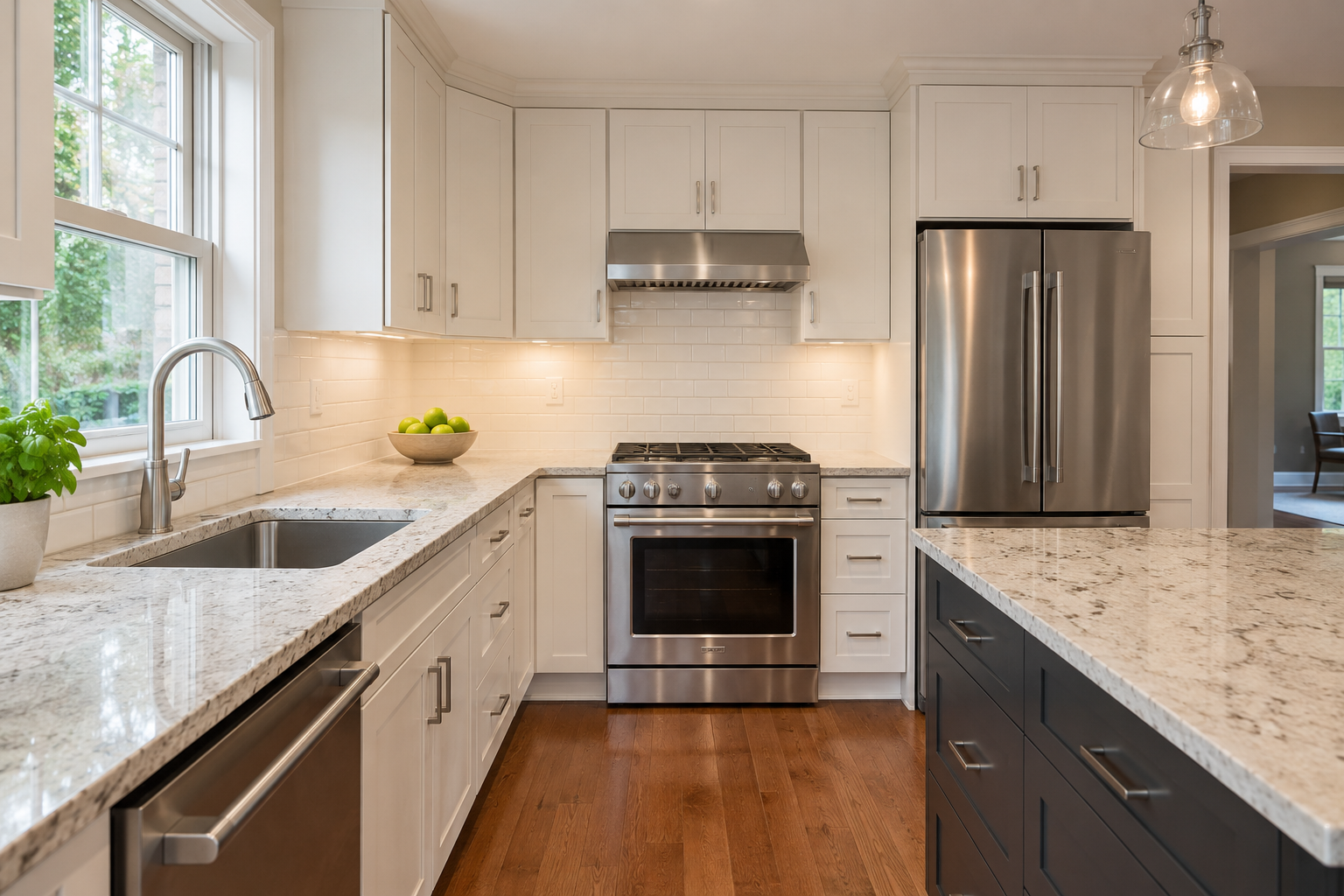
The kitchen is one of the easiest rooms to clutter because it is used every day. For listing photos, aim for clean counters with only a few purposeful items. During the showing period, create a routine that makes resetting the room quick.
Even a compact laundry room can feel efficient when counters and the sink are clean and clear. Put detergent, stain removers, towels, and supplies in cupboards or matching containers. Remove clothing from machines and floors, and make sure the room is well lit.
The exterior sets expectations for the rest of the showing. Walk from the street or driveway to the front door as a buyer would, looking for maintenance issues, clutter, and anything that interrupts a clean arrival.
A staged home needs to remain ready after the photos are complete. A short routine can help you prepare without starting from scratch before every appointment.
Not every home needs the same preparation. A vacant luxury property may benefit from professional furnishings, while an occupied home may need only editing, repairs, and a focused styling consultation. Before spending heavily, ask which changes are likely to improve the presentation for your property, price point, and launch strategy.
The Maple Knoll Realty Team helps sellers evaluate the home room by room, set practical priorities, and prepare for photography and showings. Let our family guide yours with a staging plan built around your property rather than a one-size-fits-all list.
Do I need to stage every room before selling?
Not necessarily. Start with the rooms that shape a buyer’s first impression and the spaces that will lead the photo sequence. A property-specific consultation can help you decide where staging will be most useful.
Should I remove all family photos?
You do not have to erase every personal detail. Reducing large photo groupings and highly personal collections helps buyers focus on the home’s layout, finishes, and possibilities.
Is it better to sell a home vacant or furnished?
It depends on the property and marketing plan. Some vacant homes benefit from physical or carefully disclosed virtual staging, while others show well with their existing furnishings edited and rearranged.
How far in advance should I begin staging?
Begin as soon as you have a likely selling timeline. Packing, repairs, exterior work, and contractor scheduling often take longer than expected, especially when weather affects outdoor projects.
What should I do with visible mold before listing?
Correct the moisture source and follow appropriate cleanup guidance rather than painting or caulking over it. The EPA advises that larger or complicated mold problems may require an experienced professional. Consult qualified professionals for your circumstances.