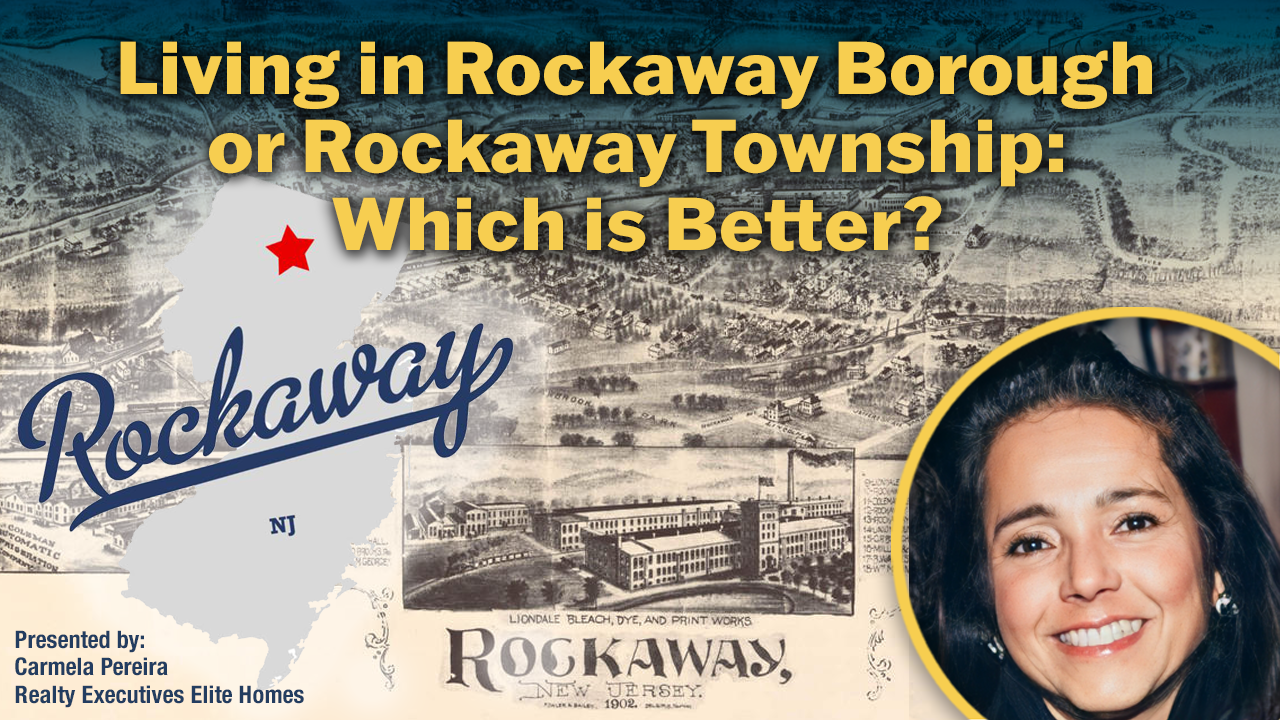
Carmela Pereira
Real Estate Professional
Realty Executives Elite Homes
1. A Safe, Family-Friendly Community! Rockaway offers top-rated schools, beautiful parks, and a welcoming small-town feel.
2. Endless Outdoor Activities! With parks, lakes, and hiking trails nearby, there’s always an adventure waiting!
3. Easy NYC Commute! Whether by train or car, getting to New York City is fast and convenient. Rockaway is only 35 miles west of NYC
4. Great Shopping & Dining! Rockaway is surrounded by big-name stores and top-rated restaurants, so there’s something for everyone!
5. Affordable Suburban Living! Get more house for your money, live in a great community, and experience an amazing quality of life!
Ready to make Rockaway your home? Let’s find your dream home—call me today!
THINKING ABOUT SELLING OR BUYING A HOME IN ROCKAWAY NJ? ??
Call or Text 973-580-1991
carmela.pereira@gmail.com
Free Resources
What is your home worth? https://www.realtyexecutives.com/agent/carmela-pereira/selling
Search for Homes Now!
https://www.realtyexecutives.com/agent/carmela-pereira
Facebook: https://www.facebook.com/carmela.pereira
Instagram: https://www.instagram.com/carmelapereirarockawayrealtor/
1. More Buyers! The spring market is HOT, with more serious buyers actively looking!
2. Homes Show Better! Natural light, blooming flowers, and great curb appeal make your home look its best.
3. With lower inventory, competition is HOT, meaning higher offers and faster sales!
4. Easier Moving! Warmer weather makes packing, moving, and settling in much smoother.
5. Beat the Summer Rush! Sell now before inventory increases and competition rises!
Ready to take advantage of the spring market? Let’s get your home sold! Call or DM me today!
THINKING ABOUT SELLING OR BUYING A HOME IN ROCKAWAY NJ?
Call or Text 973-580-1991 ?? carmela.pereira@gmail.com
Free Resources: What is your home worth?
https://www.realtyexecutives.com/agent/carmela-pereira/selling
Search for Homes Now!
https://www.realtyexecutives.com/agent/carmela-pereira
Facebook:
https://www.facebook.com/carmela.pereira
Instagram:
https://www.instagram.com/carmelapereirarockawayrealtor/
One of the most memorable stories from my real estate career centers around the sale of a special home that left a lasting impression. I had been working closely with my buyers for some time, assisting them in their search for the perfect property. The market at the time was extremely competitive, with limited inventory and frequent bidding wars making it challenging to get an offer accepted. Despite these obstacles, my buyers remained determined, and so did I.
Our journey eventually led us to a charming house at 27 Stephen Place in Rockaway. It checked many of their boxes, and we felt confident about the offer we submitted. Unfortunately, we found ourselves in a multiple-offer situation, and our bid was not the one initially accepted. Instead, we were designated as the backup offer, a position that can sometimes feel disheartening. While we hoped for a chance, we knew we couldn’t count on it. So, undeterred, my buyers and I continued our search, exploring other potential homes and staying open to new possibilities.
Several weeks later, I received an unexpected call from the listing agent. The agent asked if my clients were still interested in 27 Stephen Place. Without hesitation, I contacted my buyers, and their response was an enthusiastic, “Of course!” Their excitement was palpable, and it was clear that this home had left an impression on them as well. With renewed determination, we restarted the process, diving into negotiations and ironing out the details to secure the property.
The path to closing was not without its challenges, as is often the case in real estate. There were inspections to coordinate, documents to review, and final details to finalize. However, both my clients and I approached every step with optimism and persistence. After a series of back-and-forth negotiations and ensuring everything was in place, we finally closed on the home.
The day my clients officially became the owners of 27 Stephen Place was one of pure joy. Witnessing their excitement as they held the keys to their new home was a moment I’ll never forget. They quickly settled into the neighborhood, discovering everything the town had to offer and falling in love with the community. It was clear that this house wasn’t just a structure for them; it was the realization of a long-held dream.
For me, this experience was a reminder of why I’m so passionate about being a real estate agent. Helping people navigate the ups and downs of the home-buying process and ultimately guiding them to a place they can call their own is incredibly fulfilling. Every client has a unique journey, and being a part of such a significant milestone in their lives is truly an honor. This particular story stands out because it exemplifies the resilience, teamwork, and trust required to turn a dream into reality. It’s moments like these that make all the hard work worthwhile.
As a local real estate agent specializing in tenant placement for owners of mutli-family or multi-unit properties in Rockaway NJ. I can assist you with finding qualified tenants for your property when vacancies arise.
About me: I am a 24-year resident of Rockaway Boro with an in-depth understanding of our local rental market. I can efficiently market your units to a broad pool of prospective tenants and provide thorough screening to help ensure a reliable and timely occupancy. I focus on simplifying the leasing process, so you can rest assured that your property is in good hands, allowing you to focus on other priorities. Also, as the owner you pay no fees - the tenant will pay the realtor fee which is usually one month’s rent.
Additionally, if you ever consider selling your property, I’d be glad to offer guidance and expertise to help you navigate the process smoothly and secure a favorable sale. If you’d be interested in discussing how I can support your tenant placement or sales needs, please feel free to reach out at your convenience. I’d be glad to answer any questions or meet to discuss a strategy tailored to your property.
Nestled within Morris County, New Jersey, Rockaway Borough and Rockaway Township are neighboring communities that, while sharing part of their name, offer unique characteristics, lifestyles, and amenities. Whether you’re considering moving to one of these areas or simply interested in learning more about this region of New Jersey, understanding their distinctions can provide helpful insights into what each has to offer.
In this post, we’ll dive into the history, demographics, amenities, housing, schools, lifestyle, and transportation options of Rockaway Borough and Rockaway Township, highlighting their unique features and what makes each a desirable place to live.
1. Historical Background
Rockaway Borough’s small-town atmosphere reflects its roots as a more compact community with close historical ties, while Rockaway Township’s larger area supports diverse neighborhoods and industrial remnants reflecting its extensive historical past.
2. Geographic Size and Population
3. Housing and Real Estate
The housing style and density in Rockaway Borough generally support a more compact, traditional suburban atmosphere, while Rockaway Township’s larger, varied neighborhoods offer more options for residents with different needs.
4. Schools and Education
Both areas provide quality education through public schools, though the Township’s larger system offers slightly more options and resources for students.
5. Parks and Recreation
With its extensive park system and recreational programs, Rockaway Township provides a wider variety of outdoor activities, while Rockaway Borough’s parks are more localized but support strong community engagement.
6. Transportation and Commuting
For those seeking walkable access to amenities, Rockaway Borough offers more convenience, whereas Rockaway Township provides more commuting options but generally requires a vehicle for local travel.
7. Local Economy and Employment
With Rockaway Township’s broader economic infrastructure, residents benefit from more diverse employment options locally, while Rockaway Borough maintains a focus on community-centered businesses.
8. Community Events and Lifestyle
Rockaway Borough’s events often feel more close-knit and community-driven, while Rockaway Township provides broader and more varied event options for residents across its neighborhoods.
9. Public Services and Safety
Both areas are known for their commitment to safety, but Rockaway Township’s services are more extensive due to its larger population and geographic area.
Conclusion
Choosing between Rockaway Borough and Rockaway Township comes down to personal preference and lifestyle needs. If you’re seeking a close-knit, small-town atmosphere with walkable amenities, Rockaway Borough may be the perfect fit. However, if you desire more housing options, recreational activities, and a broader selection of shopping and employment opportunities, Rockaway Township could offer exactly what you’re looking for.